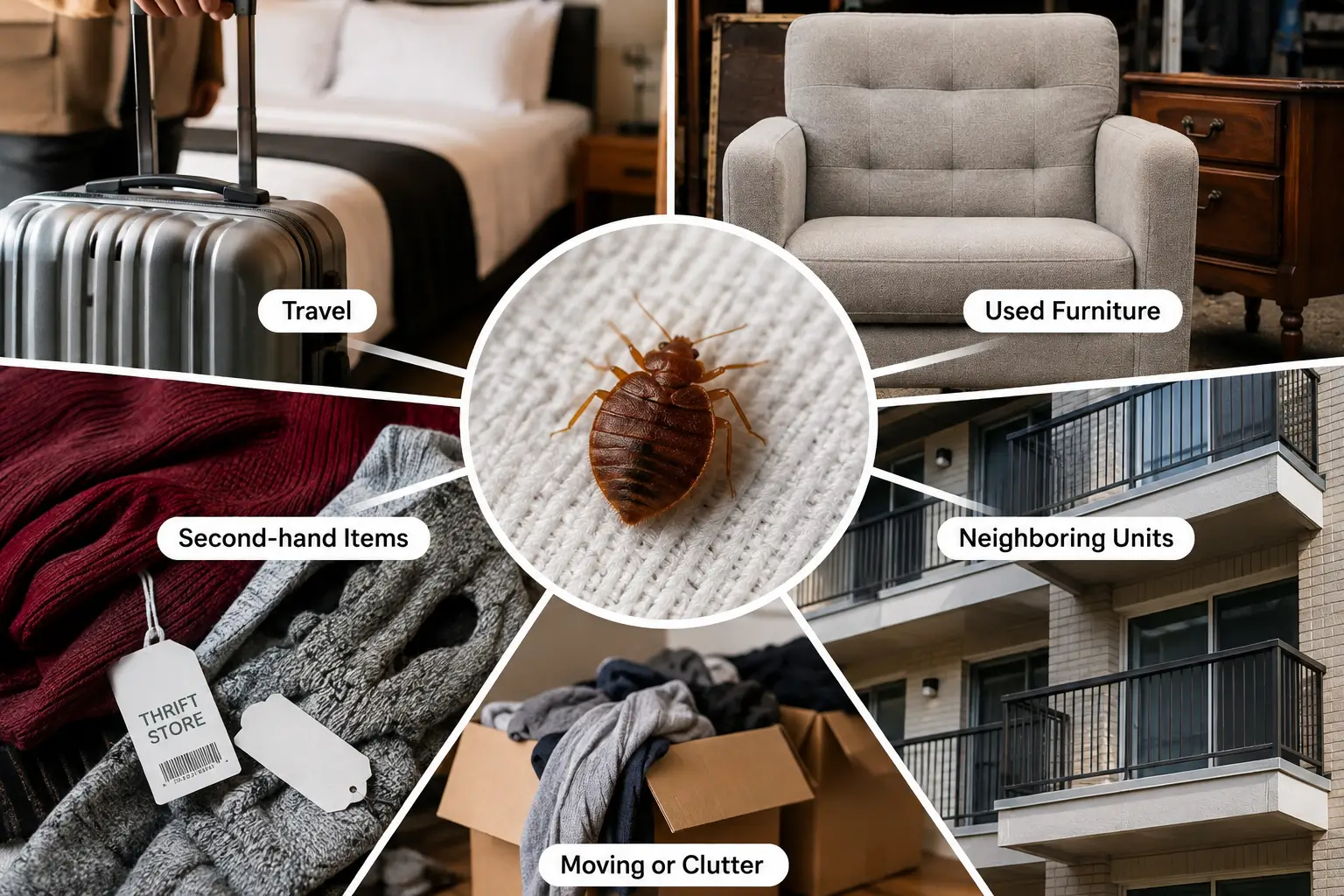
Bed bug infestations occur when small, blood-feeding insects called Cimex lectularius enter a home or business through travel, secondhand furniture, or shared walls, then breed rapidly in hidden cracks near sleeping areas. A single female bed bug lays up to 500 eggs in her lifetime, which means one unnoticed bug can turn into a full infestation within 4 to 6 weeks.
Quick Answer: Cause of Bed Bug Infestations
Bed bug infestations spread mainly through travel luggage, used furniture, shared laundry facilities, and adjoining walls in apartments. Eggs hatch in 6 to 10 days, and Allied Pest Control recommends professional heat or chemical treatment once bugs are confirmed.
What Causes Bed Bug Infestations?
Bed bug infestations start when bugs or eggs hitchhike into a space on clothing, bags, or furniture, then multiply undetected near a bed. They do not fly and cannot jump, so every infestation begins with physical transport by a person, animal, or object. A professional bed bug pest control service is the most reliable way to confirm and remove an active colony.
Hitchhiking Behavior
Bed bugs attach to fabric, bag straps, and shoe soles using tiny claws, then release only when they sense a stationary host nearby. This explains why almost every infestation traces back to a specific trip, delivery, or purchase.
Rapid Reproduction
A female bed bug matures in 5 to 6 weeks and then lays 1 to 7 eggs daily as long as she feeds every 5 to 10 days. This speed lets a colony triple in size within one reproductive cycle, making early treatment critical.
Delayed Detection
Bed bugs feed for 5 to 10 minutes while a host sleeps, then hide before daylight. Because bites are often mistaken for mosquito bites, most households do not confirm an infestation until 4 to 8 weeks after the first bug arrives.
How Bed Bugs Travel Into Homes and Hotels
Travel and furniture account for most new bed bug infestations. Understanding each entry point helps identify where prevention matters most.
Luggage and Hotel Stays
Travel luggage is the leading cause of bed bug infestations worldwide. Bugs climb into suitcase seams during hotel stays and get carried home, then release near a new bed. Placing luggage on a rack instead of the floor or bed cuts this risk significantly.
Secondhand and Rental Furniture
Used mattresses, sofas, and box springs bought from marketplaces or picked up as curbside “free” items frequently carry live bugs or eggs in seams and frame joints. Bed bugs survive several months without feeding, so furniture that looks clean may still be infested.
Shared Spaces and Public Transport
Buses, taxis, cinemas, and offices expose bags and coats to brief contact with infested surfaces. Laundromats add risk when infested clothing sits in communal baskets or machines before washing.
Why Bed Bugs Spread Fast in Dubai Apartments
High-density housing accelerates bed bug infestations in Dubai. The National Pest Management Association found that multi-unit housing reports bed bug activity at nearly double the rate of single-family homes.
High-Rise and Shared-Wall Buildings
Bed bugs travel through electrical outlets, cable conduits, and gaps around shared plumbing between adjoining units. In towers with dozens of units per floor, one untreated apartment can seed infestations in neighboring homes within 2 to 3 months. Allied Pest Control regularly treats units in Dubai Marina, JLT, and Deira buildings where infestations spread from a single-source apartment to 3 or more neighbors.
Furnished Rentals and Tenant Turnover
Short-term and furnished rentals reuse mattresses, sofas, and curtains across multiple tenants without always inspecting them between stays. Any bugs left behind by one occupant transfer directly to the next tenant within days.
Year-Round Climate Conditions
Bed bugs thrive at 21°C to 32°C, matching Dubai’s indoor air-conditioned range year-round. This removes the natural population dip associated with colder climates, so populations breed continuously throughout all 12 months.
Common Myths About What Attracts Bed Bugs
Several persistent myths cause people to misjudge their actual risk of infestation. For a complete breakdown of what causes bed bugs and how to remove them, it helps to separate fact from common assumption first.
Only Dirty Homes Get Bed Bugs
Bed bugs feed on blood, not food waste or dirt, so they infest 5-star hotels and clean apartments as often as untidy spaces. Cleanliness affects how easily bugs hide once inside, not whether they arrive.
Bed Bugs Prefer Certain Blood Types
No scientific evidence links bed bug attraction to blood type. Bugs locate hosts using exhaled carbon dioxide and body heat, detecting a sleeping person from up to 1.5 meters away.
Pets Spread Bed Bugs Like Fleas
Bed bugs rarely burrow into fur because their flat bodies are built for hiding in fabric seams and wood joints, not hair. Nearly all confirmed infestations trace back to human-carried items rather than pets.
Signs You Already Have a Bed Bug Infestation
Early recognition limits how far an infestation spreads before treatment begins.
Physical Evidence on Bedding
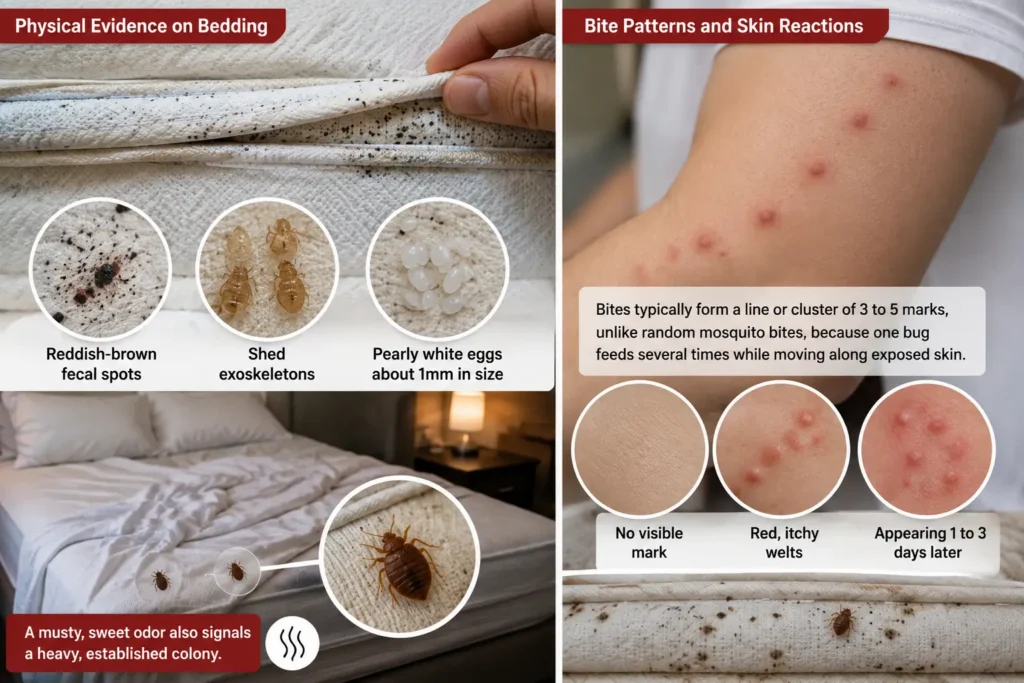
Look for reddish-brown fecal spots, shed exoskeletons, and pearly white eggs about 1mm in size along mattress seams, tags, and piping. A musty, sweet odor also signals a heavy, established colony.
Bite Patterns and Skin Reactions
Bites typically form a line or cluster of 3 to 5 marks, unlike random mosquito bites, because one bug feeds several times while moving along exposed skin. Reactions range from no visible mark to red, itchy welts appearing 1 to 3 days later.
Step-by-Step Checklist to Prevent Bed Bug Infestations
This bed bug prevention checklist works for homes, hotels, and offices in Dubai:
- Inspect hotel rooms first: Check mattress seams, headboards, and luggage racks before unpacking.
- Keep luggage elevated: Place suitcases on metal racks, never on the bed or carpet.
- Wash travel clothing in hot water: Use a cycle of at least 60°C to kill bugs and eggs on contact.
- Inspect secondhand furniture: Check every seam, joint, and drawer with a flashlight before purchase.
- Use protective mattress encasements: Zippered covers trap existing bugs and block new ones.
- Reduce clutter near beds: Fewer hiding spots mean faster detection.
- Vacuum weekly: Focus on mattress seams, baseboards, and upholstered edges.
- Schedule a professional inspection: Book a professional bed bugs pest control Dubai service at the first sign of bites or spotting.
Prevention Tips for Travelers and Renters
Travelers should seal worn clothing in a plastic bag during transit and wash it in hot water immediately after returning home. Apartment residents should seal gaps around electrical outlets and shared pipes, and alert building management immediately if a neighboring unit reports bed bugs.
How Allied Pest Control Treats Bed Bugs in Dubai
Allied Pest Control combines heat and chemical methods depending on infestation size, backed by follow-up inspection.
Heat Treatment Process
Technicians seal the treatment area and raise temperatures to 50°C to 60°C using industrial heaters monitored by multiple sensors. Sustained heat for at least 90 minutes penetrates mattress interiors and wall voids, killing bugs and eggs at every life stage without chemical residue.
Chemical Treatment for Recurring Infestations
Residual insecticides applied to cracks, baseboards, and bed frame joints provide ongoing protection for weeks after the initial visit. This method pairs with heat treatment for infestations that have spread beyond a single room.
Follow-Up Inspections
Every treatment includes a follow-up inspection within 14 days to confirm eggs have not re-hatched, since eggs laid in extremely tight voids can survive a single treatment pass. Same-day bed bug pest control Dubai appointments are available for confirmed infestations.
Conclusion
Bed bug infestations result from travel, secondhand furniture, shared walls, and slow early detection rather than poor hygiene. Understanding these causes helps residents and businesses in Dubai catch infestations before they spread to multiple rooms or units. Allied Pest Control provides inspection, heat treatment, and follow-up service to stop bed bug infestations at the source and confirm they do not return.
Frequently Asked Questions
What is the main reason for bed bugs?
Human travel is the main reason. Bed bugs cannot fly or jump, so they rely on hitchhiking in bags and furniture to spread.
How do I stop a bed bug infestation?
Wash bedding above 60°C, vacuum daily, seal cracks, and book professional heat or chemical treatment for eggs.
How to trick bed bugs out of hiding?
Place a heat source like a hot water bottle near hiding spots. Pest control uses CO2 traps for the same effect.
What smell do bedbugs hate?
Bugs avoid lavender, tea tree oil, and alcohol, but these scents only repel them and do not kill eggs.
What kills bed bugs permanently?
Heat above 50°C for 90+ minutes kills bed bugs and eggs at every stage, especially combined with insecticide.
What kills bedbugs 100%?
No single spray kills every bug, since eggs hide in deep cracks. Full-room heat treatment offers the most complete kill.