A thorough bed bug inspection in Dubai requires checking mattress seams, bed frames, headboards, and upholstered furniture for live insects, eggs, and dark fecal spots. Dubai’s high volume of travel, furnished rentals, and second-hand furniture trade increases exposure risk. Regular inspection catches infestations before they spread through a home or office.
Why You Should Inspect Beds and Furniture for Bed Bugs
Bed bugs reproduce fast. A single female lays 1 to 5 eggs daily and up to 500 in her lifetime. Early detection stops a small problem from becoming a full infestation that spreads to multiple rooms. Bed bugs enter Dubai homes through several common routes. Travelers bring them back in luggage after hotel stays.
Second-hand furniture, delivery boxes, and shared laundry facilities also introduce bed bugs into furnished apartments and villas. Dubai’s transient population and frequent moving between rental properties make a reliable bed bug treatment service in Dubai essential for residents.
Where Bed Bugs Hide in Beds and Furniture
Bed bugs avoid light and stay close to a host. They cluster in tight seams and cracks within 8 feet of a sleeping area, which is why a proper bed bug inspection focuses on these zones first.
Mattress Seams and Edges
Mattress seams offer bed bugs a dark, narrow hiding spot near their food source. Check piping, tags, and the edge binding where the fabric meets the mattress top.
Bed Frames and Headboards
Wooden and upholstered headboards contain screw holes, joints, and fabric folds that shelter bed bugs. Metal frames have hollow tubes and joint connections that also harbor them.
Bedside Tables and Drawers
Bed bugs hide inside drawer joints, under table edges, and behind items stored close to the bed. Nightstands within arm’s reach of the mattress are common hiding sites.
Sofas and Upholstered Furniture
Sofa seams, cushion zippers, and the underside of furniture attract bed bugs in living rooms and majlis areas. Reclining mechanisms and staple lines create extra hiding space.
Cracks, Joints, and Hidden Areas
Wall-mounted picture frames, baseboards, electrical outlets, and carpet edges near the bed can harbor bed bugs during heavy infestations. Check these areas when mattress and frame inspections show no results but bites continue.
How to Inspect a Bed for Bed Bugs
A complete bed bug inspection follows five clear steps. Work through each one in order to inspect a bed for bed bugs thoroughly.
Step 1: Remove the Bedding
Strip all sheets, pillowcases, and mattress protectors. Wash them immediately in hot water above 60°C to kill live bugs and eggs on contact.
Step 2: Check the Mattress
Run your fingers along every seam, then flip the mattress and repeat the check on the underside. Use a flashlight and a magnifying glass to spot eggs, which measure about 1mm and appear pearly white.
Step 3: Inspect the Bed Frame and Headboard
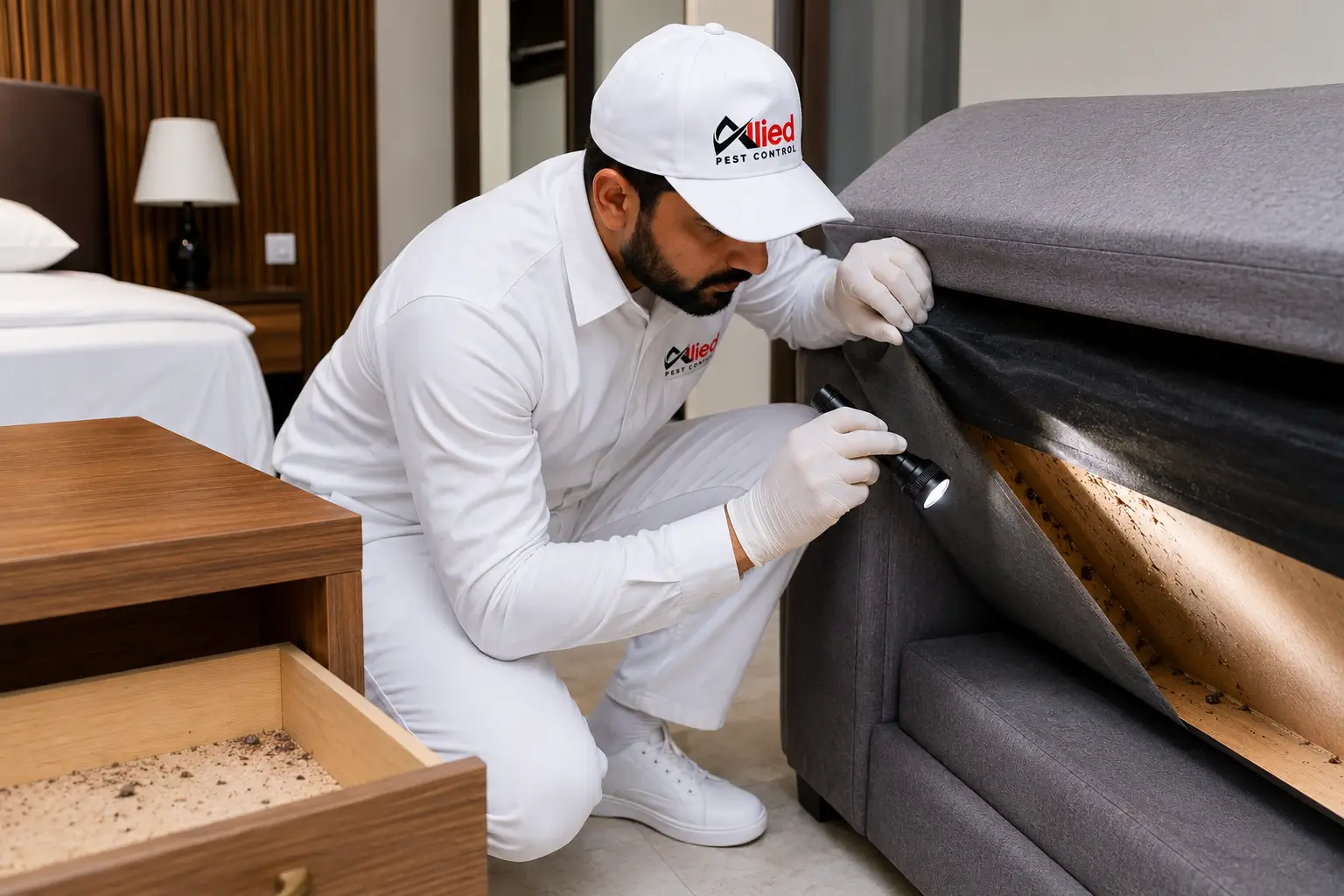
Unscrew or slide apart frame joints where possible. Check every crack, screw hole, and fabric fold on the headboard using a flashlight held at a low angle to reveal shadows cast by hiding bugs.
Step 4: Check Under and Around the Bed
Inspect the floor, carpet edges, and baseboards within 5 feet of the bed. Move the bed away from the wall and check the wall surface directly behind the headboard.
Step 5: Inspect Nearby Furniture
Check nightstands, benches, and any furniture touching the bed frame. Bed bugs travel along connected surfaces, so items touching the bed need the same scrutiny as the mattress itself.
How to Inspect Furniture for Bed Bugs
A bed bug inspection is not complete without checking sofas, chairs, and wooden furniture in every room.
Checking Sofas and Chairs
Remove cushions and check the zippers, piping, and underside fabric. Turn the sofa over and inspect the dust cover and wooden frame joints underneath.
Inspecting Wooden Furniture and Drawers
Pull drawers fully out and check the runners, corners, and underside of each drawer. Examine joints where wood panels connect, since bed bugs flatten to fit into gaps as thin as a credit card.
Checking Furniture Seams, Joints, and Gaps
Use a stiff card or old credit card to run along every seam and joint. This dislodges bed bugs and eggs that grip tightly to fabric and wood.
Inspecting Second-Hand Furniture Before Bringing It Home
Inspect second-hand furniture outdoors before bringing it inside. Check every seam, joint, and drawer using a flashlight, and avoid items with unexplained dark spotting or a sweet, musty odor.
Signs of Bed Bugs to Look For
Every bed bug inspection should check for these five confirmed signs.
Live Bed Bugs
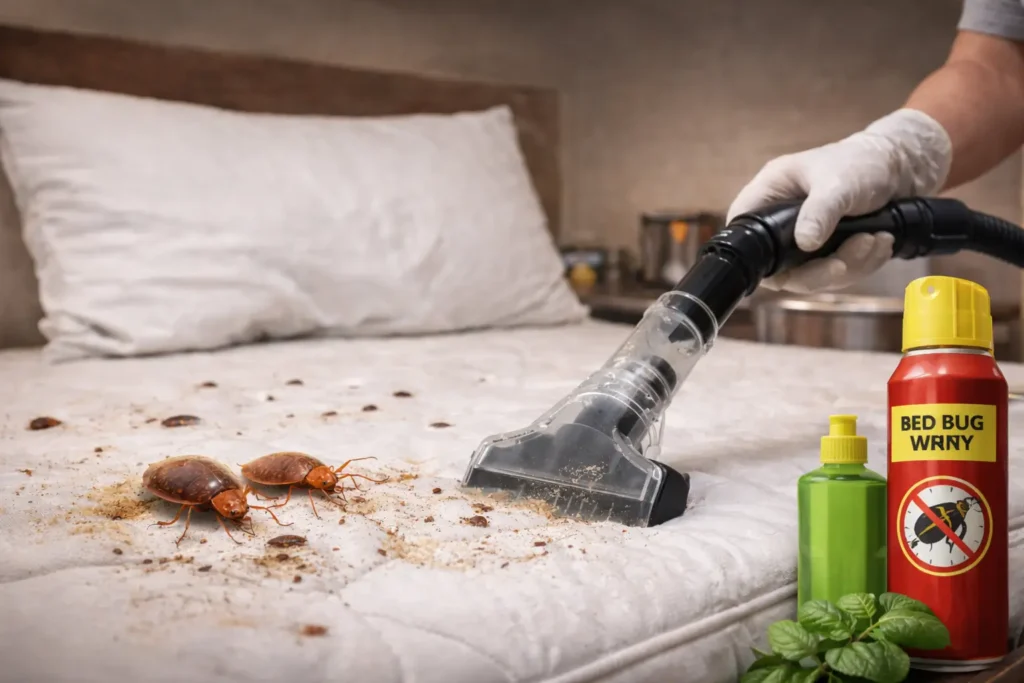
Adult bed bugs measure 4 to 5mm, have a reddish-brown flat oval body, and move quickly when exposed to light. Nymphs are smaller and translucent to pale yellow before feeding.
Bed Bug Eggs and Eggshells
Eggs are white, oval, and roughly 1mm long, often found in clusters of 10 to 50 in mattress seams and crevices. Eggshells look similar but appear empty and slightly more translucent.
Dark Fecal Spots
Bed bug feces appear as small dark or rust-colored spots on mattresses, sheets, and wooden furniture. These spots smear when wiped with a damp cloth, unlike mold or dirt stains.
Blood Stains on Bedding
Small reddish-brown blood stains on sheets result from bed bugs being crushed during sleep. These stains often appear in clusters near where a person’s body contacts the mattress.
Shed Skins
Bed bugs molt five times before reaching adulthood, leaving behind pale, hollow exoskeletons. Shed skins collect in the same hiding spots as live bugs and confirm an active or past infestation.
How to Inspect a Hotel Bed for Bed Bugs in Dubai
Hotel stays call for a fast bed bug inspection before you settle in or unpack any bags.
Check the Mattress Before Unpacking
Pull back all sheets and check the mattress seams and corners before placing any luggage in the room. Use your phone flashlight to inspect the piping and tag area closely.
Inspect the Headboard and Bed Frame
Check behind the headboard and along the frame joints, since hotel rooms with high guest turnover carry a higher infestation risk. Pay attention to the wall area directly behind the headboard.
Check Bedside Tables and Drawers
Open every drawer and inspect the corners and runners for live bugs or fecal spots. Bedside tables in hotels often go unchecked during routine housekeeping.
Keep Your Luggage Away From the Bed
Place luggage on a hard surface, such as a luggage rack or bathroom tile, away from the bed and upholstered furniture. This single habit reduces the risk of bringing bed bugs home significantly.
What to Do If You Find Bed Bugs
Isolate Infested Bedding and Furniture
Seal infested bedding, cushions, and clothing in plastic bags immediately. This prevents bed bugs from spreading to other rooms while you arrange treatment.
Avoid Moving Furniture to Other Rooms
Do not move mattresses, sofas, or drawers to other rooms after finding bed bugs. Moving items spreads the infestation and makes treatment more difficult and costly.
Clean and Vacuum Affected Areas
Vacuum mattress seams, carpet edges, and furniture joints thoroughly, then seal and dispose of the vacuum bag outside immediately. Steam cleaning at temperatures above 50°C kills bed bugs and eggs on contact.
When to Contact a Professional Pest Control Service
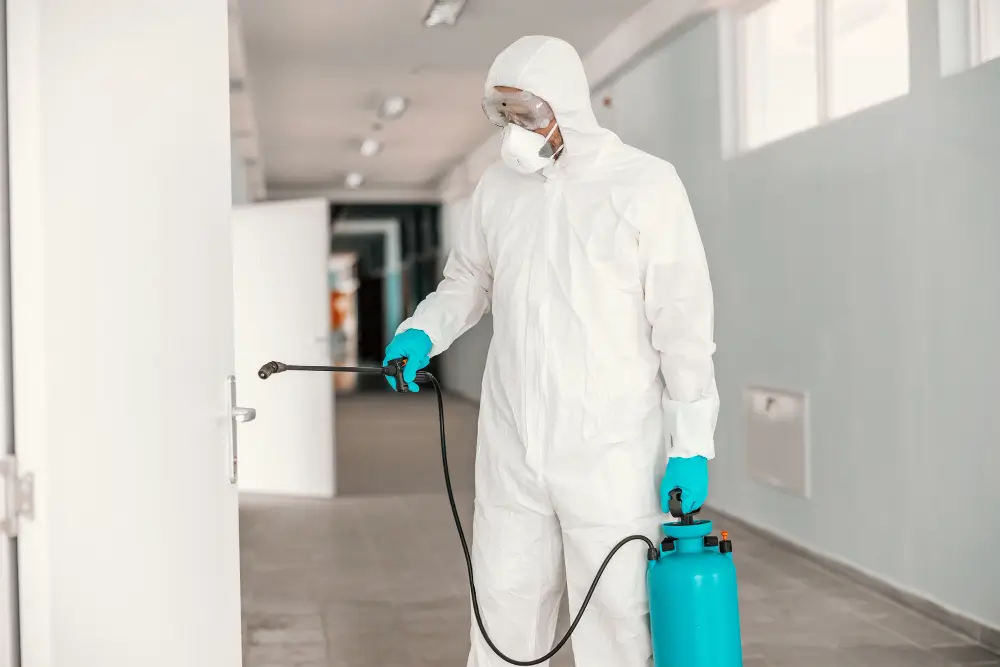
Contact a professional service if bed bugs appear in more than one room or if DIY treatment fails after two attempts. Allied Pest Control’s bed bug treatment service in Dubai uses heat treatment and targeted insecticide application to eliminate infestations at every life stage.
How to Prevent Bed Bugs in Beds and Furniture
Routine bed bug inspection habits stop infestations before they start.
Inspect Second-Hand Furniture
Check every second-hand item for seams, eggs, and stains before it enters your home. Learn more about the common causes of bed bug infestations to identify your specific risk factors.
Check Luggage After Traveling
Inspect luggage seams and pockets immediately after returning from any trip. Wash all travel clothing in hot water regardless of whether you spot bed bugs.
Keep Bedrooms and Furniture Clutter-Free
Reduce clutter around beds and furniture to limit hiding spots and simplify regular inspection. Fewer items on the floor mean faster, more thorough checks.
Inspect Beds and Furniture Regularly
Inspect beds and furniture at least once a month, and after every trip or furniture delivery. Consistent checks catch infestations while they remain small and easier to treat.
When to Get a Professional Bed Bug Inspection in Dubai
Book a professional inspection if you find any bed bug signs, experience unexplained bites, or move into a previously furnished property. Trained technicians use canine detection and moisture meters to locate infestations hidden deep in furniture and walls. For details on effective long-term solutions, read about the best way to eliminate bed bugs permanently.
Conclusion
A bed bug inspection in Dubai protects your home, health, and furniture investment. Checking mattress seams, bed frames, and upholstered furniture regularly catches infestations before they spread. Contact Allied Pest Control for a professional inspection and treatment plan if you spot any warning signs.
Frequently Asked Questions
How Can I Tell If My Bed Has Bed Bugs?
A bed bug inspection should check for live bugs, dark fecal spots, blood stains, and pearly white eggs along mattress seams and bed frame joints. A musty, sweet odor also signals a heavy infestation.
Where Do Bed Bugs Usually Hide in Furniture?
Bed bugs hide in seams, joints, drawer corners, and the underside of upholstered furniture. They stay within 8 feet of sleeping or seating areas to access their food source easily.
Can Bed Bugs Live Inside Wooden Furniture?
Yes, bed bugs live inside cracks, joints, and screw holes in wooden furniture. They flatten their bodies to fit into gaps as thin as a credit card.
Should I Throw Away Furniture With Bed Bugs?
Heavily infested furniture with damaged structure or deep cracks often needs disposal, since treatment cannot reach every hiding spot. Solid furniture usually responds well to professional heat treatment instead.
How Quickly Should I Treat a Bed Bug Infestation?
Treat a bed bug infestation within 24 to 48 hours of confirmation. Fast action prevents the population from doubling, since females lay up to 5 eggs daily.