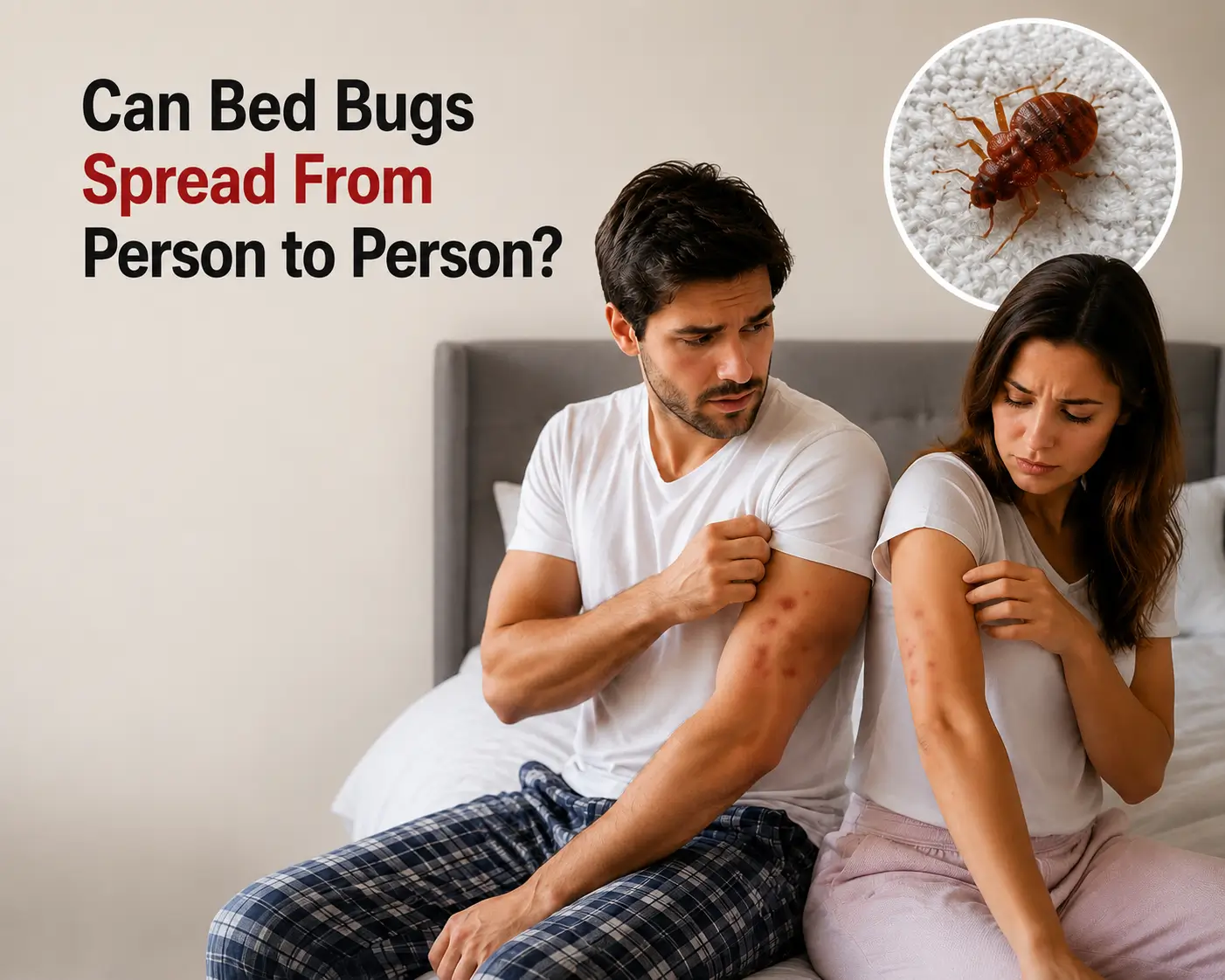
Bed bugs spread from person to person through direct contact, shared belongings, and infested furniture, not by living on skin. These pests hitchhike on clothing, bags, and bedding to reach new hosts. Understanding how bed bugs spread from person to person helps households in Dubai stop an infestation before it grows.
Quick Answer
Yes, bed bugs spread from person to person indirectly. They cling to clothes, luggage, and shared items during close contact, then move into new homes. They do not live on human bodies like lice, so transfer happens through belongings, not skin contact.
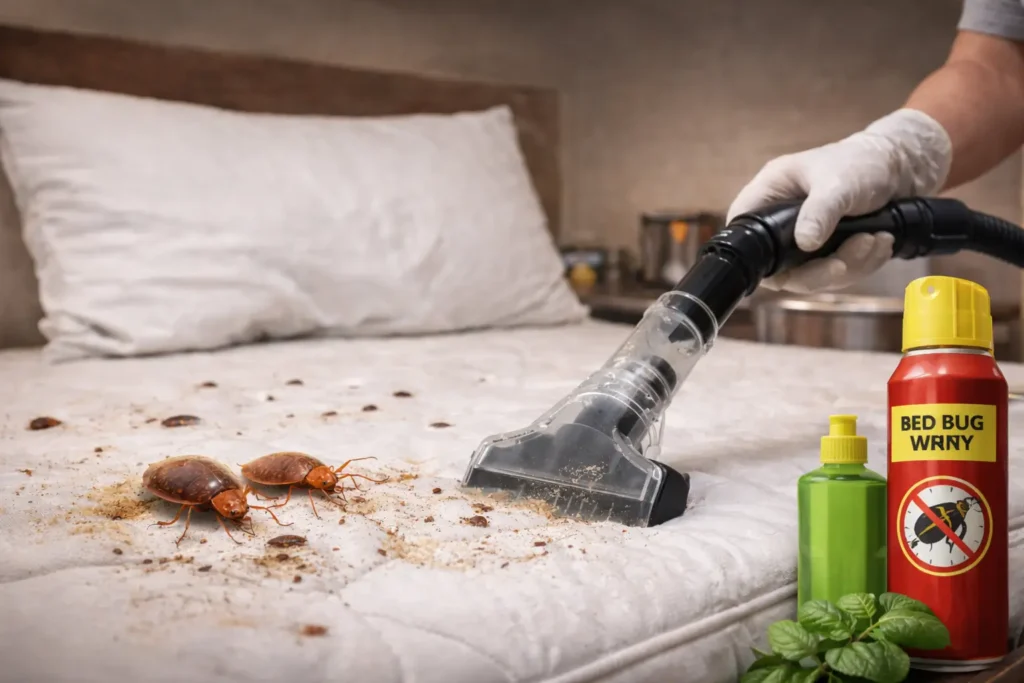
If you suspect an active infestation, professional bed bug treatment in Dubai identifies hiding spots and removes bed bugs at every life stage, including eggs.
How Do Bed Bugs Spread From Person to Person?
Bed bugs cannot fly or jump, so they rely on physical proximity to travel. When one person sits near an infested item, bed bugs crawl onto clothing, backpacks, or hair within minutes. This is the primary way bed bugs spread from person to person in schools, offices, and public transport.
Bed bugs move about 3 to 4 feet per minute, allowing them to relocate quickly between adjoining seats or shared furniture. A single mated female bed bug can produce 1 to 5 eggs daily and up to 500 eggs in her lifetime, turning one hitchhiking insect into a full infestation within weeks.
Common Ways Bed Bugs Travel Between People
Bed bugs use predictable pathways to move from one host’s environment to another. Recognizing these methods makes prevention far easier.
Shared beds and furniture: Sleeping in an infested bed or sitting on an infested couch exposes a person to bed bugs directly. The insects transfer onto clothing and skin contact points within the first hour.
Physical contact and hugging: Close, prolonged contact with someone carrying bed bugs on their clothes allows the insects to crawl across. This is uncommon but documented in households and shelters.
Borrowed clothing and bags: Bed bugs hide in seams, pockets, and linings. Borrowing a jacket or backpack from an infested home introduces bed bugs into a new space immediately.
Public transport and shared seating: Buses, taxis, and cinema seats can harbor bed bugs left behind by an infested passenger, exposing the next person who sits there.
Hotel stays and travel: Bed bugs travel through luggage picked up in infested hotel rooms, one of the common causes of bed bug infestations reported across Dubai homes.
Signs You Picked Up Bed Bugs From Someone Else
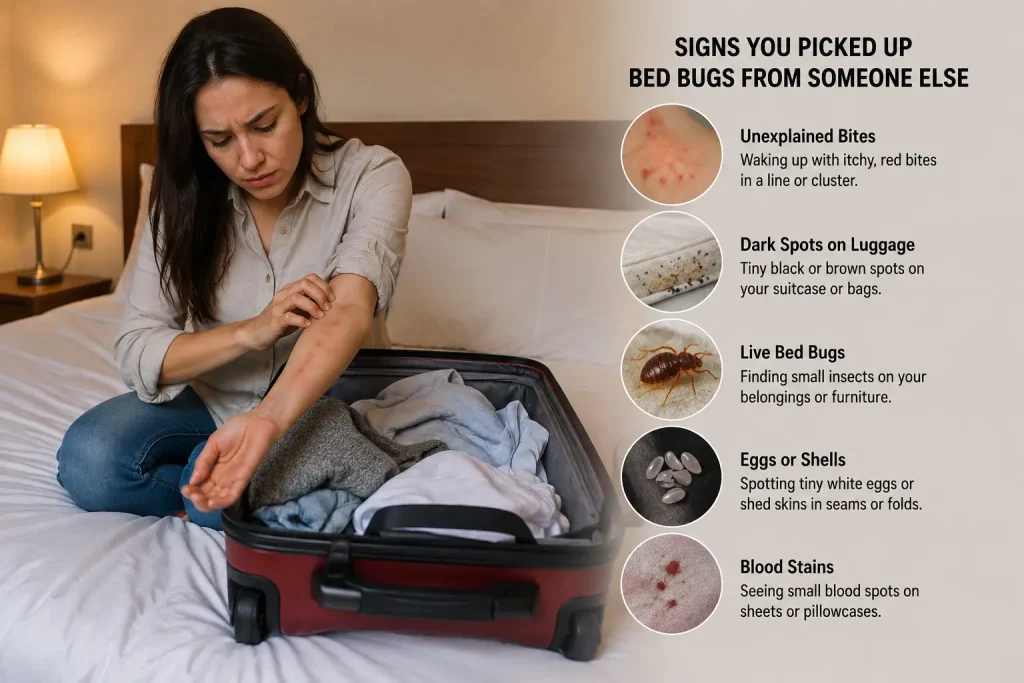
Bite patterns, live insects, and fecal spots confirm a recent transfer. Bed bug bites appear in clusters or straight lines, usually on arms, legs, and neck, and cause itching within 24 hours.
Rust-colored spots on sheets indicate crushed bed bugs or their waste. A sweet, musty odor near bedding signals a larger colony, since bed bugs release pheromones that concentrate as numbers grow.
Simple Steps to Prevent Bed Bugs From Spreading Person to Person
Follow this step-by-step process to reduce the risk of bed bugs spreading from person to person in your home or workplace.
- Inspect clothing and bags after visiting infested spaces, checking seams, zippers, and pockets under bright light.
- Wash fabrics at 60°C or higher immediately after exposure, since heat above 45°C kills bed bugs and their eggs within 30 minutes.
- Isolate suspect items in sealed plastic bags for 7 days before bringing them into living areas.
- Vacuum furniture and mattress seams weekly using a HEPA-filter vacuum to remove eggs and nymphs.
- Use encasements on mattresses and pillows to trap existing bed bugs and block new entry points.
- Avoid sharing bedding, towels, or clothing with anyone who has a confirmed infestation until treatment is complete.
- Call a licensed pest control provider for heat treatment or chemical application if bed bugs are confirmed.
Bed Bugs Spread From Person to Person: Prevention Checklist
Use this checklist for quick reference at home, school, or during travel:
- Inspect secondhand furniture before bringing it indoors
- Check hotel mattress seams and headboards on arrival
- Keep luggage off the bed and floor while traveling
- Dry clothes on high heat after visiting unfamiliar spaces
- Avoid borrowing clothing, bedding, or bags from infested homes
- Seal cracks in walls and furniture joints
- Schedule regular pest inspections in shared or rented properties
Tips to Stop Reinfestation After Treatment
Bed bugs can survive up to 20 months without feeding, so incomplete treatment allows them to return and spread again. Following professional guidance after treatment prevents a repeat cycle. Keep monitoring traps near bed legs for 30 days post-treatment to catch stragglers. Learn more about whether bed bugs can survive after treatment and what signs to watch for.
Professional Treatment Methods That Stop the Spread
Combine heat treatment with residual insecticide application for the most reliable results. This dual approach targets adults, nymphs, and eggs simultaneously. This full life cycle approach is the best way to eliminate bed bugs permanently, and it walks through each treatment stage in detail.
Conclusion
Bed bugs spread from person to person through belongings and close contact, not through skin-to-skin transmission. Regular inspection, proper laundering, and prompt professional treatment stop the cycle before it spreads to an entire household.
Acting on early signs, such as bite clusters or rust-colored spots, prevents small problems from becoming large infestations. Get in touch with our expert bed bug removal team in Dubai for a complete inspection and treatment plan.
Frequently Asked Questions
Can bed bugs live on your body and spread that way?
No. Bed bugs feed on blood but do not live on the human body like lice or fleas. They hide in fabric, furniture, and luggage instead of staying on skin.
How fast can bed bugs spread from one person to a whole household?
A single bed bug can establish an infestation within 6 to 8 weeks, since eggs hatch in 6 to 10 days and reach reproductive maturity within 5 weeks.
Do bed bugs spread through hugging or handshakes?
Rarely. Bed bugs need several minutes of contact with fabric to transfer, so brief contact like handshakes carries minimal risk.
Can bed bugs spread from a workplace to home?
Yes. Bed bugs travel on bags, coats, and clothing from infested offices or public seating, then establish new hiding spots at home.