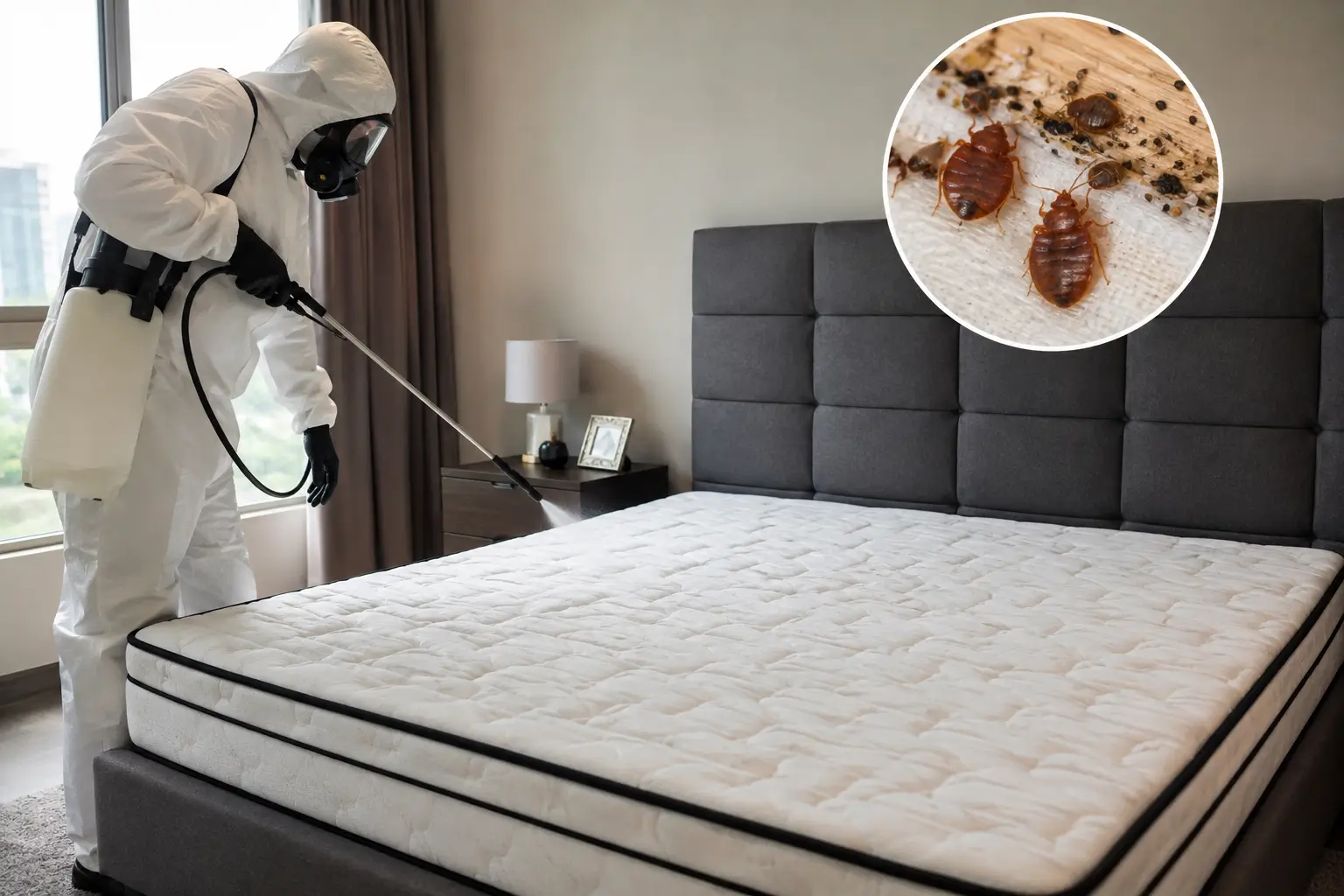
Bed bugs are small, blood-feeding insects that hide in mattresses, furniture, and cracks near sleeping areas. To eliminate bed bugs permanently, homeowners need a combination of heat treatment, targeted insecticides, thorough vacuuming, and repeated inspections. A single method rarely works alone, since bed bugs survive in eggs, cracks, and fabric folds that basic cleaning misses.
Quick Answer
The best way to eliminate bed bugs permanently combines professional heat treatment or targeted insecticide application with vacuuming, mattress encasements, and follow-up inspections over 2–3 weeks to kill newly hatched eggs.
What Are Bed Bugs and How Do You Know You Have Them?
Bed bugs are wingless insects that feed exclusively on blood, usually at night while people sleep. They reproduce fast: a single female lays 1 to 5 eggs daily and up to 500 eggs in her lifetime. Knowing the reasons for bed bugs and how to remove them helps homeowners target treatment correctly from the start.
What Do Bed Bugs Look Like?
Adult bed bugs measure 4 to 5 millimeters long, have a flat, oval, reddish-brown body, and turn darker red after feeding. Nymphs are smaller and translucent, making them harder to spot. Eggs are pearl-white, about 1 millimeter long, and stick to fabric and wood surfaces.
What Are the Common Signs of a Bed Bug Infestation?
Reddish-brown fecal spots on mattress seams signal an active infestation. Small blood stains on sheets, shed exoskeletons, and a musty odor from scent glands also indicate bed bugs. Bite marks in a line or cluster on exposed skin often appear within hours of an infestation.
Where Do Bed Bugs Usually Hide?
Bed bugs hide in mattress seams, box springs, bed frames, and headboards within 8 feet of the sleeping area. They also nest in electrical outlets, baseboards, carpet edges, and behind wall art. Their flat bodies let them squeeze into cracks as thin as a credit card.
What Is the Best Way to Eliminate Bed Bugs Permanently?
Eliminating bed bugs permanently requires a nine-step process that combines physical removal, heat, chemical treatment, and prevention. Skipping any step lets surviving eggs restart the infestation within 2 to 3 weeks.
1. Confirm the Infestation: Inspect mattress seams, box springs, and furniture joints with a flashlight before starting treatment. Confirming the species prevents wasted effort on the wrong pest control method.
2. Declutter and Prepare the Infested Area: Remove clutter from floors, closets, and under beds to eliminate hiding spots. Fewer hiding places mean bed bugs have nowhere to retreat during treatment.
3. Wash and Dry Bedding and Clothing on High Heat: Wash sheets, pillowcases, and clothing in water above 120°F (49°C), then dry on high heat for 30 minutes. Heat above 118°F kills bed bugs and eggs on contact.
4. Vacuum Bed Bugs and Their Hiding Places: Vacuum mattresses, carpets, baseboards, and furniture crevices using a crevice attachment. Seal the vacuum bag in plastic and dispose of it outside immediately after use.
5. Use Heat Treatment for Bed Bugs: Whole-room heat treatment raises room temperature to 118–135°F (48–57°C) for several hours, killing bed bugs at every life stage. This method reaches hidden nests that sprays cannot penetrate.
6. Use Appropriate Bed Bug Treatments or Insecticides: Apply EPA-registered insecticides containing pyrethroids, neonicotinoids, or desiccants like diatomaceous earth to cracks and seams. Rotate chemical classes to prevent bed bugs from developing resistance.
7. Use Mattress and Box Spring Encasements: Zippered, bite-proof encasements trap remaining bed bugs inside and block new ones from entering. Keep encasements on for at least 12 months, since bed bugs can survive without feeding that long.
8. Treat Cracks, Crevices, and Other Hiding Places: Apply residual insecticide dust into wall voids, outlet covers, and baseboard gaps. These hidden zones account for a large share of reinfestations after visible treatment.
9. Repeat Inspections and Treatments: Reinspect treated areas every 7 to 14 days for up to 6 weeks. Repeat treatment kills nymphs that hatch after the first application.
For a professional-grade solution, Allied Pest Control’s professional bed bug removal service combines heat treatment and targeted chemical application to eliminate infestations at every life stage.
Can You Get Rid of Bed Bugs Without Professional Help?
DIY treatment works only for very small, early-stage infestations limited to one item or piece of furniture. Larger or spreading infestations need professional-grade equipment and chemicals that consumer products cannot match.
When DIY Bed Bug Treatment May Work
DIY methods succeed when the infestation is confined to a single mattress or chair and caught within days of the first bite. Combining heat washing, vacuuming, and encasements handles isolated cases effectively.
When You Should Hire a Professional Bed Bug Exterminator
Hire a professional bed bug exterminator when bites appear in multiple rooms, DIY treatment fails after 2 attempts, or the infestation involves furniture with dense upholstery. A licensed exterminator uses commercial heat equipment and EPA-registered chemicals unavailable to consumers, giving faster and more permanent results than store-bought sprays.
What Is the Most Effective Professional Bed Bug Treatment?
Professional treatment combines heat, chemicals, and monitoring for the highest permanent success rate, often exceeding 95% when protocols are followed correctly.
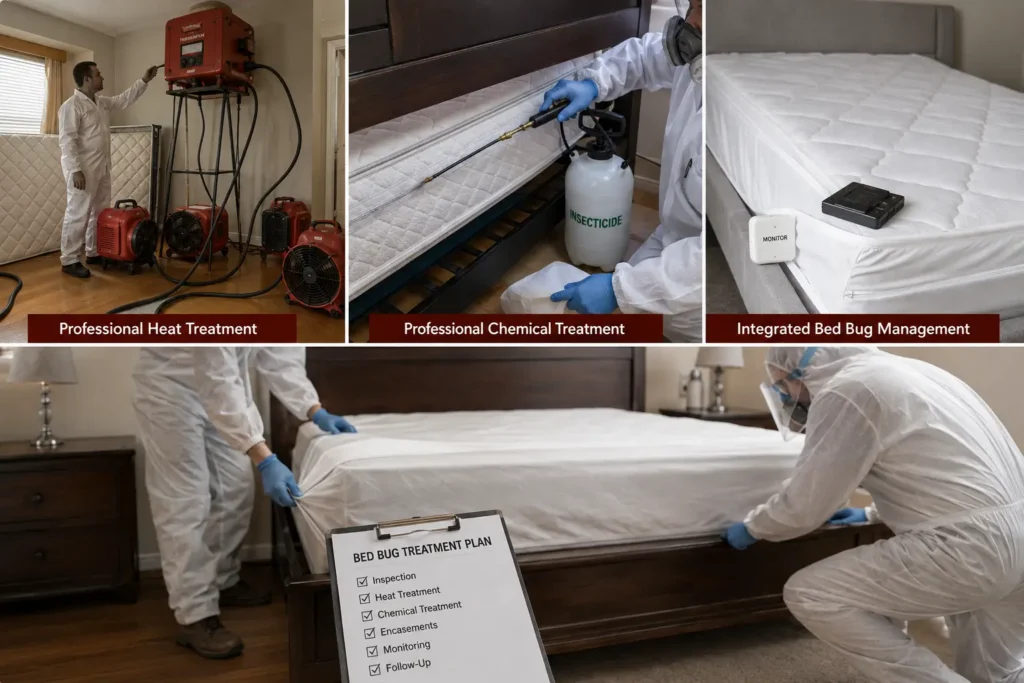
Professional Heat Treatment
Technicians raise room temperature to 135–140°F for 2 to 4 hours using industrial heaters, killing bed bugs and eggs in one visit. Heat penetrates furniture, walls, and fabric without leaving chemical residue.
Professional Chemical Treatment
Exterminators apply a combination of contact insecticides, growth regulators, and residual dust to target both adults and eggs. This layered approach breaks the reproduction cycle within one to two treatment cycles.
Integrated Bed Bug Management
Integrated management combines heat, chemical treatment, encasements, and scheduled follow-ups into one plan. This method addresses the causes of bed bug infestations directly, reducing the chance of recurrence.
What Methods Do NOT Permanently Eliminate Bed Bugs?
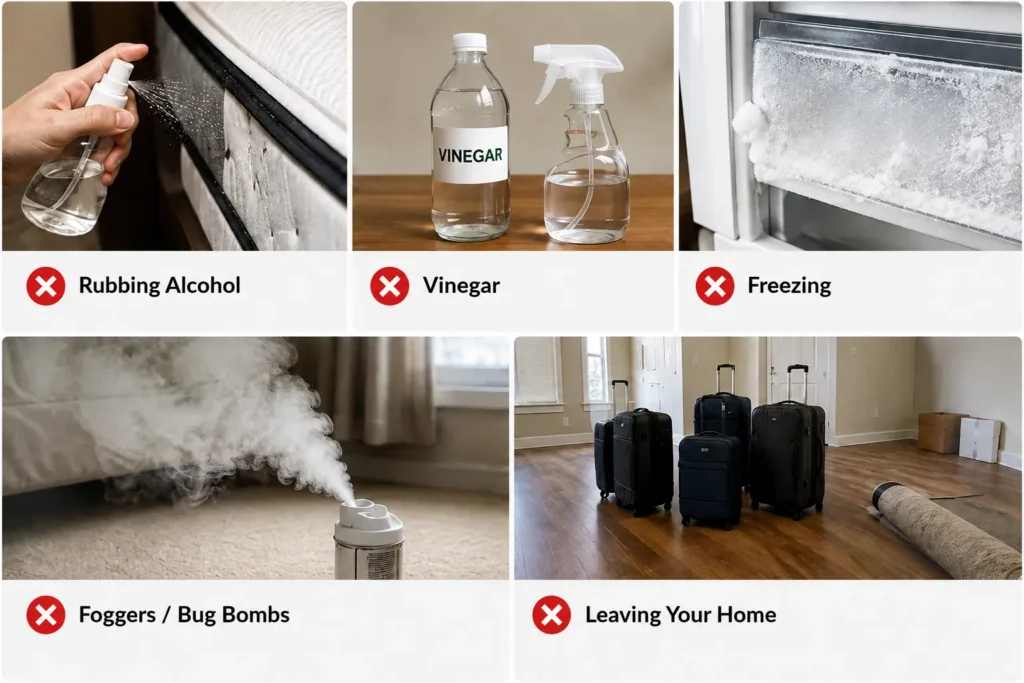
Several popular home remedies fail to eliminate bed bugs permanently because they don’t reach eggs hidden in cracks and seams.
Can Spraying Rubbing Alcohol Kill Bed Bugs?
Rubbing alcohol kills bed bugs only on direct contact and evaporates before reaching hidden eggs. It’s also flammable and poses a fire risk when sprayed near electronics or open flames.
Do Home Remedies Like Vinegar Kill Bed Bugs?
Vinegar kills bed bugs on contact through its acidity but has no residual effect and leaves eggs untouched. Infestations treated with vinegar alone return within 2 to 3 weeks.
Does Freezing Kill Bed Bugs?
Freezing kills bed bugs only at temperatures below 0°F (-18°C) sustained for 4 days or longer. Household freezers rarely reach or maintain this temperature consistently.
Do Foggers and Bug Bombs Kill Bed Bugs?
Foggers release insecticide into open air but fail to penetrate cracks, seams, and wall voids where bed bugs hide. Studies show foggers kill fewer than 50% of bed bugs in a treated room.
Can You Kill Bed Bugs by Leaving Your Home?
Bed bugs survive up to 20 months without feeding, so leaving a home empty does not eliminate them. Starvation tactics fail unless combined with active treatment.
How Long Does It Take to Permanently Get Rid of Bed Bugs?
Full elimination typically takes 2 to 4 weeks with professional treatment and 6 to 8 weeks with DIY methods. Multiple treatment cycles are required because eggs hatch 6 to 10 days after being laid.
Factors That Affect Treatment Time
Infestation size, clutter level, and building type (apartment vs. house) all affect how long treatment takes. Multi-unit buildings often need coordinated treatment across neighboring units to prevent bed bugs from migrating back.
How Do You Know the Bed Bugs Are Gone?
No new bites, fecal spots, or live bugs for 3 consecutive weeks after the final treatment confirms elimination. Interceptor traps placed under bed legs provide physical proof of zero activity.
How to Prevent Bed Bugs From Coming Back
Prevention reduces reinfestation risk by more than 80% when applied consistently after treatment.
- Inspect Secondhand Furniture Before Bringing It Home: Check seams, joints, and undersides of used furniture with a flashlight before bringing it indoors.
- Be Careful When Traveling: Inspect hotel mattresses and headboards before unpacking, and keep luggage on raised racks away from beds.
- Inspect Luggage and Clothing After Trips: Wash and dry all travel clothing on high heat immediately after returning home.
- Reduce Clutter Around Sleeping Areas: Keep floors and nightstands clear to eliminate hiding spots and simplify inspections.
- Monitor for Early Signs of Bed Bugs: Check mattress seams monthly for fecal spots or shed skins, especially after guests stay overnight.
- Respond Quickly to Any New Infestation: Treat new signs within 48 hours to prevent bed bugs from spreading beyond one room.
For additional technical background on treatment methods, see this overview of bed bug control techniques.
Common Mistakes People Make When Eliminate Bed Bugs
- Treating Only the Mattress: Bed bugs spread to furniture, baseboards, and walls, so mattress-only treatment leaves the infestation active.
- Moving Infested Furniture to Another Room: Relocating furniture spreads bed bugs to new areas instead of containing them.
- Using Too Much Pesticide: Excess pesticide use doesn’t improve results and creates health risks; label-directed dosing is more effective.
- Relying on One Treatment: A single treatment misses eggs that hatch afterward; follow-up treatment within 2 weeks is essential.
- Ignoring Eggs and Hidden Areas: Eggs survive most surface-level treatments, so cracks and seams need direct insecticide or heat exposure.
- Failing to Follow Up After Treatment: Skipping reinspection allows surviving bed bugs to rebuild the population within a month.
For symptom relief while treatment is underway, see this guide on bed bug bite treatment and allergic reactions.
Conclusion
The best way to eliminate bed bugs permanently combines heat treatment, targeted insecticides, thorough vacuuming, encasements, and repeated inspections over several weeks. DIY methods work for small, early infestations, but professional treatment offers faster, more reliable results for larger problems. Allied Pest Control provides pest control services in Dubai, helping homeowners handle infestations that DIY methods can’t fully resolve.
Frequently Asked Questions About Eliminating Bed Bugs
What is the most effective way to get rid of bed bugs permanently?
Combining professional heat treatment with targeted insecticide application and follow-up inspections eliminates bed bugs permanently in most cases.
Can bed bugs be eliminated?
Yes, bed bugs can be eliminated with proper treatment protocols, encasements, and 2 to 3 follow-up inspections over several weeks.
How long does it take to permanently get rid of bed bugs?
Permanent elimination takes 2 to 4 weeks with professional treatment and up to 8 weeks with DIY methods alone.
What kills bed bugs instantly?
Heat above 118°F (48°C) and direct-contact insecticide sprays kill bed bugs instantly on contact, though eggs may require repeat treatment.
Should I hire a professional for bed bugs?
Hire a professional exterminator for infestations spanning multiple rooms or lasting more than 2 weeks despite DIY efforts.