Not every cockroach crawling through a Dubai kitchen, bathroom, or drain is the same species. Some live and reproduce indoors, while others usually originate from sewers, gardens, drains, and other outdoor environments.
Knowing the types of cockroaches in Dubai matters because their preferred hiding places, behaviour, and treatment requirements differ. Our cockroach pest control experts recommend identifying the species before treatment because effective management methods vary between cockroaches.
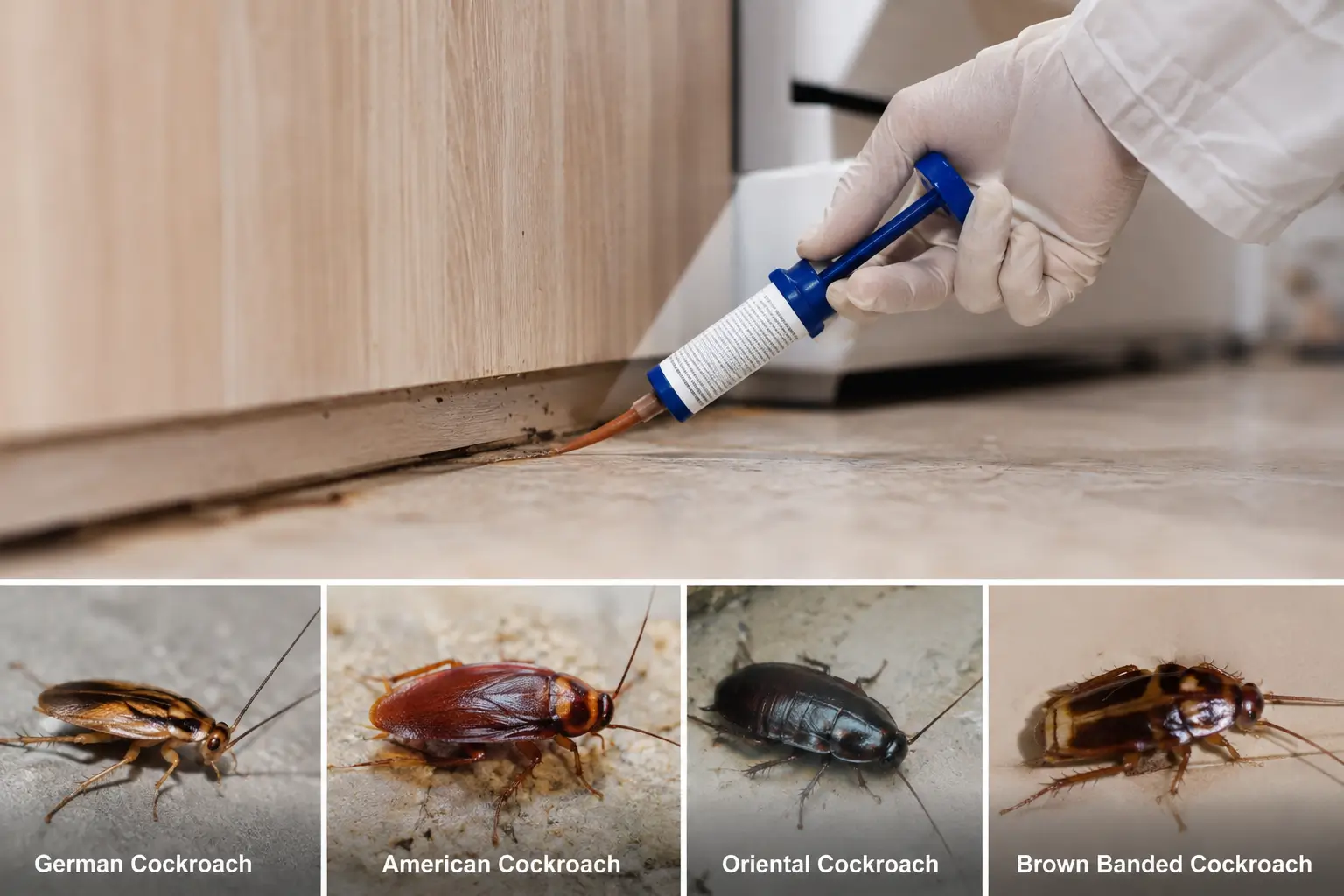
Here are four important cockroach species you may encounter and how each should be controlled.
1. German Cockroach
Scientific name: Blattella germanica
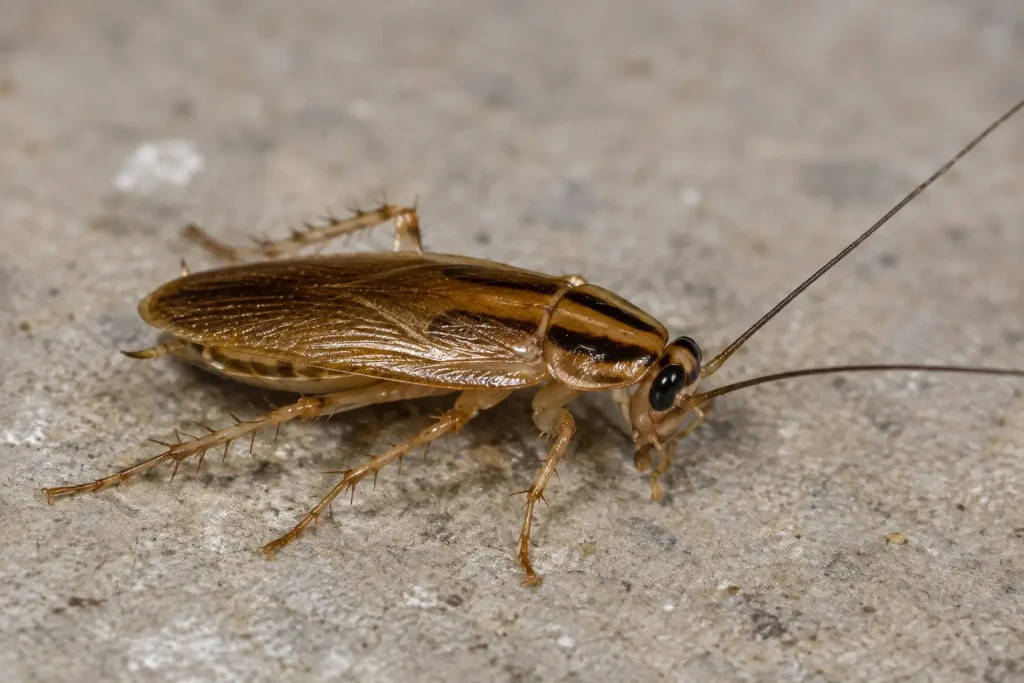
German cockroaches are the most common types of cockroaches in Dubai. They are small, light brown or tan insects, usually about 12–17 mm long. Two dark parallel stripes behind the head are their easiest identifying feature.
Unlike cockroach species that primarily live outdoors, German cockroaches can live and reproduce entirely indoors.
Where Do German Cockroaches Hide?
Dubai environment is very suitable for them, as they look for warm areas with easy access to food and moisture, including:
- Kitchen cabinets
- Under sinks
- Behind refrigerators
- Dishwashers and appliances
- Cabinet hinges
- Cracks near food-preparation areas
Restaurants, apartments, hotels, and commercial kitchens can be particularly vulnerable when food, moisture, and harbourage remain available.
Best Treatment for German Cockroaches
Gel baiting is generally preferable to simply spraying visible German cockroaches.
Small bait placements near active harbourages and foraging routes allow cockroaches to encounter the treatment where they actually live. Sticky traps can help determine where activity is concentrated.
Allied Pest Control experts say that baits provide better control than sprays and warn that pesticides alone will not solve cockroach problems. Sanitation, moisture reduction, monitoring, and exclusion should accompany treatment.
2. American Cockroach
Scientific name: Periplaneta americana
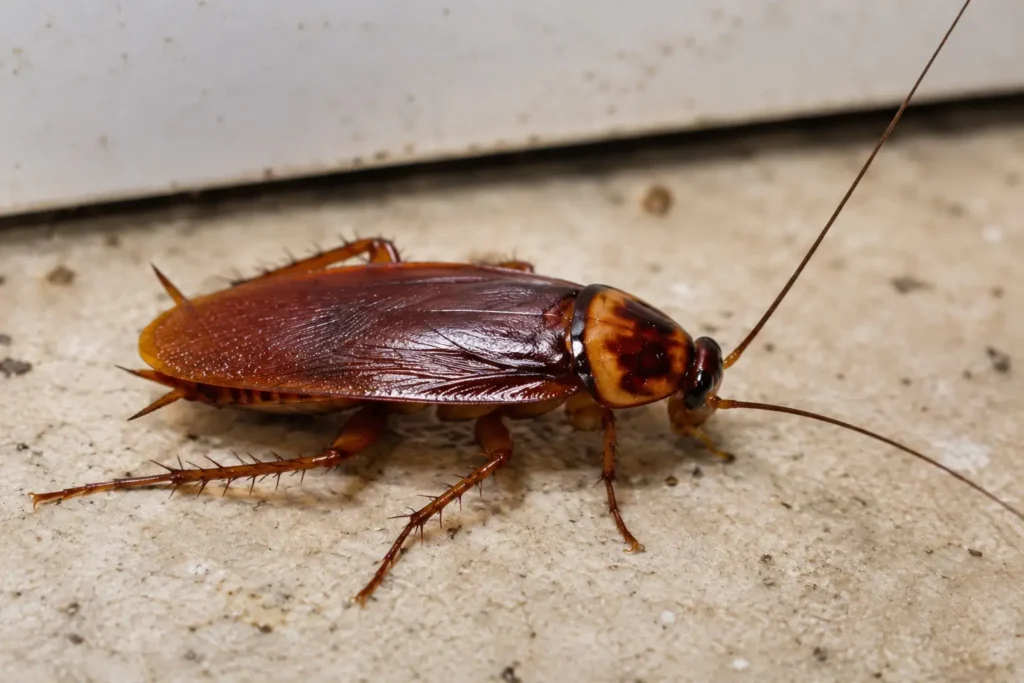
If you see a much larger reddish-brown cockroach, you may be dealing with an American cockroach.
Adults can reach approximately 1.5 inches (38 mm) in length. They have a distinctive pale or yellowish border around the shield-like area behind the head.
American cockroaches behave differently from German cockroaches. They can live outdoors and invade buildings rather than depending entirely on indoor environments.
Where Do American Cockroaches Hide?
They favour dark, warm, damp locations and may be associated with:
- Sewers
- Floor drains
- Basements
- Utility rooms
- Garbage areas
- Service spaces
- Moist outdoor areas
Finding a large cockroach in a bathroom does not necessarily mean it has established a breeding population inside your kitchen. It may have entered through drainage or another building access route.
Best Treatment for American Cockroaches
Treatment should focus on where the cockroaches are entering and harbouring, not only the room where one was spotted.
Inspect drains, plumbing routes, utility areas, waste zones, cracks, door gaps, and other potential access points. Remove moisture sources and seal suitable openings.
Baits and other appropriately labelled treatments may be used depending on the infestation, but exclusion is particularly important when cockroaches are entering from outdoors or building infrastructure.
3. Oriental Cockroach
Scientific name: Blatta orientalis
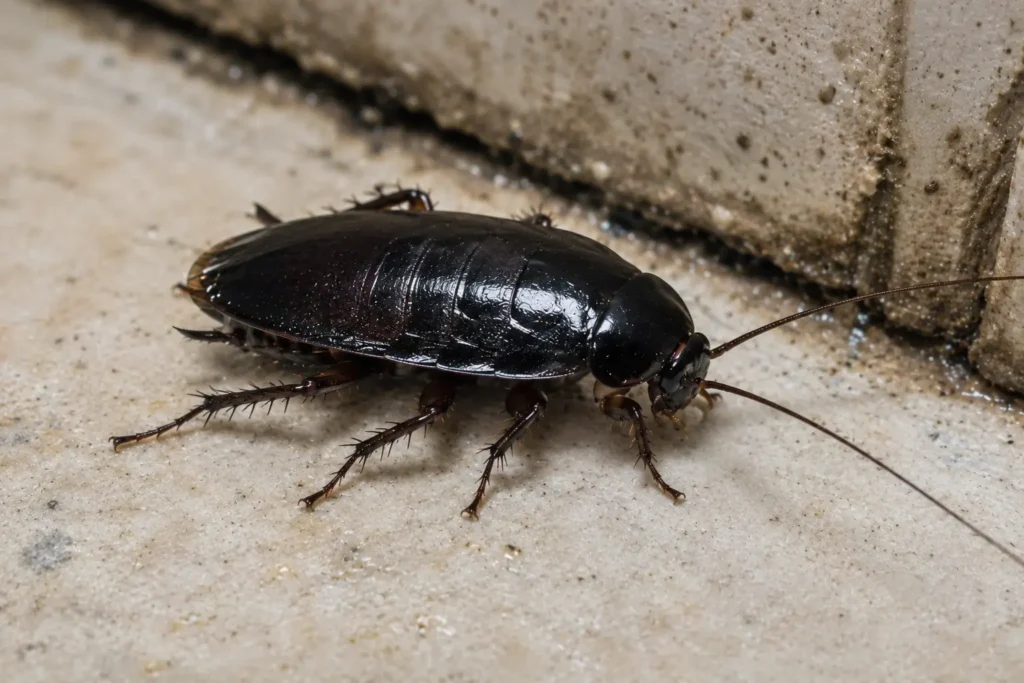
Oriental cockroaches look quite different from German cockroaches. They are generally dark brown to nearly black and have a shiny appearance.
Adults are approximately 1 inch (25 mm) long. They are often associated with cool, damp environments rather than warm kitchen cabinets.
Where Do Oriental Cockroaches Hide?
Typical harbourages include:
- Drains
- Sewers
- Damp utility spaces
- Ground-level areas
- Water-meter boxes
- Moist outdoor locations
- Areas containing decaying organic material
Moisture is an important clue. If dark cockroaches repeatedly appear around drains or damp service areas, simply applying gel around kitchen cabinets may fail to address the source.
Best Treatment for Oriental Cockroaches
Start with moisture and entry-point management.
Repair plumbing leaks, reduce standing water, inspect drainage areas, seal appropriate structural openings, and remove decaying organic debris around potential harbourages.
Sticky traps can help identify travel routes before targeted treatment is applied.
This is why accurate identification matters: an Oriental cockroach associated with a damp drain requires a different inspection strategy from German cockroaches breeding behind a refrigerator.
4. Brown-Banded Cockroach
Scientific name: Supella longipalpa
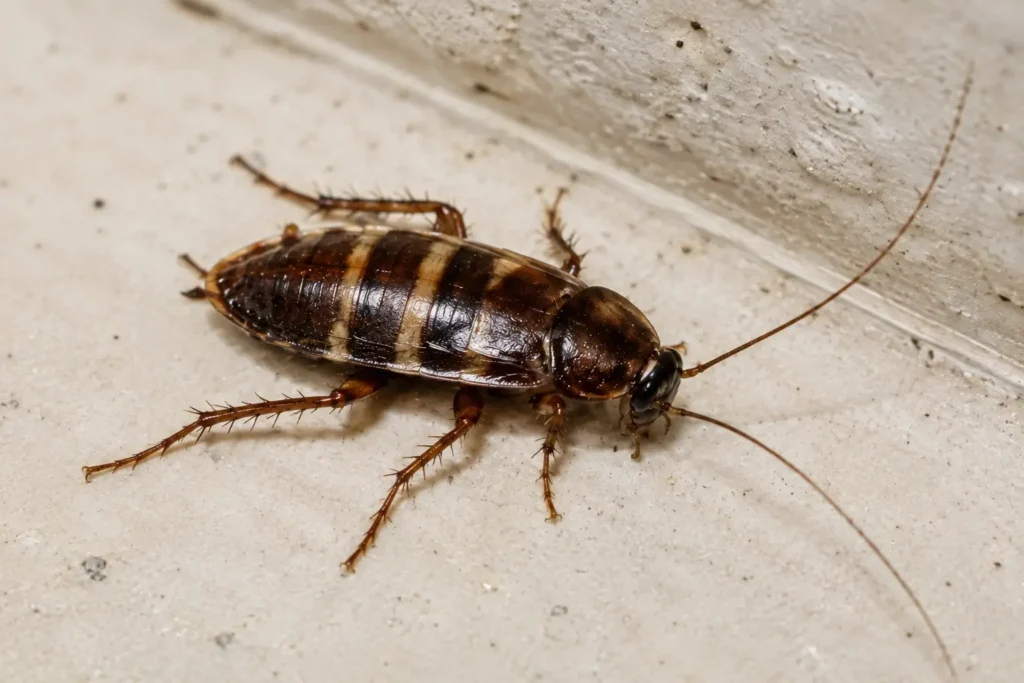
Brown-banded cockroaches are small and can sometimes be confused with German cockroaches.
Adults are approximately ½ inch (12–13 mm) long. Their name comes from the lighter bands visible across the wings or body.
One important difference is their preferred environment.
German cockroaches favour moisture-rich kitchens and bathrooms, while brown-banded cockroaches tolerate warmer and drier locations and may be found throughout other rooms.
Where Do Brown-Banded Cockroaches Hide?
Check less obvious locations such as:
- Upper cabinets
- Furniture
- Shelves
- Closets
- Behind wall decorations
- Around electronic equipment
- Warm, dry rooms
Our pest control team informs that brown-banded cockroaches tend to occur in warmer, drier areas than German cockroaches.
Best Treatment for Brown-Banded Cockroaches
Treatment needs to extend beyond kitchens and bathrooms.
Sticky traps can identify active rooms and harbourages. Appropriate baits should then be placed close to activity rather than concentrating all treatment at floor level or around plumbing.
Cleaning, clutter reduction, crack sealing, and targeted treatment should work together.
How to Identify Different Types of Cockroaches in Dubai
A quick comparison can help narrow down the species:
| Cockroach | Appearance | Common Hiding Area | Treatment Priority |
| German | Small, tan, 2 dark stripes | Kitchens, appliances, cabinets | Gel bait + sanitation |
| American | Large, reddish-brown | Drains, sewers, utility areas | Entry control + targeted treatment |
| Oriental | Dark brown/black, shiny | Damp areas, drains | Moisture control + exclusion |
| Brown-banded | Small with light bands | Warm, dry, higher areas | Wider monitoring + baiting |
Don’t identify a cockroach by location alone. Colour, size, markings, life stage, and where repeated activity occurs should all be considered.
Sticky traps placed near likely harbourages are useful for capturing specimens for identification.
Why Cockroach Species Change the Treatment
Using the same spray for every infestation is one of the biggest mistakes in cockroach control.
German and brown-banded cockroaches can reproduce indoors. American and Oriental cockroaches may instead invade from outdoor or infrastructure-related harbourages.
That changes the treatment objective.
For German cockroaches, you may need to locate an indoor breeding population. With large drain-associated cockroaches, finding and reducing entry routes may be equally important.
This is why professional cockroach pest control in Dubai should start with inspection and identification rather than immediately spraying the property.
Which Cockroach Treatment Works Best?
There isn’t one treatment that is best for every species.
UC IPM recommends an Integrated Pest Management (IPM) approach. This combines identification, sanitation, removal of food and water, exclusion, monitoring, and targeted pesticide use where necessary.
For Dubai properties, think of treatment this way:
German cockroach → locate indoor colony → targeted baiting
American cockroach → inspect drains/external routes → exclusion + treatment
Oriental cockroach → identify damp source → moisture control + treatment
Brown-banded cockroach → inspect warm, dry rooms → wider monitoring + bait placement
If cockroaches continue appearing after DIY treatment, professional cockroach treatment in Dubai can identify the species and source before selecting an appropriate control method.
FAQs About types of Cockroaches in Dubai
What is the most common cockroach found in kitchens?
German cockroaches are strongly associated with indoor kitchens and food-preparation environments. Their small size allows them to hide around appliances and narrow cabinet gaps.
What are the large cockroaches in Dubai bathrooms?
Large reddish-brown cockroaches may be American cockroaches, particularly when activity occurs around drains or damp service areas. Identification should be confirmed before treatment.
Which cockroach is hardest to eliminate?
German cockroaches can be particularly challenging because they reproduce indoors and hide in small cracks close to food and moisture. Successful control requires thorough treatment of harbourages rather than killing visible insects alone.
Should different cockroach species receive different treatments?
Yes. UC IPM specifically advises identifying the species because effective management options vary.