You protect wood against termites by removing moisture, eliminating wood-to-soil contact, using treated or resistant wood, and inspecting structures regularly. Termites cause billions of dollars in property damage worldwide every year, and wooden furniture, doors, and frames in Dubai homes face constant risk from heat and humidity.
This guide from Allied Pest Control combines physical barriers, chemical treatment, and routine inspection into one prevention plan.
Quick Answer
Protect wood against termites by keeping it dry, away from soil, and treated with borate or chemical barriers. Seal cracks, fix leaks, use termite-resistant wood, and schedule professional inspections every 6 to 12 months.
How to Protect Wood Against Termites?
Protecting wood against termites requires prevention, treatment, and monitoring. Termites need moisture, wood, and shelter, so removing any one factor lowers infestation risk. The steps below form a complete wood termite protection plan for Dubai homes.
Keep Wood Away From Soil
Maintain an 18-inch gap between wooden structures and the ground. Concrete footings and metal barriers block subterranean termite access.
Keep Wooden Areas Dry
Ventilate crawl spaces and basements to keep humidity below 60%. Dehumidifiers and exhaust fans reduce moisture buildup around wood.
Fix Water and Plumbing Leaks
Repair dripping faucets, broken pipes, and roof leaks within 48 hours. Standing water near wooden beams attracts termite colonies within weeks.
Use Treated Wood
Pressure-treated wood resists termites because borate chemicals penetrate its fibers. Treated lumber lasts 20 to 30 years longer than untreated wood in termite-prone areas.
Apply Protective Wood Coatings
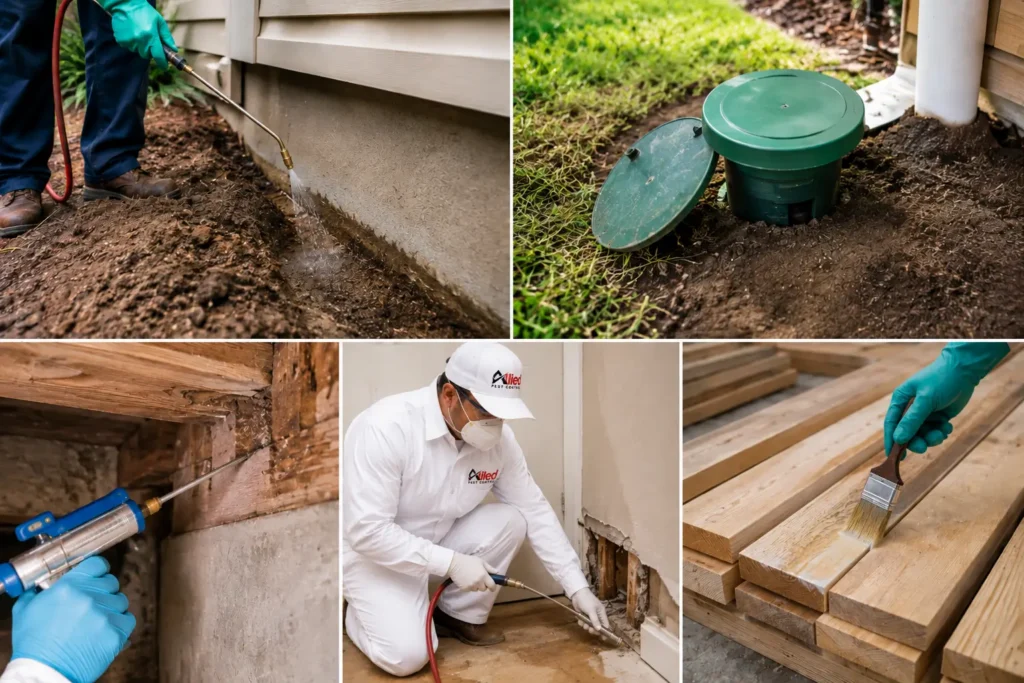
Borate-based preservatives soak into timber and kill termites on contact. Reapply coatings every 3 to 5 years, including on cut ends.
Keep Wooden Furniture Clean and Dry
Wipe furniture weekly with a dry cloth and avoid placing damp items on wood. Keep furniture away from windows and walls prone to condensation.
Remove Wood and Cardboard Debris
Clear scrap wood, old furniture, and cardboard from basements and yards. Store firewood at least 20 feet from the house on raised racks.
Maintain Proper Drainage
Install gutters and sloped landscaping to direct water away from the foundation. Proper drainage reduces the soil moisture that attracts subterranean termites.
Inspect Wooden Structures Regularly
Check beams, frames, and furniture every 3 to 6 months for hollow sounds or tunnels. Early detection cuts repair costs by up to 80%.
What Are the Signs of Termite Damage in Wood?
Termite damage stays hidden until infestations become severe, so recognizing the signs of termites in your home early prevents costly repairs.
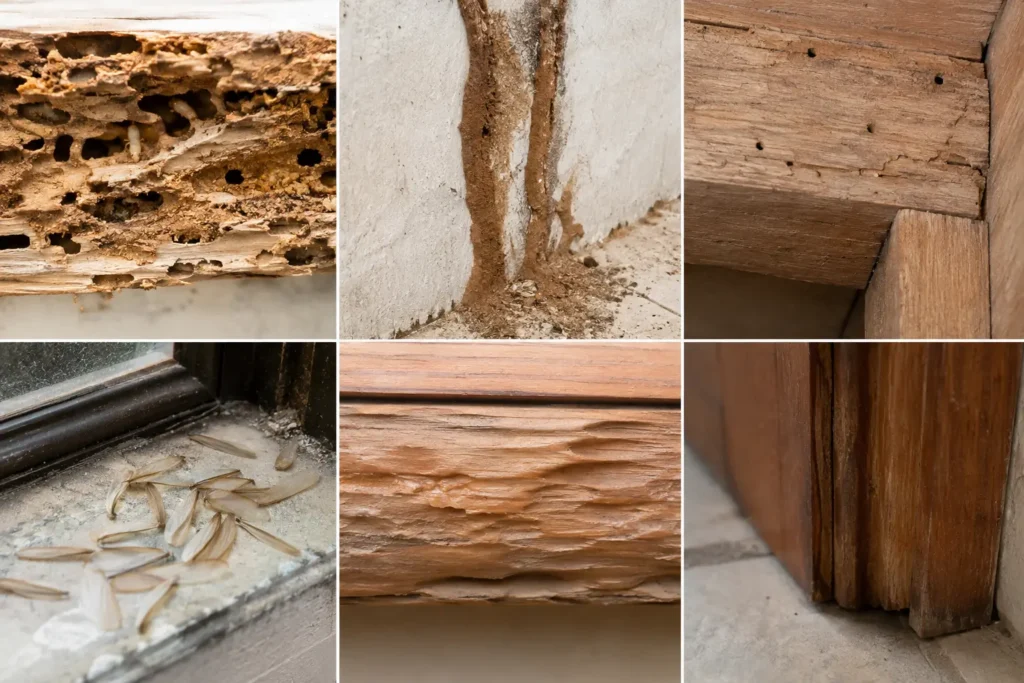
Hollow or Damaged Wood
Termites eat wood from the inside out. Tapping affected wood produces a hollow sound instead of a solid thud.
Mud Tubes on Wooden Surfaces
Subterranean termites build pencil-width mud tubes between soil and wood. These tubes appear on foundations and support beams.
Small Holes and Cracks
Termites create small exit holes as colonies mature, often surrounded by pinholes or cracks.
Discarded Termite Wings
Swarming termites shed wings after finding a new nesting site. Piles of wings near windows or doors signal active infestation.
Swollen or Warped Wood
Moisture from termite activity causes wood to swell or buckle. Sticking doors and window frames often indicate hidden damage.
Difficult-to-Open Doors and Windows
Termite tunnels weaken wood fibers and shift frames out of alignment, causing doors and windows to jam.
Which Types of Wood Are More Resistant to Termites?
Teak, cedar, redwood, and cypress contain natural oils that repel termites, while ipe and mahogany resist attack due to dense grain. No wood species is fully termite-proof, so even resistant wood needs chemical termite treatment to fully protect wood against termites in humid climates like Dubai.
Can Paint or Varnish Protect Wood From Termites?
Paint and varnish reduce termite access by sealing wood surfaces, but they do not kill termites or stop determined colonies. Termites bypass painted surfaces through cracks and untreated edges. To truly protect wood against termites, combine paint or varnish with borate treatment.
How to Protect Wooden Furniture From Termites?
Wooden furniture needs targeted care since it sits against damp walls and floors.
Protect Wardrobes and Cabinets
Apply anti-termite polish every 12 months and check back panels during cleaning.
Protect Wooden Beds and Tables
Place furniture legs on raised pads to limit ground contact. Inspect joints for tunnels twice a year.
Check Furniture Undersides and Back Panels
Termites attack hidden surfaces first. Pull furniture from walls every 6 months for a full check.
Keep Furniture Away From Damp Areas
Avoid placing wood near bathrooms, kitchens, or AC drip points, since humidity accelerates termite activity.
How to Protect Wooden Doors and Frames From Termites?
Seal wooden doors and frames with termite-resistant varnish or borate solution before installation. Fill gaps between frames and walls with termite-proof sealant. Inspect frames every 6 months and treat affected sections immediately with localized termiticide to protect wood against termites before damage spreads.
How Does Moisture Increase the Risk of Termites?
Moisture softens wood fibers, making them easier for termites to digest, and supports the fungal decay termites prefer. Homes with humidity above 60% face significantly higher termite risk, which makes Dubai’s climate a factor demanding constant moisture control if you want to protect wood against termites long-term.
Why Is Termite Protection Important in Dubai?
Dubai’s climate combines high humidity, irrigation-heavy landscaping, and imported wooden furniture, creating ideal termite conditions. Villas with gardens and basements face elevated risk from soil moisture. Learning how to protect wood against termites prevents damage that can cost thousands of dirhams in repairs and furniture replacement.
What Should You Do If You Find Termites in Wood?
Finding termites requires immediate action to limit damage. Follow these steps to protect wood against termites once an infestation is confirmed.
Inspect the Affected Area
Check nearby walls, floors, and furniture for mud tubes, hollow wood, or live termites.
Identify and Fix Moisture Problems
Locate and repair the leak or humidity source, since termites return if conditions stay unchanged.
Avoid Covering the Damage
Painting over damaged wood hides the problem without solving it, letting infestations spread further.
Get a Professional Termite Inspection
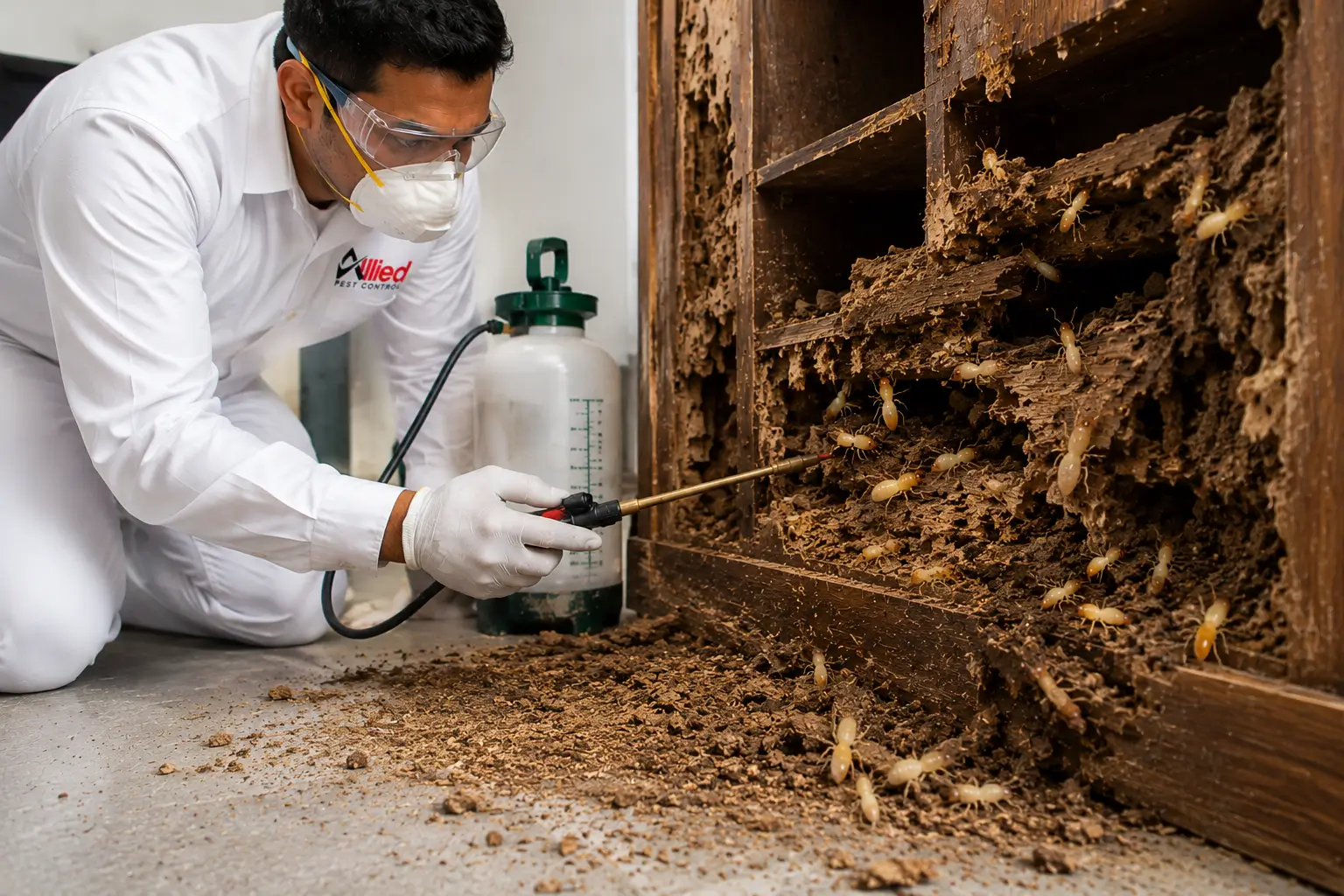
Licensed technicians use moisture meters and thermal imaging to find hidden colonies that visual checks miss. Allied Pest Control’s inspectors in Dubai use this equipment to locate infestations before they spread to structural wood.
Treat the Infestation
Apply liquid termiticide, bait systems, or wood injections based on severity for reliable colony elimination.
Monitor the Property After Treatment
Schedule follow-up checks at 30, 60, and 90 days to confirm the colony is gone.
What Are the Best Termite Treatment Methods?
Effective treatment combines several techniques based on infestation type, and choosing the right one helps protect wood against termites for years, not just months.
Liquid Termite Treatment
Technicians apply termiticide to soil around foundations, creating a barrier that lasts 5 to 10 years.
Termite Baiting Systems
Bait stations attract foraging termites, which carry poison back to the colony, eliminating it within 3 to 6 months.
Wood Treatment
Direct termiticide injection kills termites inside infested beams, frames, and furniture.
Localized Termite Treatment
Spot treatments target isolated infestations without treating the whole property.
Preventive Termite Treatment
Pre-construction soil and borate treatment protect new structures before termites appear, costing far less than post-infestation repairs.
Should You Use DIY Termite Treatment?
DIY sprays and store-bought baits manage minor surface issues but rarely eliminate full colonies, since nests extend underground and into wall cavities. Professional termite control services in Dubai, such as those offered by Allied Pest Control, use licensed chemicals and colony-elimination techniques that protect wood against termites more reliably than DIY methods.
How Often Should You Inspect Your Property for Termites?
Inspect wooden structures every 6 to 12 months, with more frequent checks in humid areas or in homes with a history of termites. New homes need an inspection within the first year, while older properties with gardens require checks every 6 months. Regular inspection is the single most reliable way to protect wood against termites before damage becomes structural.
Termite Prevention Checklist for Dubai Homes
Use this checklist to protect wood against termites throughout your property:
- Maintain an 18-inch gap between wood and soil
- Fix leaks and plumbing issues within 48 hours
- Apply borate treatment every 3 to 5 years
- Store firewood away from the house on raised racks
- Clean and dry wooden furniture weekly
- Ensure proper drainage around the foundation
- Inspect wooden structures every 6 to 12 months
- Schedule a professional termite inspection annually
- Use termite-resistant wood for construction and repairs
Final Thoughts on Protecting Wood Against Termites in Dubai
Protecting wood against termites requires moisture control, physical barriers, and routine inspection. Dubai’s climate makes prevention essential for villas, furniture, and structural timber. Combining treated wood, protective coatings, and professional termite control keeps properties safe from costly damage over the long term.
Allied Pest Control offers termite inspections and treatment plans built for Dubai’s climate, helping property owners protect wood before damage starts.
Frequently Asked Questions About Protecting Wood From Termites
What is the best way to protect wood from termites?
The best way combines borate treatment, moisture control, and physical barriers between wood and soil, backed by inspections every 6 to 12 months.
Does paint prevent termites?
Paint seals wood surfaces but does not kill termites or guarantee full protection, since termites enter through cracks and untreated edges.
Does varnish protect wood from termites?
Varnish makes wood less attractive to termites by resisting moisture, but it does not eliminate risk without added borate treatment.
Can termites damage wooden furniture?
Termites severely damage wardrobes, beds, tables, and cabinets, often entering through hidden undersides and back panels.
Can termites attack wood inside walls?
Termites attack structural framing and hidden beams inside walls, and damage often stays undetected until doors or windows warp.
How often should wood be checked for termites?
Check wood every 6 to 12 months, with more frequent inspections in humid areas or homes with a prior infestation.