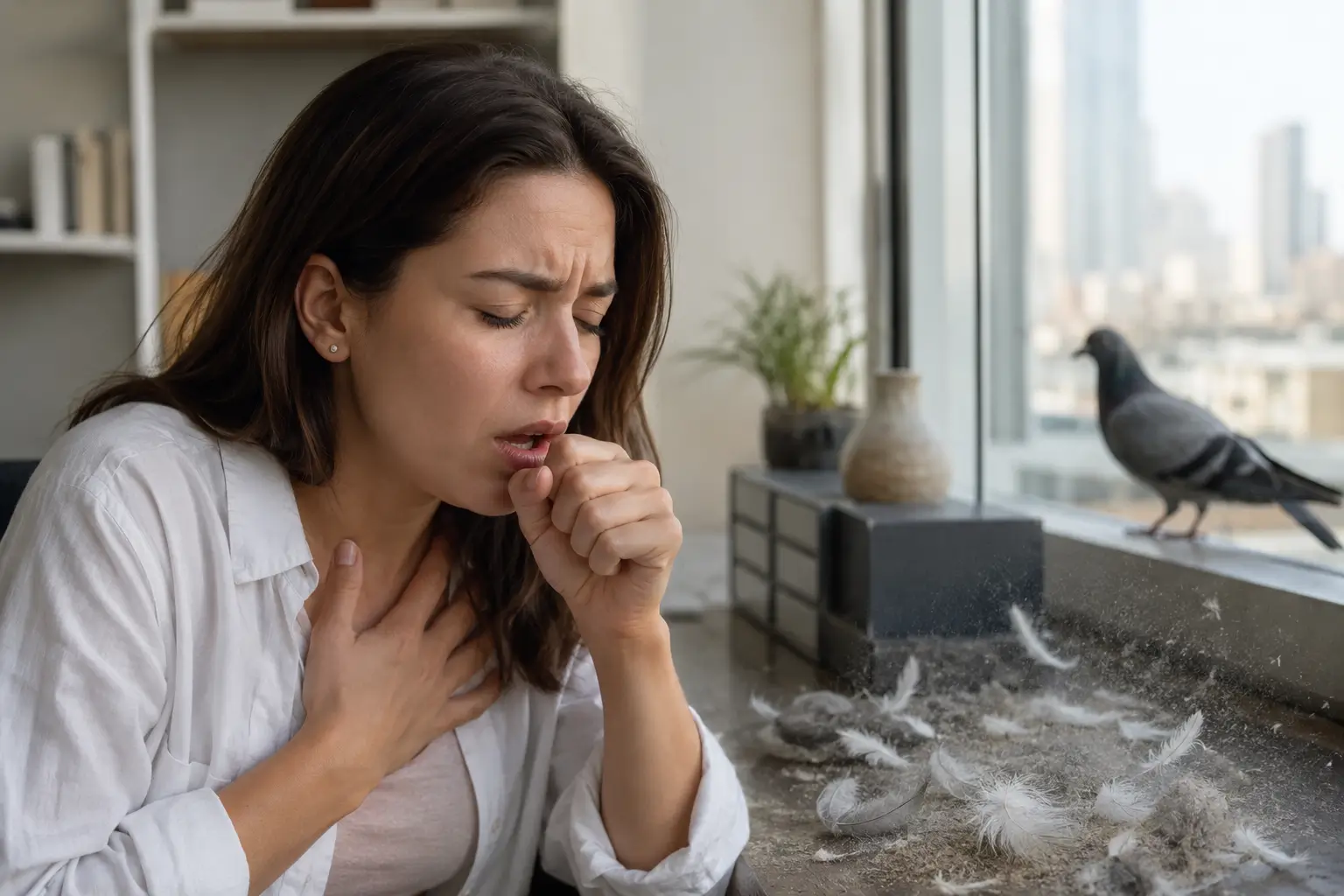
Bird dander symptoms include sneezing, itchy eyes, coughing, and breathing difficulty caused by tiny protein particles shed from bird feathers and skin. In Dubai’s closed, air-conditioned buildings, these particles circulate indoors and trigger allergic and respiratory reactions in residents, especially those with asthma or existing allergies.
Quick Answer
Bird dander causes sneezing, nasal congestion, itchy eyes, coughing, wheezing, skin rashes, and in severe cases, asthma attacks or hypersensitivity pneumonitis. Dubai’s high AC usage and dense apartment living increase indoor exposure and worsen symptoms year-round.
What Is Bird Dander?
Bird dander consists of microscopic flakes of dead skin that birds shed continuously, similar to human dandruff. These particles carry proteins that trigger immune responses in sensitive individuals. A single bird sheds thousands of dander particles daily, and each particle stays airborne for hours.
Bird Dander vs Bird Feathers
Bird dander and bird feathers are different allergen sources. Dander comes from skin cells, while feather dust comes from the protective powder coating on feathers. Both substances trigger allergic reactions, but dander particles are smaller and penetrate deeper into the lungs.
How Bird Dander Becomes Airborne
Birds release dander through preening, flapping, and molting. Air conditioning systems pull these particles into vents and redistribute them throughout a property. Dander also settles on furniture, curtains, and carpets, where it stays reactive for months.
Why Bird Dander Can Cause Health Problems
Allergic Reactions
Bird dander proteins bind to antibodies in the immune system, triggering histamine release. This process causes sneezing, itching, and swelling within minutes of exposure. Roughly 20-30% of people with existing allergies react to bird dander specifically.
Respiratory Irritation
Dander particles measure 2.5 to 10 microns in size, small enough to bypass nasal filters and reach the lower lungs. This direct entry irritates airway linings and triggers inflammation, coughing, and mucus production.
Long-Term Exposure Risks
Repeated dander exposure over months or years causes chronic sensitization. The immune system becomes increasingly reactive, and symptoms that started mild can progress to persistent asthma or hypersensitivity pneumonitis, a serious inflammatory lung condition.
Who Is Most at Risk?
Children, elderly residents, and people with asthma or existing allergies face the highest risk. Bird owners, pigeon feeders, and residents near balconies with nesting birds also experience higher exposure levels than the general population.
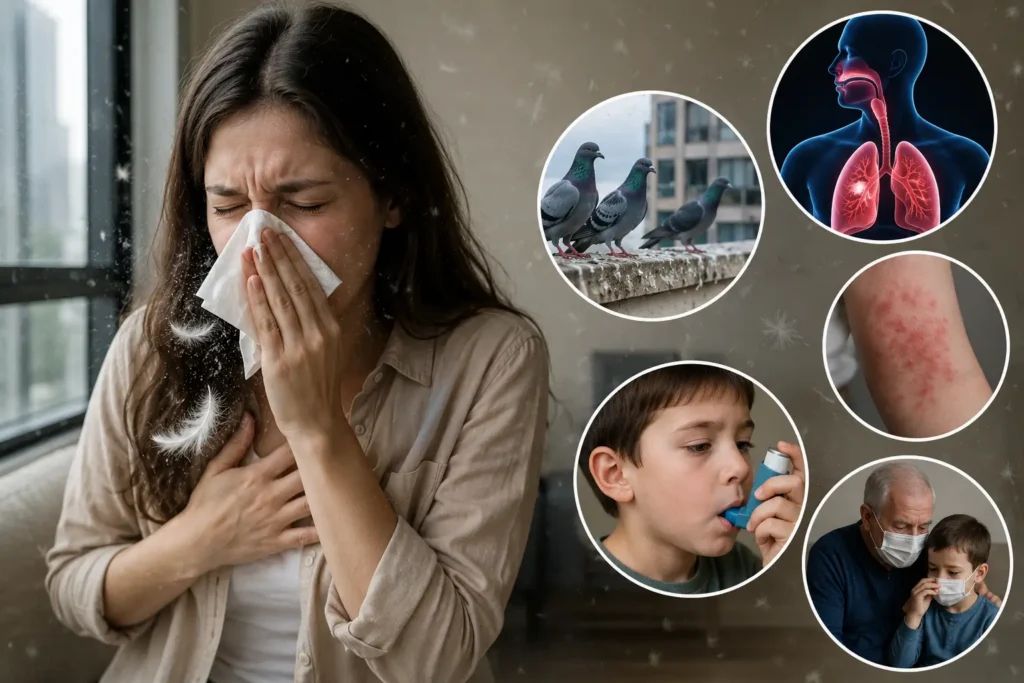
Common Symptoms of Bird Dander Related Health Problems
Sneezing and Runny Nose
Bird dander triggers rapid histamine release in nasal passages, causing repeated sneezing and clear nasal discharge. Symptoms typically appear within 15 to 30 minutes of exposure.
Nasal Congestion
Inflamed nasal tissue swells and blocks airflow, making breathing through the nose difficult. This congestion often worsens at night in bedrooms where dander has accumulated in bedding and carpets.
Itchy or Watery Eyes
Dander particles that contact the eyes trigger allergic conjunctivitis, causing redness, itching, and excess tear production. Rubbing the eyes worsens irritation and increases infection risk.
Persistent Cough
A dry, recurring cough develops when dander irritates the throat and upper airway. This cough often persists for weeks after exposure stops if dander remains in the home environment.
Wheezing
Wheezing produces a whistling sound during breathing and signals narrowed airways. This symptom indicates the lower respiratory tract has reacted to inhaled dander proteins.
Shortness of Breath
Airway inflammation reduces oxygen intake, causing breathlessness during normal activity. This symptom requires prompt attention, particularly in people with pre-existing lung conditions.
Chest Tightness
Chest tightness feels like pressure or constriction across the ribcage. It results from bronchial muscle spasms triggered by allergic inflammation in the airways.
Skin Rashes and Itching
Direct skin contact with dander causes red, itchy patches known as contact dermatitis. Bird owners who handle birds daily face the highest risk of this symptom.
Sinus Problems
Chronic dander exposure inflames sinus cavities, leading to facial pain, pressure, and recurring sinus infections. Symptoms often mimic a persistent cold that never fully resolves.
Fatigue Due to Ongoing Allergies
The immune system consumes significant energy fighting constant allergen exposure. This process leaves affected individuals feeling tired, sluggish, and unable to concentrate throughout the day.

Severe Symptoms That Require Medical Attention
Asthma Attacks
Bird dander triggers acute asthma attacks in sensitized individuals, causing severe wheezing, coughing, and airway constriction. Emergency treatment is necessary if symptoms don’t improve with a rescue inhaler.
Difficulty Breathing
Sudden, severe breathlessness signals a medical emergency. This symptom demands immediate hospital care, especially if accompanied by bluish lips or confusion.
Allergic Reactions That Worsen Quickly
Rapid swelling of the face, throat, or tongue after bird exposure indicates a severe allergic response. This reaction requires emergency medical treatment without delay.
Signs of Hypersensitivity Pneumonitis
Hypersensitivity pneumonitis, also called “bird fancier’s lung,” causes fever, chills, dry cough, and progressive breathlessness after repeated dander exposure. This condition develops in long-term bird owners and can cause permanent lung scarring if untreated.
Why Bird Dander Is a Concern in Dubai
High Indoor Air Conditioner Usage
Dubai residents run air conditioning up to 10 months per year due to extreme heat. Central AC systems trap and recirculate bird dander through ductwork, spreading allergens across every room instead of releasing them outdoors.
Apartment Living and Limited Ventilation
Most Dubai residents live in high-rise apartments with sealed windows and limited natural airflow. This closed environment prevents allergens from dispersing and concentrates dander indoors over time.
Pet Birds in Homes
Pet birds, including parrots, budgies, and lovebirds, are common household pets across Dubai. Daily preening and molting from these birds release dander directly into living spaces.
Birds Around Buildings and Balconies
Pigeons and other wild birds frequently nest on balconies, window ledges, and building exteriors in Dubai. Bird droppings and feathers near these nesting sites introduce dander and pathogens into nearby living areas.
Dust and Allergens Combining Indoors
Dubai’s desert climate produces high ambient dust levels that mix with bird dander indoors. This combination worsens indoor air quality Dubai residents already struggle with, amplifying allergic and respiratory symptoms.
How Bird Dander Health Problems Are Diagnosed
Medical History
Doctors review symptom patterns, exposure history, and bird contact frequency to identify likely triggers. This step usually forms the first part of any allergy consultation.
Allergy Testing
Skin prick tests introduce small amounts of bird allergen extract under the skin to check for a reaction. Results appear within 15 to 20 minutes and confirm sensitivity levels.
Blood Tests
IgE antibody blood tests measure immune response to specific bird proteins. This test suits patients who cannot undergo skin testing due to severe eczema or medication use.
Lung Function Tests
Spirometry measures airflow and lung capacity to detect asthma or restrictive lung patterns linked to hypersensitivity pneumonitis. Doctors use this test to track disease progression over time.
Treatment Options for Bird Dander Allergies
Antihistamines
Antihistamines block histamine receptors and reduce sneezing, itching, and nasal discharge within one hour of taking a dose. Common options include cetirizine and loratadine.
Nasal Sprays
Corticosteroid nasal sprays reduce nasal inflammation and congestion with daily use over 1-2 weeks. These sprays target chronic symptoms more effectively than oral antihistamines alone.
Asthma Medications
Inhaled bronchodilators open constricted airways within minutes during an asthma flare-up. Long-term controller medications reduce airway inflammation and prevent future attacks.
Allergy Immunotherapy
Immunotherapy involves regular allergen injections that gradually desensitize the immune system over 3-5 years. This treatment offers long-term relief for patients with severe, persistent bird allergies.
Reducing Exposure
Eliminating or minimizing contact with birds and their dander remains the most effective treatment. Medication controls symptoms, but exposure reduction addresses the root cause.
How to Reduce Bird Dander Exposure at Home
Regular Cleaning
Vacuum carpets, curtains, and upholstery at least twice weekly using a vacuum with a sealed HEPA filter. Regular cleaning removes settled dander before it becomes airborne again.
Use HEPA Air Purifiers
HEPA air purifiers capture particles as small as 0.3 microns, removing over 99.9% of airborne dander from indoor air. Place units in bedrooms and living rooms for maximum benefit.
Clean Bird Cages Frequently
Clean bird cages, perches, and surrounding surfaces every 2-3 days to prevent dander buildup. Use a damp cloth rather than dry dusting to avoid releasing particles into the air.
Improve Indoor Ventilation
Open windows for 15-20 minutes daily when outdoor air quality permits to flush out trapped allergens. Fresh airflow reduces dander concentration significantly compared to sealed environments.
Wash Hands After Handling Birds
Wash hands with soap for at least 20 seconds after touching birds or cleaning cages. This simple step prevents transferring dander to the face and eyes.
Keep Birds Out of Bedrooms
Restrict pet birds from bedrooms to protect sleeping areas from dander accumulation. Bedrooms should remain the lowest-exposure zone in any home with pet birds.
Professional Bird Dropping and Bird Nest Cleaning in Dubai
Why Professional Cleaning Is Recommended
Bird droppings carry fungal spores and bacteria alongside dander, requiring specialized protective equipment and disinfection methods for safe removal. Professional technicians follow safety protocols that prevent airborne contamination during cleanup.
Safe Removal of Bird Waste and Dander
Trained teams use PPE, HEPA-filtered vacuums, and hospital-grade disinfectants to remove bird waste without spreading allergens further. This method protects both technicians and residents during the cleaning process.
Preventing Future Bird Infestations
Professional bird control services in Dubai install deterrent systems like netting, spikes, and sound devices to stop birds from returning. Prevention reduces recurring dander and dropping accumulation on balconies and ledges.
Improving Indoor Air Quality
Removing bird waste sources directly improves indoor air quality Dubai homes need for healthy breathing. Combined with duct cleaning, this service reduces allergen circulation throughout the property.
Tips to Prevent Bird Dander Health Problems
Routine Property Maintenance
Schedule quarterly inspections of balconies, window ledges, and rooftop areas to catch nesting activity early. Early detection prevents small problems from becoming large infestations.
Install Bird Deterrent Systems
Bird spikes, netting, and gel repellents stop birds from roosting on building exteriors. These physical barriers offer long-term protection without harming birds.
Schedule Regular Deep Cleaning
Book professional deep cleaning every 3-6 months for properties with recurring bird activity nearby. Consistent cleaning schedules prevent dander from accumulating to allergenic levels.
Monitor Indoor Air Quality
Use an indoor air quality monitor to track particulate levels and identify when allergen concentrations rise. This data helps residents know when additional cleaning or ventilation is needed.
For a full property assessment, visit Allied Pest Control to schedule an inspection.
Frequently Asked Questions (FAQs)
Can bird dander trigger asthma?
Yes. Bird dander proteins irritate airway linings and trigger bronchial inflammation, causing asthma attacks in sensitized individuals. Long-term exposure also increases the risk of developing new asthma symptoms.
How long does bird dander stay in a house?
Bird dander can remain airborne and settle on surfaces for several months after a bird leaves the property. Regular cleaning and HEPA filtration are necessary to fully clear residual dander.
Can bird dander cause skin allergies?
Yes. Direct contact with bird dander causes contact dermatitis, resulting in red, itchy, inflamed skin patches. Bird owners who handle birds daily face the highest risk of this reaction.
Is bird dander harmful even if I don’t own a bird?
Yes. Wild birds nesting on balconies or nearby ledges release dander that enters homes through windows, vents, and air conditioning systems, affecting non-bird owners as well.
How can I tell if bird dander is causing my symptoms?
Symptoms that worsen near birds or bird-nesting areas and improve when away from these locations suggest bird dander sensitivity. An allergist can confirm this through skin or blood testing.
How do professionals remove bird dander from a property in Dubai?
Professionals use HEPA-filtered vacuums, PPE, and hospital-grade disinfectants to safely remove bird droppings, nests, and dander. They also install deterrent systems to prevent birds from returning to the property.
Conclusion
Bird dander symptoms range from mild sneezing and itchy eyes to severe asthma attacks and hypersensitivity pneumonitis. Dubai’s closed-building lifestyle and high air conditioner usage make indoor dander exposure a persistent health concern for residents. Regular cleaning, HEPA filtration, and professional bird control services in Dubai reduce exposure and protect long-term respiratory health. Residents experiencing ongoing symptoms should consult an allergist and schedule a professional property inspection to identify and remove hidden dander sources.