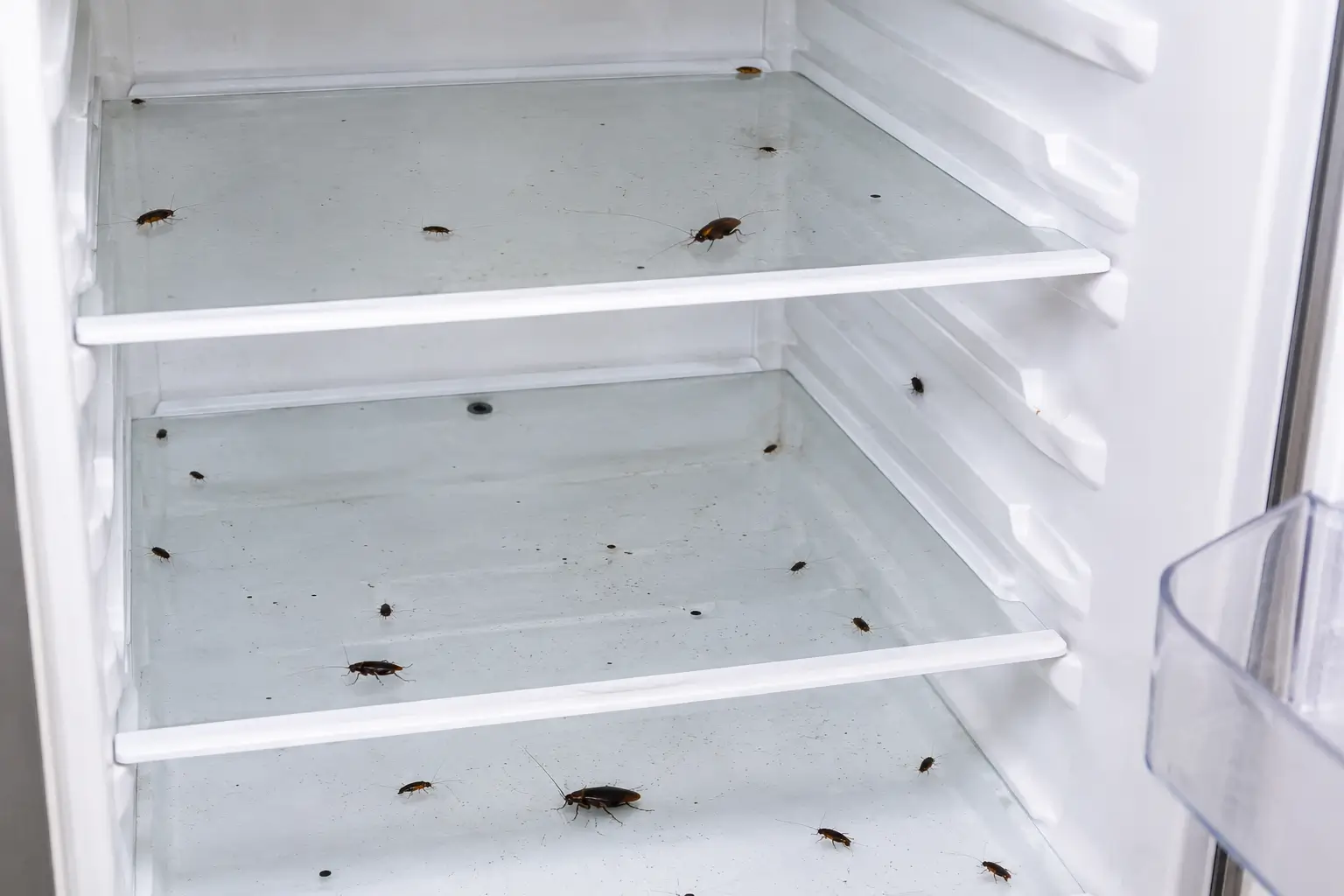
Finding cockroaches inside your refrigerator is a serious hygiene concern. They can crawl over food, packaging, shelves, and other surfaces while carrying microorganisms from contaminated areas.
If you are wondering how to get rid of cockroaches in the fridge, avoid immediately reaching for an insecticide spray. A refrigerator stores food and contains electrical components, so treatment requires extra care. Our cockroach pest control service experts suggest that the safest approach combines food removal, thorough cleaning, physical removal, targeted treatment outside food-contact areas, and prevention.
Why Do Cockroaches Get Inside a Fridge?
The refrigerator compartment is cold, but the appliance contains several areas that can attract cockroaches.
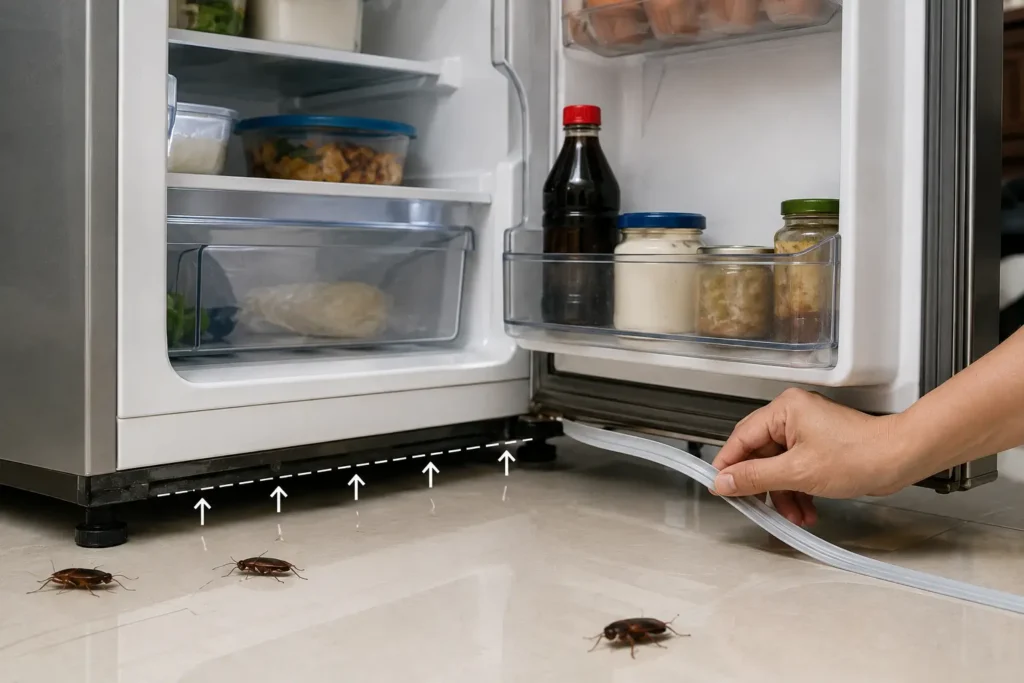
Food crumbs, spilled liquids, moisture, damaged door seals, narrow gaps, and concealed spaces can provide access or temporary shelter. The compressor and other external components also generate warmth.
German cockroaches are particularly well adapted to indoor kitchens and can hide in very small spaces around appliances, cabinets, sinks, and food-storage areas.
If you repeatedly find small cockroaches, nymphs, droppings, or egg cases inside or within the appliance, you may be dealing with an established kitchen infestation rather than an occasional cockroach.
How to Get Rid of Cockroaches in the Fridge
Getting rid of visible cockroaches is only the first step. You also need to remove contamination and determine how they are entering or hiding within the appliance.
1. Remove All Food
Empty the refrigerator before starting.
Discard uncovered food that may have been exposed to cockroaches. Inspect packaged products and clean the exterior of sealed containers before storing them again.
Keep perishable food in another refrigerator or a properly chilled cooler while cleaning.
2. Unplug the Refrigerator
Switch off and unplug the fridge before carrying out a detailed inspection or moving removable components.
Follow the manufacturer’s instructions when removing shelves, drawers, trays, or other parts. Don’t dismantle electrical or mechanical components yourself.
3. Inspect the Interior Carefully
Look for cockroaches, droppings, shed skins, and egg cases.
Pay particular attention to:
- Door gasket folds
- Drawer tracks
- Shelf supports
- Corners and joints
- Drain areas
- Removable trays
- Small accessible gaps
If cockroaches repeatedly emerge from inaccessible components, professional inspection may be safer than attempting to dismantle the refrigerator.
Also learn how to get rid of cockroaches in Dubai
4. Deep Clean the Fridge
Remove shelves and drawers and clean them according to the appliance manufacturer’s instructions.
Clean accessible interior surfaces thoroughly to remove food residue, grease, spills, droppings, and other contamination. Pay particular attention to door seals and narrow corners where debris can accumulate.
Dry everything properly before replacing the components.
Good sanitation is an important part of cockroach management because eliminating accessible food and moisture makes the environment less suitable for them.
5. Physically Remove Cockroaches and Egg Cases
Vacuuming is useful for removing accessible cockroaches, egg cases, shed skins, and debris.
Use a narrow attachment where appropriate and immediately empty the vacuum contents into a sealed bag outside your home.
This reduces the number of cockroaches immediately, but vacuuming alone will not control insects hiding in inaccessible parts of the appliance or elsewhere in the kitchen.
6. Treat the Source, Not Food Surfaces
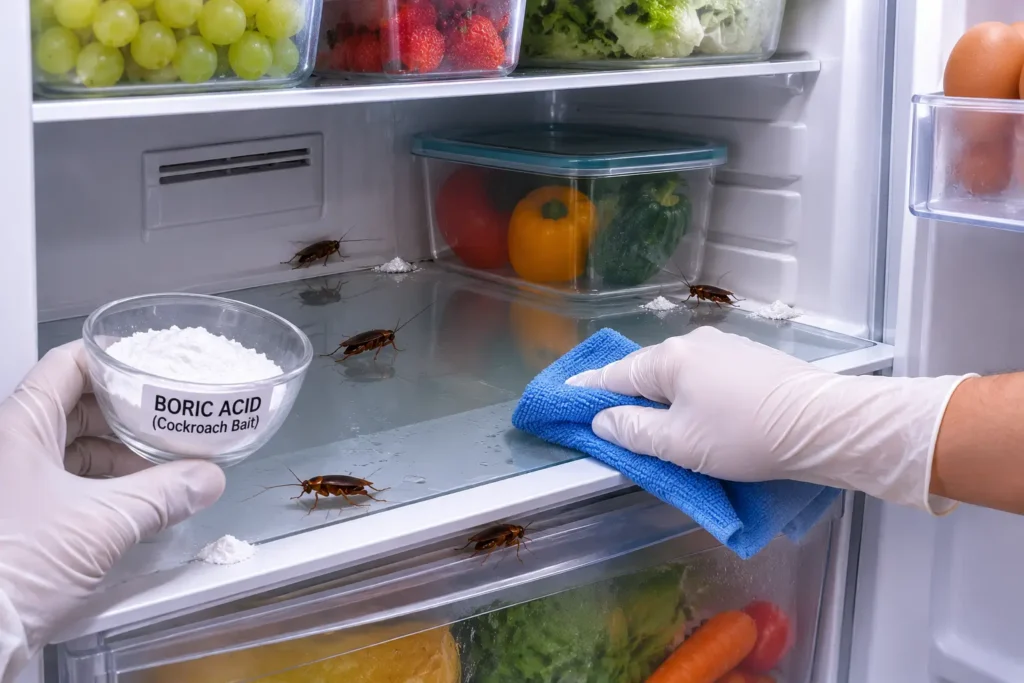
Do not apply ordinary cockroach spray, gel bait, boric acid, or pesticide dust directly to refrigerator shelves or food-contact surfaces.
Instead, inspect suitable external harbourages and travel routes around the appliance.
Correctly labelled cockroach gel bait can be placed in appropriate cracks and crevices outside food-storage areas. Baits are an established cockroach-control method because cockroaches feed on the bait and are exposed to its active ingredient.
Always follow the product label.
Two Proven Home Methods for Cockroaches
Many online remedies recommend vinegar, essential oils, baking soda, coffee, or lemon. Evidence for eliminating an established cockroach infestation with these methods is limited.
Two more reliable approaches are:
1. Boric Acid
Boric acid has a long history of use in cockroach control. A thin layer of an appropriately labelled boric-acid product can be applied to suitable inaccessible cracks, crevices, and harbourages.
However, never put boric acid inside the food-storage compartment of your fridge.
Keep it away from food and food-contact surfaces and inaccessible to children and pets. Follow the manufacturer’s label exactly.
2. Vacuuming and Sanitation
Physical removal combined with sanitation is another evidence-based nonchemical approach.
Vacuum accessible cockroaches and egg cases, remove food residue, eliminate unnecessary moisture, and clean hidden areas. These steps reduce the resources cockroaches need and can improve the effectiveness of targeted bait treatments.
Can You Spray Cockroach Killer Inside a Fridge?
Avoid spraying conventional insecticide inside your refrigerator unless a product is specifically labelled for that application.
Spraying food-storage surfaces can create contamination concerns. Applying liquids or aerosols around electrical and mechanical components can also be unsafe.
Broad aerosol spraying may kill cockroaches you can see without reaching the hidden infestation.
Instead, clean the food compartment thoroughly and target appropriate harbourages with correctly labelled pest-control products.
What If Cockroaches Are Inside Fridge Components?
Cockroaches can sometimes reach inaccessible spaces within appliances.
If you see insects emerging from control panels, insulation, wiring areas, motors, or other inaccessible components, don’t dismantle or spray these areas yourself.
A pest-control technician can assess the infestation, while an appliance technician may be required if the refrigerator needs to be opened or repaired.
This is particularly important when repeated cleaning does not stop cockroaches from appearing inside the fridge.
How to Prevent Cockroaches from Entering Your Fridge
Once the infestation is controlled, prevention reduces the likelihood of another problem.
Keep food covered or stored in sealed containers. Clean spills immediately and regularly wash door seals, shelves, drawers, and other areas where residue collects.
Replace damaged refrigerator gaskets that create unnecessary gaps.
Keep the kitchen clean, repair water leaks, remove rubbish regularly, and avoid accumulating cardboard near food-storage areas.
Also inspect cracks around cabinets, plumbing penetrations, drains, and nearby appliances. Cockroaches found inside a fridge may be part of a wider kitchen infestation.
When Should You Call Pest Control in Dubai?
Consider professional cockroach pest control in Dubai when you repeatedly find cockroaches inside the refrigerator, discover multiple egg cases or nymphs, notice activity in several appliances, or continue seeing cockroaches after cleaning and home treatment.
A professional technician, such as Allied Pest Control, can identify the cockroach species, locate harbourages, assess entry points, and determine whether the infestation extends beyond the fridge.
Depending on the findings, professional cockroach treatment Dubai may include targeted gel baiting, monitoring, appropriate residual treatments, and preventive recommendations.
FAQs About Cockroaches in the Fridge
Can cockroaches survive inside a refrigerator?
Cockroaches prefer warmer conditions, but they can enter refrigerated compartments temporarily and hide in suitable gaps. Other parts of the appliance may provide warmer harbourages.
Does vinegar kill cockroaches in the fridge?
Vinegar can be useful for household cleaning, but it should not be relied upon to eliminate an established cockroach infestation.
Should I throw away a cockroach-infested fridge?
Not necessarily. Thorough cleaning and professional treatment may solve the problem. If cockroaches have heavily infested inaccessible insulation or electrical components, seek professional pest-control and appliance advice.