Bird infestation hygiene risks arise when pigeons, sparrows, or starlings nest and roost in large numbers on a property without control measures. Droppings, feathers, and nesting debris build up quickly, creating conditions for bacteria, fungi, and parasites to spread. Left unmanaged, these infestations turn from a minor nuisance into a genuine public health threat.
Quick Answer of Uncontrolled Bird Infestations
Uncontrolled bird infestations create serious hygiene risks because droppings, nests, and feathers carry over 60 diseases and parasites. Regular cleaning, waste management, and humane deterrents reduce contamination and protect building occupants from airborne and surface-based health hazards.
Why Birds Become a Hygiene Problem
Birds settle wherever they find shelter, food, and minimal disturbance. Urban buildings, warehouses, and rooftops offer all three, which is why bird infestations escalate quickly, and bird control in Dubai remains in high demand year-round.
Frequent Nesting Near Human Activity
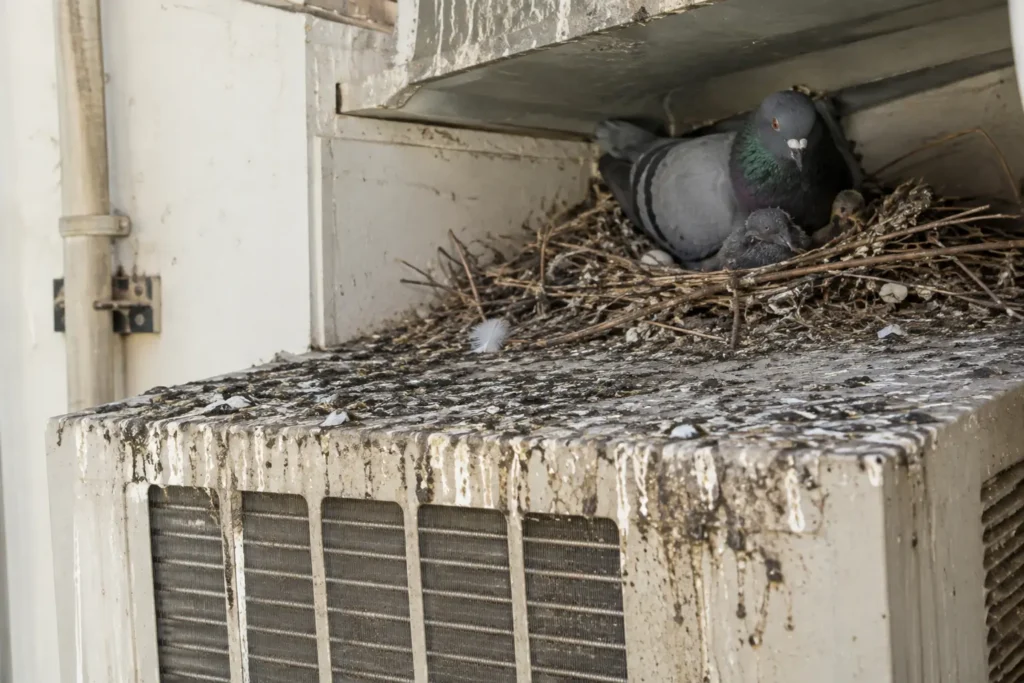
Pigeons and sparrows build nests on balconies, ledges, and air conditioning units within a few feet of people. This proximity increases direct contact with droppings, feathers, and nesting material during daily activity.
Accumulation of Bird Droppings
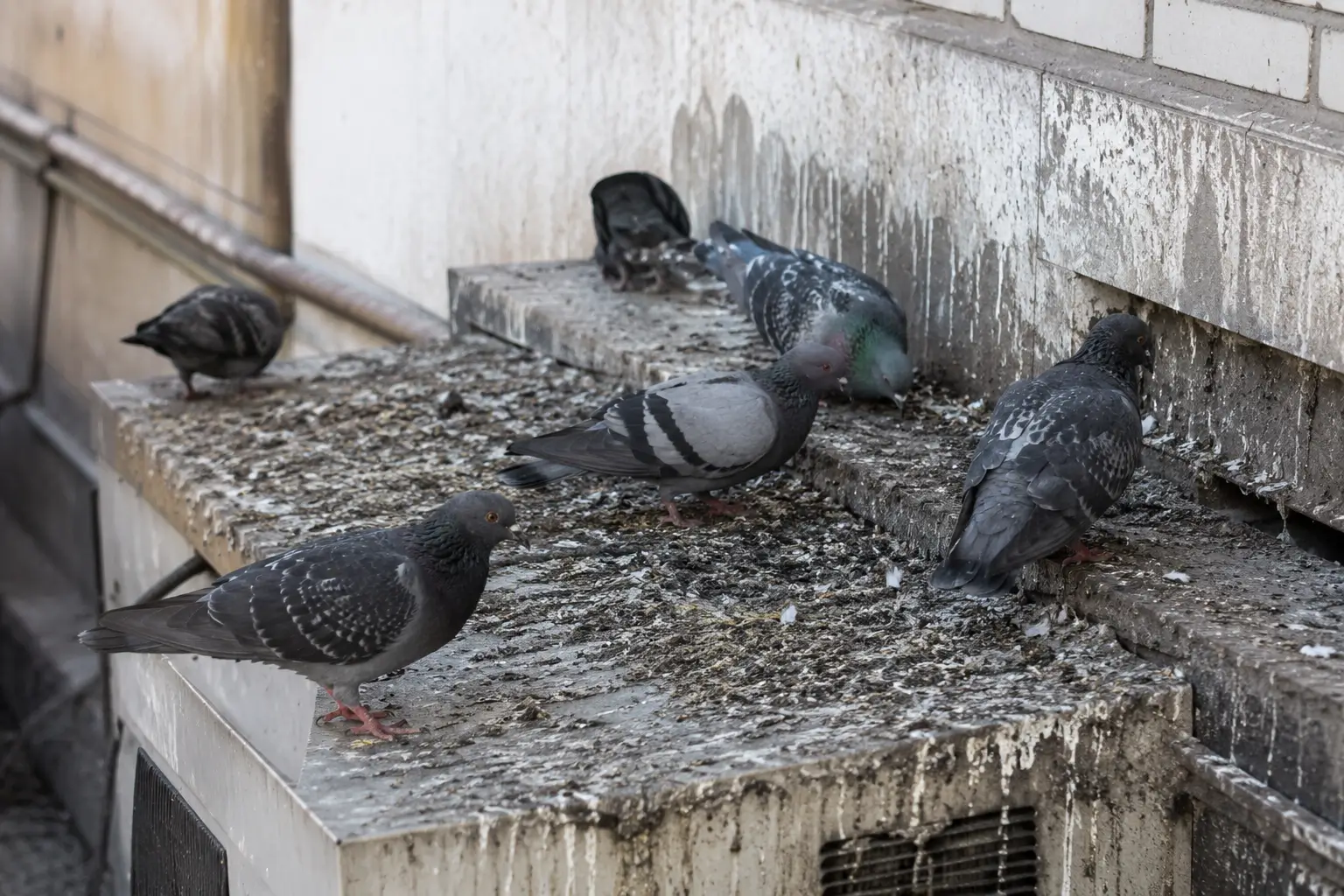
A single pigeon produces 25–50 pounds of droppings per year. Multiply that across a flock of 20–30 birds, and a rooftop or ledge accumulates hundreds of pounds of waste within months.
Food Waste and Organic Debris
Open garbage bins, spilled grain, and food scraps near restaurants and markets attract birds daily. This constant food source keeps flocks returning and multiplies the volume of droppings and nesting waste on-site.
Lack of Regular Property Maintenance
Buildings without scheduled cleaning or inspection let droppings dry, harden, and accumulate in layers. Neglected gutters, vents, and rooftops become long-term breeding grounds for bacteria and insects.
Health Risks Associated with Bird Infestations
Bird infestation health risks extend beyond visible mess. Birds carry pathogens that transfer to humans through direct contact, inhalation, or contaminated surfaces.
Disease-Carrying Microorganisms
Pigeons and other urban birds carry over 60 diseases, including histoplasmosis, cryptococcosis, salmonellosis, and psittacosis. These pathogens live in droppings and transfer to humans through skin contact or contaminated dust.
Airborne Contaminants from Dried Droppings
Dried droppings crumble into fine particles that become airborne when disturbed by wind, sweeping, or foot traffic. Inhaling these particles causes histoplasmosis, a fungal lung infection linked directly to bird and bat waste.
Parasites Found in Bird Nests
Bird nests harbor mites, ticks, fleas, and lice that feed on bird blood but bite humans when nests are abandoned or disturbed. A single nest can host thousands of mites, which spread indoors through vents and cracks.
Increased Risk for Vulnerable Individuals
Children, elderly residents, and people with respiratory conditions face higher risk from airborne bird contaminants. Asthma patients and immunocompromised individuals develop severe reactions after exposure to histoplasmosis spores or cryptococcosis fungi.
How Bird Droppings Affect Hygiene
Bird droppings spread diseases primarily through contamination of surfaces, air, food, and water. Each contact point multiplies the risk to building occupants.
Surface Contamination
Fresh droppings on railings, ledges, and walkways transfer bacteria directly to hands and shoes. Salmonella and E. coli bacteria survive on hard surfaces for several days, increasing the chance of accidental ingestion.
Unpleasant Odors
Accumulated droppings release ammonia gas as they decompose, producing a sharp, persistent odor. This smell penetrates HVAC systems and spreads through indoor spaces, signaling an active infestation problem.
Contamination of Food Preparation Areas
Restaurants and food facilities face direct risk when birds nest near kitchens, storage rooms, or outdoor dining areas. A single dropping on a food surface can transmit Salmonella bacteria, forcing health code violations and closures.
Water Source Contamination
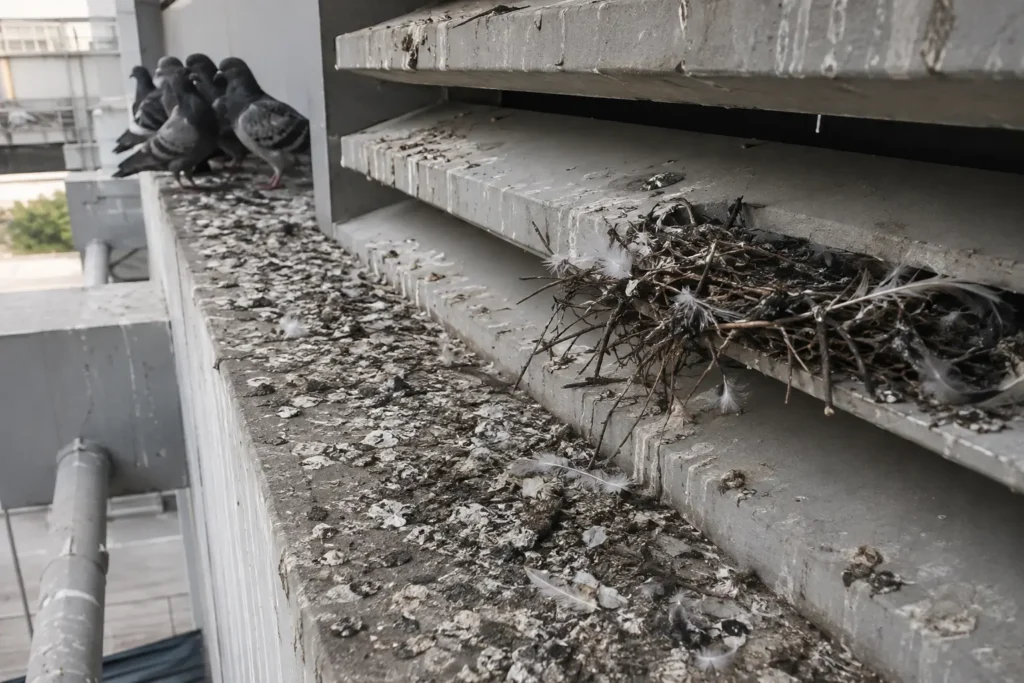
Droppings that wash into water tanks, gutters, or drainage systems introduce bacteria and parasites into the water supply. Contaminated water systems require full disinfection before they meet safety standards again.
Bird Nests and Their Impact on Cleanliness
Nests are not just unsightly. They function as active breeding sites for bacteria, fungi, and insects that spread throughout a building.
Nesting Materials That Harbor Germs
Birds build nests from twigs, feathers, food scraps, and debris that trap moisture and bacteria. This organic material decomposes slowly, creating a persistent source of contamination near rooflines and vents.
Insects and Pests Attracted to Bird Nests
Nests attract mites, fleas, cockroaches, and flies that feed on organic waste and bird parasites. These secondary pests then migrate indoors, expanding the infestation beyond the original nesting site.
Hidden Hygiene Issues in Roof Spaces and Vents
Birds nesting inside roof cavities, chimneys, and ventilation ducts contaminate airflow throughout a building. HVAC systems can circulate droppings, dust, and parasites into offices, homes, and hospital wards without visible warning signs.
Areas Most Vulnerable to Bird-Related Hygiene Issues
Certain property types face higher exposure due to layout, food availability, or public foot traffic.
Residential Buildings
Balconies, rooftops, and window ledges in apartment complexes attract pigeons seeking shelter. Shared spaces increase the number of residents exposed to droppings and nesting debris.
Restaurants and Food Facilities
Outdoor seating areas and waste bins near restaurants draw birds looking for food scraps. Health inspectors cite bird activity as a direct violation risk under food safety regulations.
Warehouses and Factories
Large open structures with high rafters give birds unrestricted nesting access. Stored goods and packaging materials risk contamination from droppings and feathers falling from overhead beams.
Hospitals and Healthcare Facilities
Bird droppings near air intake vents pose a critical risk in hospitals, where airborne contaminants can affect patients with weakened immune systems. Strict infection control standards make bird control a priority in these facilities.
Schools and Public Buildings
High foot traffic and outdoor play areas increase children’s exposure to bird droppings and parasites. Schools require frequent inspection since students are among the most vulnerable groups to infection.
Environmental Factors That Worsen Bird Infestations
Certain site conditions make properties more attractive to nesting birds and accelerate infestation growth.
Easy Access to Food Sources
Open dumpsters, uncovered food storage, and public feeding all sustain large bird populations. Removing accessible food cuts the primary reason birds return to a site daily.
Standing Water
Puddles, clogged gutters, and open water tanks give birds a reliable drinking source. Standing water also breeds mosquitoes, compounding the pest problem beyond birds alone.
Shelter and Nesting Opportunities
Ledges, vents, and gaps in building structures provide safe, sheltered nesting spots. Birds prefer elevated, enclosed spaces that protect eggs and chicks from predators and weather.
Seasonal Breeding Patterns
Most urban bird species breed multiple times per year, producing 2–6 eggs per clutch. Populations can double within a single breeding season if nesting sites remain undisturbed.
Warning Signs of an Uncontrolled Bird Infestation
Recognizing early signs prevents small problems from becoming full-scale infestations.
Excessive Bird Activity
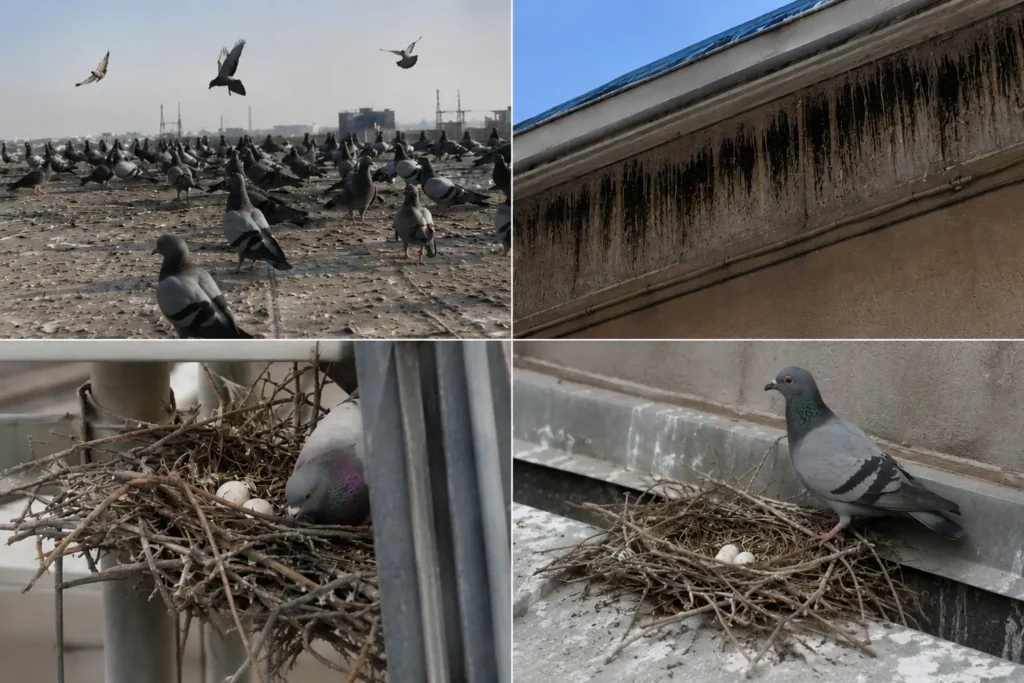
Flocks of 10 or more birds consistently roosting or feeding on a property signal an established infestation. Regular activity at the same time each day indicates birds have claimed the site as habitat.
Large Amounts of Droppings
Visible buildup on ledges, walkways, and rooftops beyond routine cleaning capacity points to an active, growing population. Droppings layered more than a few millimeters thick indicate weeks or months of unmanaged accumulation.
Persistent Nesting
Nests that reappear after removal show birds have identified the site as a permanent shelter. Repeated nesting in the same location requires physical deterrents, not just removal.
Strong Odors
A sharp ammonia smell near rooflines or vents confirms significant dropping accumulation. This odor often precedes visible mold or fungal growth in enclosed spaces.
Increased Presence of Insects
A rise in mites, fleas, or flies near nesting areas signals secondary infestation triggered by bird activity. These insects often move indoors once nest density increases.
The Importance of Early Intervention
Acting quickly on bird infestation problems limits damage, cost, and health exposure.
Preventing Hygiene Deterioration
Early cleaning and deterrent installation stop droppings from hardening into layers that are harder and costlier to remove. Buildings that act within the first few weeks of activity avoid extensive decontamination later.
Reducing Health Risks
Removing active nests and droppings before populations grow cuts exposure to salmonella, histoplasmosis, and parasites. Fewer birds mean fewer disease vectors circulating through a property.
Maintaining a Cleaner Environment
Consistent early intervention keeps surfaces, air quality, and water sources free from bird-related contamination. This protects both property value and occupant health over the long term.
Preventive Measures to Reduce Hygiene Risks
A structured bird infestation prevention plan combines cleaning, exclusion, and monitoring.
Regular Cleaning and Sanitation
Scheduled cleaning of ledges, rooftops, and gutters every 2–4 weeks prevents dropping buildup. Use disinfectant-grade cleaners, not just water, to neutralize bacteria and fungal spores on contaminated surfaces.
Proper Waste Management
Sealed garbage bins and prompt removal of food waste eliminate the main attractant for urban bird species. Facilities should empty outdoor bins daily in high-traffic areas.
Limiting Food Availability
Signage banning public bird feeding, combined with covered outdoor dining areas, reduces food access significantly. Fewer food sources directly correlate with smaller, more manageable bird populations.
Routine Building Inspections
Quarterly inspections of rooflines, vents, and ledges catch new nesting activity before it becomes established. Early detection allows for simple removal instead of large-scale cleanup.
Humane Bird Deterrent Methods
Bird spikes, netting, and sloped ledge covers physically block nesting without harming birds. Ultrasonic devices and visual deterrents like reflective tape add an extra layer of prevention for high-risk zones.
When Bird Infestations Require Professional Attention
Some situations exceed what routine cleaning and basic deterrents can handle safely.
Persistent Nesting Activity
Nests that return repeatedly despite removal attempts indicate a need for professional-grade exclusion systems. Licensed bird pest control technicians install permanent barriers that DIY methods cannot match.
Large-Scale Dropping Accumulation
Heavy, layered dropping deposits require specialized decontamination equipment and protective gear to remove safely. Professional teams follow biohazard protocols that prevent airborne exposure during cleanup.
Recurring Hygiene Concerns
Properties experiencing repeated odor complaints, insect infestations, or health inspection issues need a comprehensive bird control strategy. Recurring problems signal that current measures are insufficient.
High-Risk Commercial Environments
Hospitals, food facilities, and warehouses require certified pest control providers to meet regulatory hygiene standards. Commercial Pest Control Services ensures compliance with health codes while protecting staff and visitors.
Conclusion
Bird infestation hygiene risks worsen quickly without action, turning droppings and nests into real health hazards. Regular cleaning, waste control, and humane deterrents keep properties safe. For persistent problems, Allied Pest Control Bird Removal Services in Dubai offers professional solutions.