Anti-termite treatment eliminates active termite colonies but does not offer permanent, lifetime protection against future infestations. It kills existing termites and creates a chemical or physical barrier around a structure. New colonies can still form years later if conditions favor them.
Quick Answer
Anti-termite treatment removes current termite colonies and protects a property for 5 to 10 years, depending on the method used. No treatment guarantees permanent elimination, since untreated soil, moisture, or new colonies nearby can lead to reinfestation.
What Is Anti-Termite Treatment?
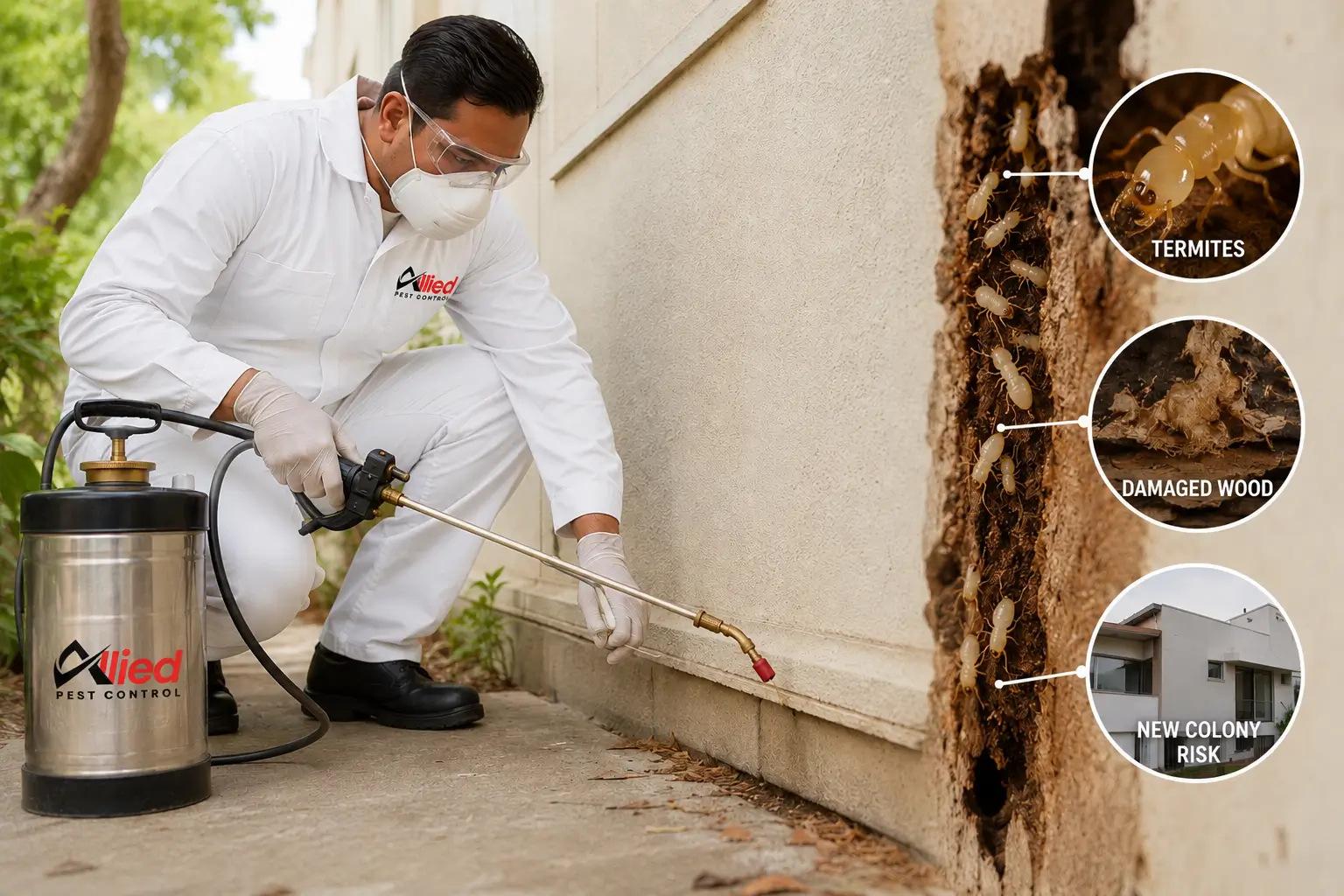
Anti-termite treatment is a pest control process that targets termite colonies using chemical termiticides, baiting systems, or physical barriers. Licensed technicians apply these treatments to soil, wood, and building foundations. The goal is to kill existing termites and block new colonies from entering the structure.
Companies like Allied Pest Control in Dubai use termiticide injections, soil treatments, and monitoring stations to control termite populations.
How Does Anti-Termite Treatment Work?
Termiticides work in two ways: repellent and non-repellent action. Repellent termiticides create a barrier termites avoid. Non-repellent termiticides stay undetected, so termites carry the chemical back and spread it through contact, eliminating 90% to 100% of a colony within 3 months. Baiting systems use slow-acting toxicants carried back to the queen.
Types of Anti-Termite Treatments
- Pre-Construction Anti-Termite Treatment: Applied to soil and foundation before a building is constructed, offering the strongest long-term barrier.
- Post-Construction Anti-Termite Treatment: Applied around an existing structure’s perimeter, foundation, and interior access points.
- Soil Treatment: Termiticide is injected into the ground around and beneath a building to block termite entry.
- Wood Treatment: Termiticide is applied directly to wooden structures, furniture, and framing to prevent termite feeding.
- Baiting Systems: Bait stations placed around a property attract termites and deliver slow-acting toxicants back to the colony.
Can Anti-Termite Treatment Eliminate Termites Permanently?
Anti-termite treatment eliminates the colony present at the time of treatment, not future ones. Termiticide barriers degrade over time, and soil disturbance from landscaping or construction can create gaps. New colonies can migrate in even after successful treatment.
Does Anti-Termite Treatment Kill the Entire Colony?
Non-repellent termiticides kill entire termite colonies, including the queen, within 90 days of application in most cases. Repellent termiticides only block entry points and do not always reach the colony directly. Baiting systems eliminate colonies gradually over 3 to 12 months by targeting the queen through worker termites.
Why No Treatment Can Guarantee Lifetime Protection
Termiticide chemicals break down due to sunlight, rainfall, and soil microorganisms. Most liquid termiticides lose effectiveness after 5 to 10 years. Construction changes, new landscaping, or pipe repairs can breach the treated barrier and create fresh entry points for termites.
How Long Does Anti-Termite Treatment Last?
Liquid termiticide treatments last 5 to 10 years under normal conditions. Baiting systems require ongoing monitoring and bait replacement every 3 to 6 months to remain effective. Wood treatments protect timber for 5 to 15 years, depending on the product and application method.
Factors That Affect the Effectiveness of Anti-Termite Treatment
Type of Termite Species
Subterranean termites, the most common type of termite species in Dubai and the UAE, live underground and build mud tubes to reach food sources. Drywood termites live directly inside wood and require different treatment approaches, such as fumigation or localized injections.
Severity of the Infestation
Early-stage infestations respond faster to treatment, often clearing within weeks. Severe infestations with extensive colony networks require multiple treatment rounds and take 3 to 6 months to fully resolve.
Quality of the Treatment
Improper termiticide dilution, incomplete soil coverage, or missed access points reduce treatment effectiveness by up to 50%. Certified technicians follow manufacturer-specified concentrations and application depths to ensure full protection.
Moisture and Environmental Conditions
Termites need moisture to survive, so leaking pipes, poor drainage, and irrigation near foundations attract new colonies. Dubai’s climate, combined with air conditioning condensation, creates moisture pockets that draw termites toward buildings.
Regular Property Maintenance
Properties that schedule annual termite inspections detect new activity 70% faster than those that don’t. Consistent maintenance, including sealing cracks and managing moisture, extends the life of any anti-termite treatment.
Signs That Your Anti-Termite Treatment Is Working
Knowing the signs of termites in your home helps confirm whether a treatment is succeeding or if reinfestation has started.
Reduced Termite Activity
A successful treatment shows a sharp drop in termite sightings within 2 to 4 weeks. Fewer swarmers, less wood dust, and reduced tapping sounds inside walls indicate the colony is dying.
No New Mud Tubes or Fresh Wood Damage
Subterranean termites build mud tubes to travel between soil and wood. No new tubes forming after treatment signals that the barrier is holding and the colony has stopped foraging.
Colony Elimination Indicators
Complete colony elimination shows zero termite activity in bait stations and monitoring points for at least 3 consecutive months. Professional pest control companies confirm elimination through follow-up inspections.
Why Termites Can Return After Treatment
Untreated Entry Points
Gaps around pipes, expansion joints, and utility lines often go untreated during initial applications. Termites exploit these gaps to bypass the chemical barrier entirely.
Excess Moisture Around the Property
Standing water, leaking taps, and poor drainage near the foundation attract termites back to a property within months of treatment. Moisture control is essential to prevent reinfestation.
Nearby Termite Colonies
Termite colonies within 50 meters of a treated property can send new foraging groups once the original barrier weakens. Neighboring untreated structures increase reinfestation risk significantly.
Lack of Regular Inspections
Properties without annual termite inspections miss early reinfestation signs. Undetected activity can cause structural damage before a follow-up treatment is scheduled.
How to Prevent Termites After Treatment
Fix Water Leaks Immediately
Repair leaking pipes, faucets, and irrigation systems within 48 hours of detection. Moisture is the leading cause of termite attraction after treatment.
Eliminate Wood-to-Soil Contact
Keep wooden structures, decking, and fencing at least 6 inches above soil level. Direct wood-to-soil contact gives termites an easy, undetected entry point.
Store Firewood Away from the Building
Store firewood, lumber, and wood debris at least 20 feet from the property. Stacked wood near a structure attracts termites and shortens the distance to the building.
Schedule Regular Termite Inspections
Book professional termite inspections every 12 months to catch early signs of reinfestation. Allied Pest Control offers scheduled inspection plans for residential and commercial properties across Dubai.
Professional Anti-Termite Treatment vs DIY Solutions
Benefits of Professional Treatment
Professional termite control services use commercial-grade termiticides unavailable to consumers, along with specialized injection equipment. Licensed technicians identify termite species accurately and apply treatment at the correct depth and concentration for lasting results.
Limitations of DIY Methods
DIY termite sprays only kill termites on contact and rarely reach the colony or queen. Store-bought products typically protect a small area for a few weeks, not the entire structure long-term.
Which Option Provides Better Long-Term Protection?
Professional anti-termite treatment provides significantly better long-term protection because it targets entire colonies and includes warranty-backed follow-up service. DIY methods work only as a temporary, short-term fix for minor surface activity.
When Should You Schedule Another Anti-Termite Treatment?
Schedule a follow-up anti-termite treatment every 5 years for liquid termiticide barriers, or immediately after detecting new mud tubes, swarmers, or wood damage. Properties in high-risk areas or near green spaces should schedule inspections every 6 months.
Why Professional Termite Control Is the Best Long-Term Solution
Professional termite control services combine accurate species identification, commercial-grade termiticides, and scheduled monitoring to deliver measurable results. Allied Pest Control in Dubai uses internationally approved termiticides and follows structured treatment protocols for residential, commercial, and pre-construction properties. Ongoing professional support reduces reinfestation risk far more effectively than one-time treatments or DIY products.
Conclusion
Anti-termite treatment eliminates active colonies and protects a property for 5 to 10 years, but it isn’t permanent. Moisture control, regular inspections, and timely follow-up treatments keep termites away long-term. Allied Pest Control offers certified termite treatment and inspection services across Dubai.
Frequently Asked Questions (FAQs)
Can anti-termite treatment eliminate termites permanently?
No. It removes existing colonies but cannot guarantee permanent, lifetime protection.
How long does anti-termite treatment last?
Liquid termiticides last 5 to 10 years. Baiting systems need bait checks every 3 to 6 months.
Can termites return after professional treatment?
Yes, if moisture issues, untreated entry points, or nearby colonies remain unaddressed.
Is anti-termite treatment safe for children and pets?
Yes, once fully dried or cured and applied by licensed professionals following safety guidelines.
How often should a property be inspected for termites after treatment?
Every 12 months, or every 6 months for high-risk properties near vegetation or water.