Termites can start damaging a house within three to six months of entering a structure, though visible destruction often takes one to two years to appear. Understanding termite control in Dubai matters, since the region’s warm climate and humidity create ideal breeding conditions for subterranean termites year-round. This guide explains how fast termites damage a house and how to stop them.
Quick Answer
Termites damage wood continuously once a colony establishes itself, causing minor harm within months and severe structural damage within one to three years. Regular inspection, moisture control, and professional termite treatment in Dubai prevent long-term destruction.
Understanding How Fast Termites Damage a House
Termites work silently inside walls, floors, and foundations. A single colony can contain 60,000 to 1 million workers feeding on cellulose around the clock, so damage often goes unnoticed until it becomes extensive.
How Termites Feed on Wood
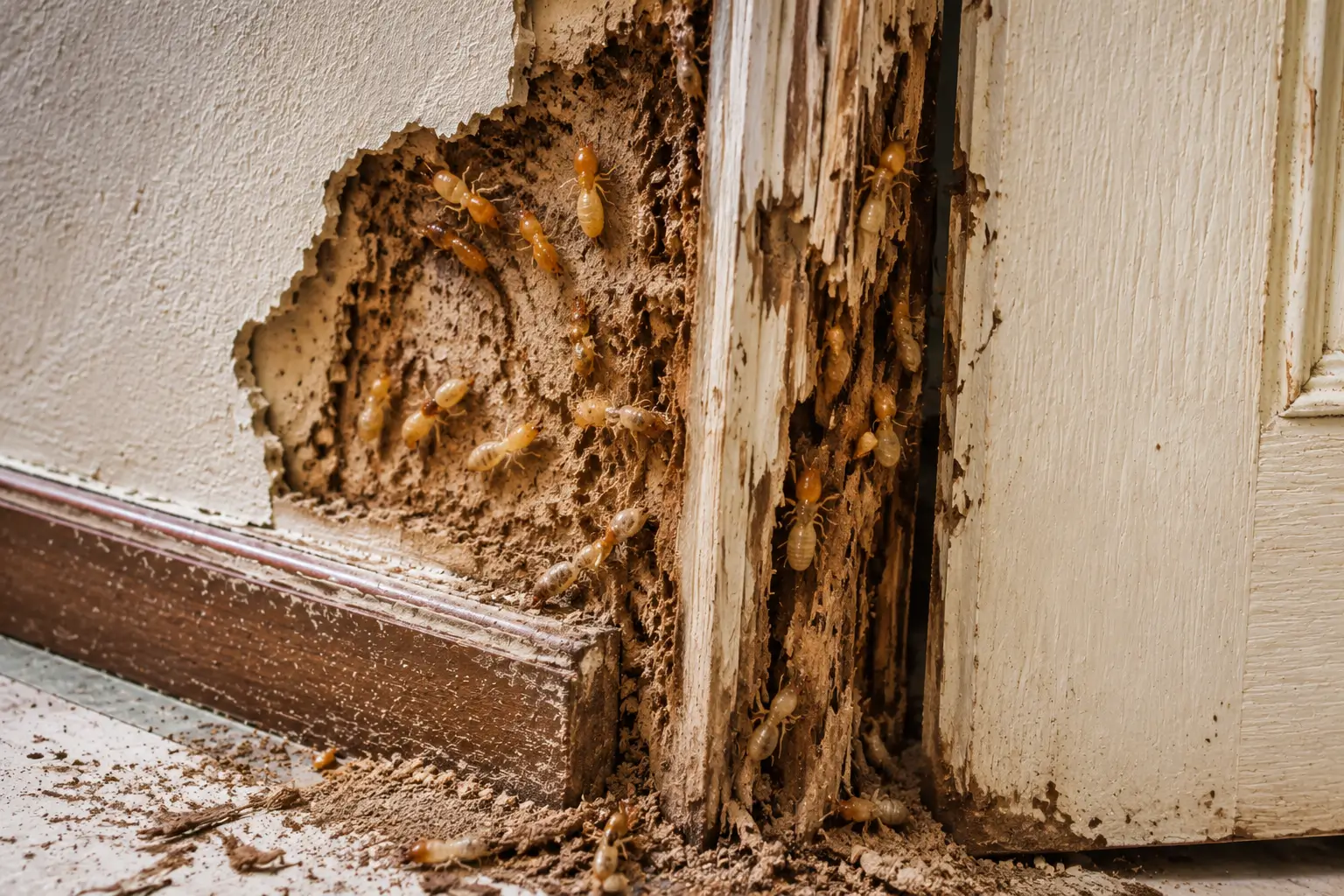
Worker termites chew through wood grain, extracting cellulose for food. They tunnel through softer spring wood first, leaving a honeycomb pattern inside beams and studs. This weakens wood structurally while the outer surface stays intact, making detection difficult without a trained eye.
Factors That Affect the Speed of Termite Damage
Larger colonies, favorable climate conditions, and untreated wood all accelerate how quickly termites destroy a home.
Colony Size
A mature termite colony consumes up to 0.5 kg of wood per day. Colonies take three to five years to mature, but even young colonies with a few thousand members cause measurable damage within months.
Type of Termite Species
Among the different types of termites, subterranean termites are the most common species in Dubai. They cause faster damage than drywood termites because they build extensive underground tunnels and access structures continuously. Subterranean termite control requires targeting both the colony and its soil tunnels.
Moisture Levels in the Home
Termites need moisture to survive. Homes with leaking pipes, poor drainage, or high humidity attract termites faster and support larger colonies.
Type and Condition of Wood
Softwoods like pine deteriorate faster than hardwoods such as teak or oak. Untreated, unsealed, or decaying wood offers termites easier access.
How Long the Infestation Goes Undetected
An infestation caught within the first few months causes minimal harm, while one left undetected for two or more years can compromise a building’s structural integrity.
How Long Does It Take for Termites to Cause Serious Damage?
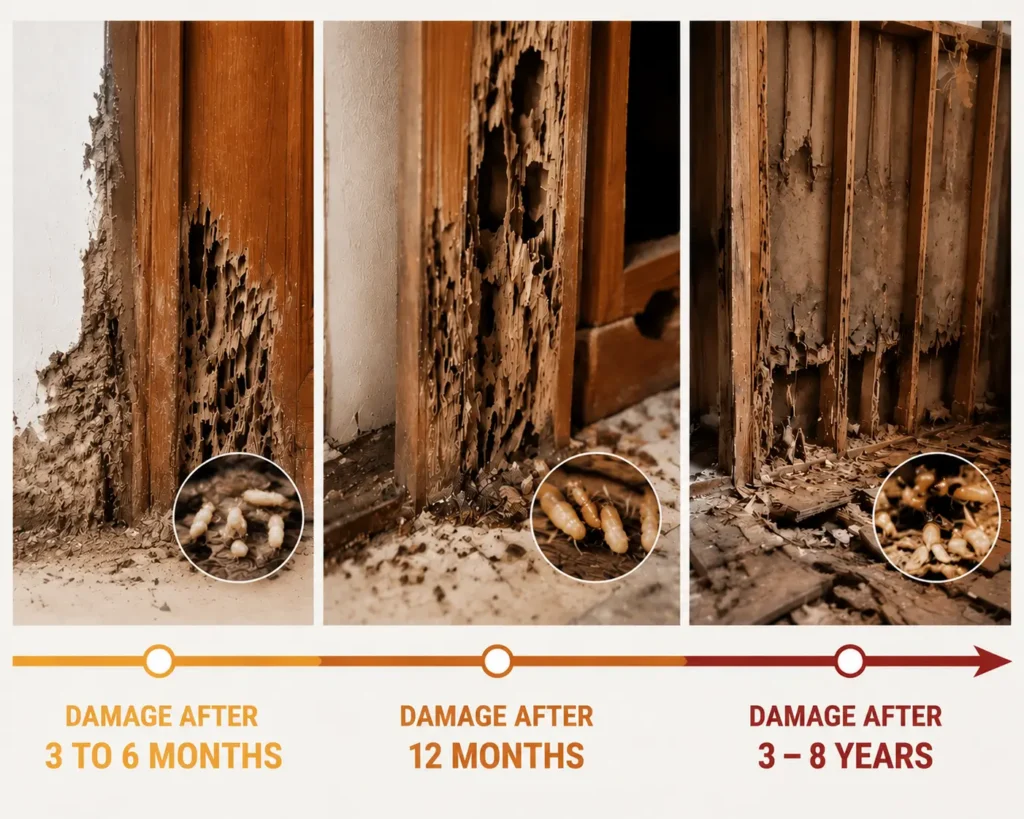
Termite damage progresses in stages, with severity increasing the longer the colony stays active.
Damage After a Few Months
Within three to six months, termites cause cosmetic issues such as small holes, faint tunnel patterns, or soft spots in wood. Structural strength is only slightly reduced.
Damage After One Year
After 12 months, termites can hollow out support beams, door frames, and flooring. Wood begins to sound hollow when tapped, and repair costs rise sharply.
Long-Term Structural Damage
Left untreated for three to eight years, termites can destroy load-bearing walls, floor joists, and roof trusses. Repairs at this stage often cost thousands of dirhams and may require replacing entire sections of a building.
Signs That Termites Are Damaging Your Home
Recognizing early signs of termites in your home prevents minor issues from becoming major structural failures.
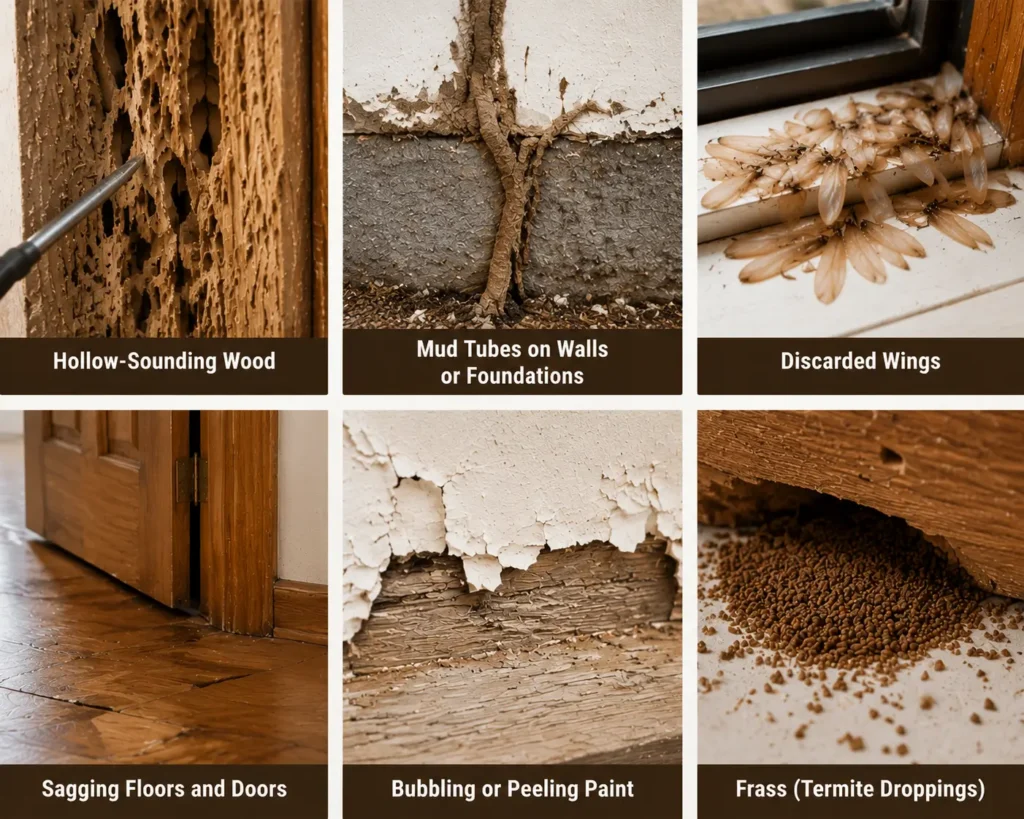
Hollow-Sounding Wood
Tapping on infested wood produces a hollow or papery sound because termites eat wood from the inside out, leaving only a thin outer shell.
Mud Tubes on Walls or Foundations
Subterranean termites build pencil-width mud tubes along foundations and walls to travel between soil and wood while avoiding open air.
Discarded Wings
Swarms of winged termites shed their wings after mating. Piles of wings near windowsills or doors indicate an active, established colony nearby.
Sagging Floors and Doors
Floors that sag, doors that stick, or window frames that warp often signal wood damage caused by termites feeding on internal supports.
Bubbling or Peeling Paint
Termite activity creates moisture buildup beneath painted wood surfaces, causing paint to bubble, crack, or peel in irregular patterns.
Frass (Termite Droppings)
Drywood termites push out small, pellet-like droppings called frass near infested wood, resembling piles of sawdust.
Which Parts of a House Do Termites Damage First?
Termites target areas with direct wood-to-soil contact or hidden moisture before spreading to visible structures.
Wooden Foundations and Support Beams
Foundation timbers and support beams are usually the first targets because they sit closest to soil, where subterranean colonies originate.
Flooring and Subfloors
Subfloors made of plywood or timber are vulnerable, especially in areas with poor ventilation or hidden leaks.
Wall Studs and Drywall
Termites tunnel through wall studs behind drywall, often going unnoticed until paint bubbling or visible cracks appear.
Roof Structures and Attics
Roof trusses and attic beams attract termites when moisture accumulates from leaks or poor insulation, weakening roof support over time.
Wooden Decks, Fences, and Porches
Outdoor wood structures in direct contact with soil face the highest risk, since termites can reach them without breaching a home’s foundation. Learn how to protect wood furniture from termites too.
Can a House Collapse from Termite Damage?
Severe, prolonged infestations can compromise structural integrity enough to cause partial collapse, though this typically takes many years of undetected damage.
When Damage Becomes Structurally Dangerous
Damage becomes dangerous when termites destroy over 30% of a support beam’s cross-section, reducing its load-bearing capacity and raising collapse risk.
Warning Signs You Should Never Ignore
Sagging ceilings, buckling floors, cracked walls near wooden supports, and multiple active mud tubes signal advanced damage requiring immediate professional treatment.
How to Protect Your House from Termites
Prevention reduces termite risk more effectively than treatment after an infestation begins.
Eliminate Moisture Around Your Home
Fix leaking pipes, improve drainage, and use dehumidifiers in humid areas. Moisture control removes the conditions termites need to survive.
Keep Wood Away from the Foundation
Store firewood, lumber, and wooden debris at least 30 cm away from your home’s foundation to prevent easy termite access.
Seal Cracks and Entry Points
Seal foundation cracks, gaps around utility lines, and expansion joints with caulk or cement to block termite entry routes.
Schedule Regular Termite Inspections
Annual termite inspections by licensed professionals identify colonies before they cause significant damage, especially in termite-prone regions like Dubai.
Use Termite Barriers and Treated Wood
Physical and chemical termite barriers, along with pressure-treated wood, create protective layers that deter termites from entering.
Maintain Proper Ventilation
Good airflow in crawl spaces, attics, and basements reduces humidity, making these areas less attractive to termite colonies.
Best Termite Treatment Options
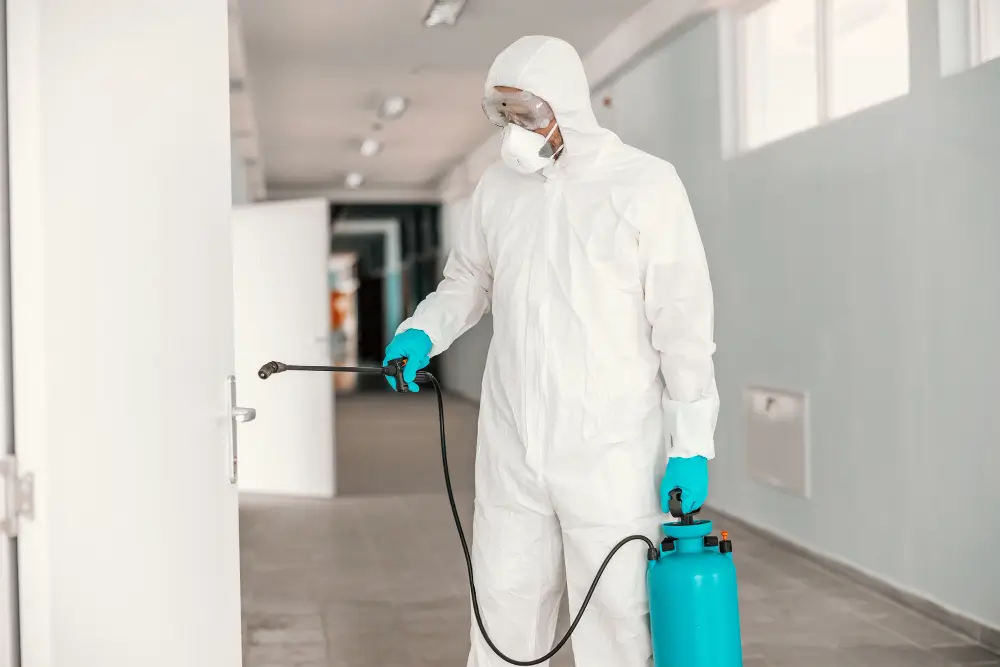
Effective termite control services in Dubai combine chemical, physical, and monitoring-based methods, depending on the severity of the infestation. Allied Pest Control uses licensed technicians and approved termiticides to match the treatment to the infestation type.
Liquid Termite Treatments
Termiticide treatment applies liquid chemicals around a home’s perimeter and foundation, creating a barrier that kills termites on contact.
Termite Bait Stations
Bait stations placed around a property attract termites to slow-acting toxic bait, which workers carry back to the colony, eliminating it over time.
Fumigation
Fumigation treats severe drywood termite infestations by sealing a structure and introducing gas fumigants that penetrate wood entirely.
Heat Treatment
Heat treatment raises indoor temperatures to 50-60°C, killing termites without chemicals. This suits localized infestations in furniture or small structures.
DIY vs. Professional Termite Control
DIY products offer limited, temporary results. Professional termite pest control identifies colony locations, applies targeted treatment, and provides warranties DIY methods can’t match.
What to Do If You Suspect Termite Damage
Acting quickly after spotting termite signs limits damage and reduces repair costs.
Inspect the Affected Area
Check for hollow wood, mud tubes, and discarded wings in basements, attics, and areas near wood-soil contact before calling a professional.
Contact a Licensed Pest Control Professional
A licensed pest control inspection identifies the termite species, colony size, and extent of damage, enabling accurate, targeted treatment.
Repair Structural Damage After Treatment
Replace or reinforce damaged beams, flooring, and wall studs after treatment eliminates the colony, restoring structural integrity.
Prevent Future Infestations
Combine ongoing moisture control, annual inspections, and termite barriers to prevent reinfestation after treatment.
Common Mistakes That Increase the Risk of Termite Damage
Avoiding these mistakes reduces the likelihood of costly termite infestations.
Ignoring Early Warning Signs
Dismissing small signs like discarded wings or faint hollow sounds allows colonies to grow undetected for months or years.
Storing Firewood Against the House
Firewood stacked against exterior walls gives termites direct access to a home’s structure, bypassing soil barriers entirely.
Skipping Annual Inspections
Homeowners who skip yearly termite inspections often discover infestations only after significant structural damage has occurred.
Delaying Treatment
Waiting to treat a confirmed infestation lets colonies expand, raising the termite treatment cost and increasing the overall extent of structural damage.
Conclusion
Allied Pest Control helps homeowners across Dubai catch termite infestations early and prevent costly repairs. Termites can begin damaging a house within months and cause severe structural harm within a few years if left unchecked.
Termite control in Dubai requires proactive moisture management, regular inspections, and professional treatment to protect a property’s long-term value.
Frequently Asked Questions
How quickly can termites destroy a house?
Termites cause visible damage within six months to one year, and severe structural damage within three to eight years if left untreated.
Can termites damage a home in just a few months?
Yes, termites create hollow spots and minor structural weakening within three to six months of an active infestation.
Is termite damage covered by homeowners insurance?
Most standard policies exclude termite damage, treating it as a preventable maintenance issue rather than a covered peril.
What attracts termites to a house?
Moisture, wood-to-soil contact, cracks in foundations, and stored wood near a home’s exterior all attract termites.
Can I get rid of termites without professional help?
DIY methods rarely eliminate an entire colony. Professional termite extermination targets the colony source for lasting results.
How often should a home be inspected for termites?
Homes in termite-prone areas like Dubai should be inspected at least once per year, or every six months in high-risk properties.