Bird netting in Dubai protects buildings from pigeons, sparrows, and other birds by physically blocking access to roofs, balconies, and ledges. Property owners across the UAE use this method to stop nesting, droppings, and structural damage. It remains one of the most reliable, humane, and long-lasting bird control solutions available today.
Quick Answer
Yes, bird netting works. It creates a physical barrier that blocks birds from landing, roosting, or nesting on buildings, reducing damage, mess, and health risks without harming the birds.
What Is Bird Netting and How Does Bird Netting Work?
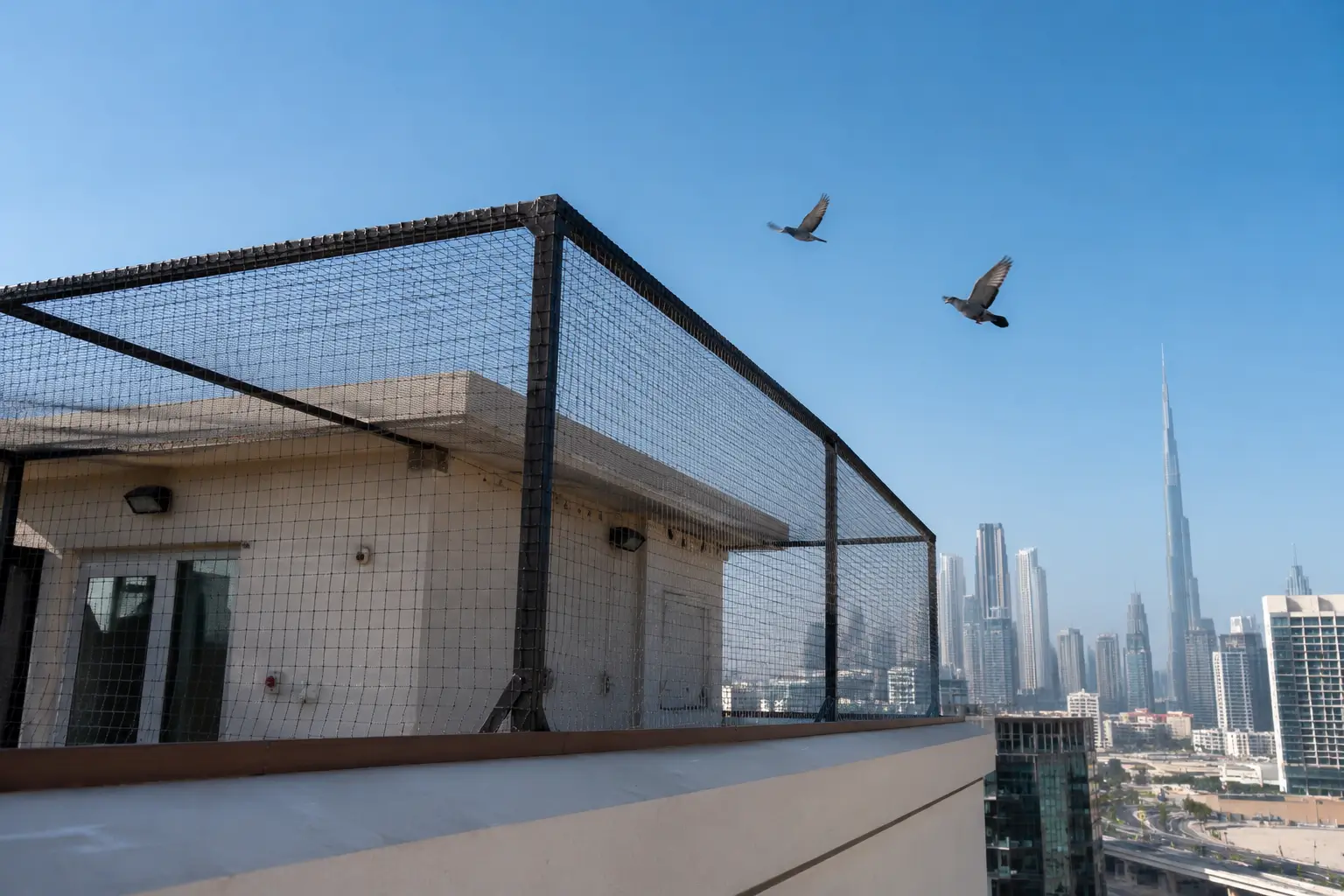
Bird netting is a mesh barrier installed over roofs, balconies, ledges, and other structures to block bird access. The netting stops birds from landing or building nests on the surface it covers. Installers stretch the mesh across open areas and secure it with cables, hooks, or frames.
Once installed, the netting prevents birds from reaching the surface. Birds cannot land, perch, or nest through the mesh. This method targets the root cause of bird problems: physical access, not just symptoms like droppings or noise.
Types of Bird Netting Available in Dubai
Bird netting in Dubai comes in several materials and mesh options, each suited to different bird species and building types.
| Netting Type | Best For | Mesh Size |
| Polyethylene (PE) netting | General pigeon control | 50mm x 50mm |
| Stainless steel netting | High-security industrial sites | 19mm x 19mm |
| Knotted nylon netting | Heavy-duty outdoor use | 25mm–75mm |
| UV-stabilized netting | Long-term outdoor exposure | Varies |
Suppliers in Dubai typically stock UV-stabilized polyethylene netting because it withstands high heat and direct sunlight without degrading.
How Do Birds Damage Buildings?
Birds cause damage in three main ways: droppings, nesting materials, and disease transmission. Each problem compounds over time if left untreated.
Bird Droppings and Structural Damage
Bird droppings contain uric acid, which corrodes metal roofing, paint, and stone within months of repeated exposure. A single pigeon produces up to 12 kg of droppings per year. Accumulated waste blocks drainage systems, causing water damage and roof leaks.
Nesting Problems
Birds build nests in gutters, vents, and rooftop machinery. Nesting materials clog air conditioning units and drainage pipes, leading to costly repairs. Nests also block ventilation systems, reducing HVAC efficiency by up to 30%.
Health and Safety Risks
Bird droppings carry over 60 diseases, including salmonella, E. coli, and histoplasmosis. Dried droppings become airborne dust that spreads pathogens through building ventilation systems. Slippery droppings on walkways also create slip-and-fall hazards for staff and visitors.
Does Bird Netting Really Protect Buildings?
Yes. Bird netting eliminates bird access to a structure, which stops damage before it starts. This section explains how the barrier works and why it delivers long-term results.
How Bird Netting Prevents Bird Access
Netting covers the entire vulnerable surface, leaving no gap for birds to enter. Properly installed netting seals edges tightly against walls, beams, and structural frames. Birds test the barrier for a few days, then abandon the site permanently once they find no way through.
Long-Term Protection Benefits
Correctly installed bird netting lasts 10 to 15 years with minimal upkeep. It requires no chemicals, no ongoing baiting, and no repeated service visits. This makes it more cost-effective than repellent gels or sonic deterrents, which need frequent reapplication.
Is Bird Netting Humane?
Bird netting is a humane bird control method because it does not injure, trap, or kill birds. It simply redirects them to alternative roosting locations away from the building. Wildlife protection agencies, including the RSPB, recognize netting as an approved exclusion method when installed correctly.
Key Benefits of Bird Netting for Commercial and Residential Buildings
Bird netting delivers measurable value across property types, from private balconies to large industrial facilities.
Protects Roofs and Balconies
Netting stops birds from accessing rooftops and balcony ledges, preventing the buildup and structural corrosion. Balcony bird netting also keeps outdoor living spaces clean and usable year-round.
Reduces Cleaning and Maintenance Costs
Buildings without netting require weekly or monthly cleaning to remove droppings and nesting debris. Netting reduces cleaning frequency by up to 80%, significantly lowering facility management costs.
Improves Building Appearance
Dropping stains and nesting debris damage a building’s exterior appearance and reduce property value. Netting keeps facades, signage, and walkways visibly clean.
Prevents Pest Infestations
Bird nests attract mites, ticks, and fleas that spread into HVAC systems and living spaces. Removing bird access eliminates this secondary pest risk.
Where Can Bird Netting Be Installed?
Bird netting suits nearly any structure with open ledges, beams, or rooftop access.
Roofs
Roof bird protection netting covers flat and pitched roofs, blocking access to vents, solar panels, and HVAC units.
Balconies
Balcony bird netting seals open-air balconies in residential towers, a common request for pigeon net for balcony installations in Dubai.
Warehouses
Bird control for warehouses uses large-span netting to cover open loading docks and rafters where pigeons roost in bulk.
Parking Garages
Netting blocks open-sided parking structures, preventing droppings from damaging vehicles and concrete surfaces.
Industrial Facilities
Factories and processing plants use stainless steel netting to meet food-safety and hygiene compliance standards.
Schools and Hospitals
These facilities require humane, low-maintenance bird exclusion netting to protect public health without using chemicals near children or patients.
Choosing the Right Bird Netting
Selecting the correct netting depends on four key factors.
Netting Material
Polyethylene suits most residential and commercial buildings. Stainless steel suits high-security or heavy-load industrial applications.
Mesh Size
Smaller mesh (19mm) blocks sparrows and small birds. Larger mesh (50mm) suits pigeon control on bigger structures.
UV Resistance
Dubai’s climate demands UV-stabilized netting rated for temperatures above 50°C. Non-UV-rated netting degrades within 2 to 3 years under direct sun exposure.
Professional Installation vs DIY
Professional installers use tensioning systems and anchor points that ensure a taut, gap-free fit. DIY installations often leave gaps that birds exploit within weeks. Allied Pest Control’s professional bird control services in Dubai include site assessment, custom netting design, and certified installation.
Bird Netting vs Other Bird Control Methods
Each bird control method offers different strengths depending on the site and bird species involved.
| Method | Effectiveness | Lifespan | Best Use Case |
| Bird netting | Very High | 10–15 years | Large open areas, roofs, balconies |
| Bird spikes | Moderate | 5–10 years | Ledges, signs, and narrow surfaces |
| Bird wire systems | Moderate | 5–8 years | Beams, parapets |
| Bird repellent gels | Low–Moderate | 3–6 months | Small perching areas |
| Electronic deterrents | Variable | Depends on the device | Open outdoor spaces |
Bird Spikes
Bird spikes prevent landing on narrow ledges but fail on wide, flat surfaces where birds can walk around them. Explore Allied Pest Control’s bird spikes installation in Dubai for ledges, signage, and window sills.
Bird Wire Systems
Wire systems use tensioned lines to make perching uncomfortable. They work well on beams but not on open roof areas. Check out our bird wire systems in Dubai for the best solutions for parapets, ledges, and signage installations.
Bird Repellent Gels
Repellent gels irritate birds’ feet, but Dubai’s heat causes gels to dry out and lose effectiveness within months
Electronic Bird Deterrents
Sonic and ultrasonic devices emit distress signals. Birds often adapt to the sound within weeks, reducing long-term effectiveness.
Bird Netting Maintenance Tips
Proper maintenance extends the netting’s lifespan and keeps the protection effective.
- Inspect netting every 6 months for tears or loosening.
- Remove debris, leaves, and dead branches caught in the mesh.
- Check anchor points and cables for rust or wear.
- Repair small holes immediately to prevent bird entry.
- Schedule a professional inspection annually.
Regular Cleaning
Clean netting with water and a soft brush every 3 to 6 months to remove dust and organic buildup.
Annual Inspection
A yearly inspection by a licensed technician identifies wear before birds exploit weak points. Book Allied Pest Control’s bird netting maintenance service to keep your installation compliant and fully functional year-round.
Repairing Damaged Sections
Patch small tears with matching mesh material within 48 hours of discovery to prevent birds from widening the gap.
Conclusion
Bird netting in Dubai remains the most effective, humane, and long-lasting solution for building bird protection. It blocks access, reduces damage, cuts maintenance costs, and protects public health without harming birds. Property owners seeking reliable bird control solutions should choose UV-resistant netting installed by licensed professionals for the best long-term results.
Frequently Asked Questions
How long does bird netting last?
Bird netting lasts 10 to 15 years when installed correctly and maintained with regular inspections. UV-stabilized netting lasts longer in high-sun climates like Dubai.
Is bird netting safe for birds?
Yes. Bird netting is a humane, non-lethal method that blocks access without trapping or injuring birds. It simply redirects birds to other locations.
Can bird netting be installed on old buildings?
Yes. Installers use adjustable anchor systems and low-impact fixings that work on heritage and older structures without damaging facades.
How much does bird netting cost?
Bird netting costs vary by building size, mesh type, and installation complexity. Small balconies cost less than large warehouse or industrial rooftop installations. Contact a licensed provider for a site-specific quote.
Does bird netting work for pigeons and sparrows?
Yes. Netting with 50mm mesh blocks pigeons, while 19mm mesh blocks smaller birds like sparrows. Choosing the correct mesh size ensures full exclusion for the target species.