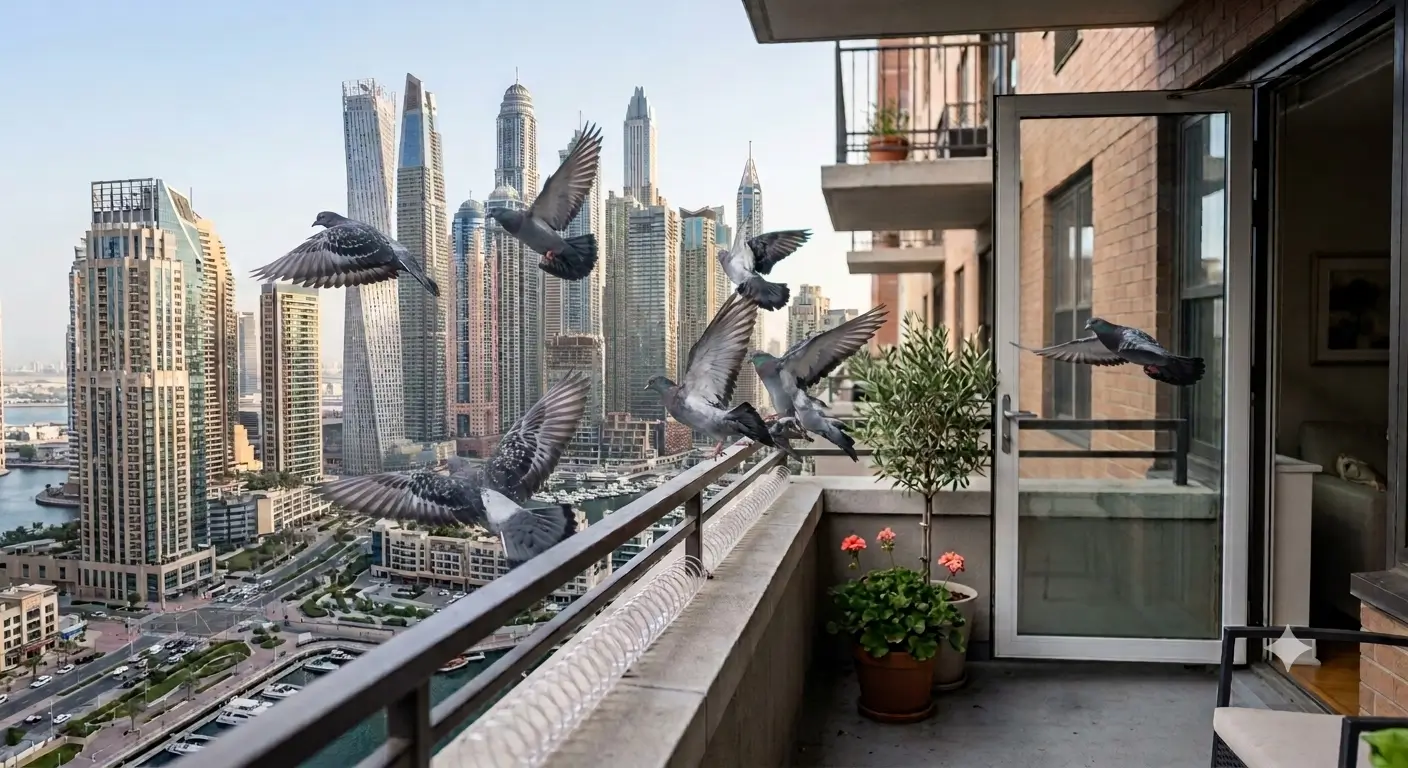
Bird control in Dubai means removing pigeons, seagulls, and other birds from homes and businesses using safe, humane techniques instead of poisons or traps. Property owners across Dubai face bird problems on rooftops, balconies, and warehouses year-round. This guide explains how to stop birds from coming to your balcony, using proven, non-lethal methods that protect both your property and the birds.
Quick Answer
Get rid of birds humanely using bird spikes, netting, reflective deterrents, and sound repellents. Remove food sources, seal entry points, and trim trees. These methods stop roosting and nesting without harming birds or violating UAE wildlife protection laws.
Why Birds Become a Problem Around Homes and Businesses
Birds nest in gutters, balconies, and rooftops because these spots offer shelter and warmth. Dubai’s climate attracts pigeons and mynas that roost in large numbers near food sources. Droppings damage building surfaces, block drainage systems, and spread bacteria like Salmonella and E. coli.
Common Bird Species That Cause Issues
Pigeons cause the most bird control in Dubai calls, followed by house sparrows and common mynas. Seagulls create problems near coastal properties and waste facilities. Each species nests differently, so identifying the bird determines the right deterrent strategy.
Signs You Have a Bird Problem
Droppings on balconies, nesting material in gutters, and scratching sounds in ceilings signal an active bird problem. Feathers near air conditioning units and persistent cooing or chirping at dawn confirm roosting activity. Damaged rooftop insulation often indicates birds have nested for several weeks.
Why Choose Humane Bird Control Methods?
Humane bird control in Dubai removes birds without killing or injuring them. The UAE protects many bird species under wildlife regulations, making poison and lethal traps both illegal and ineffective in the long term.
Benefits of Non-Lethal Bird Removal
Humane bird removal methods prevent birds from returning by making the area unattractive, not by killing individual birds. This approach reduces re-infestation rates by over 70% compared to lethal methods, since new birds don’t repopulate an already-hostile space. Non-lethal methods also protect pets, children, and other wildlife from accidental harm.
Why Harmful Methods Can Create More Problems
Poison and glue traps harm birds and create legal liability, while leaving a vacancy that new birds quickly fill. New methods for bird control using electronic systems, like ultrasonic and motion-sensor devices, offer a safer, longer-lasting alternative.
Best Ways to Get Rid of Birds Without Hurting Them
Follow this step-by-step approach to bird-proof your home or business effectively:
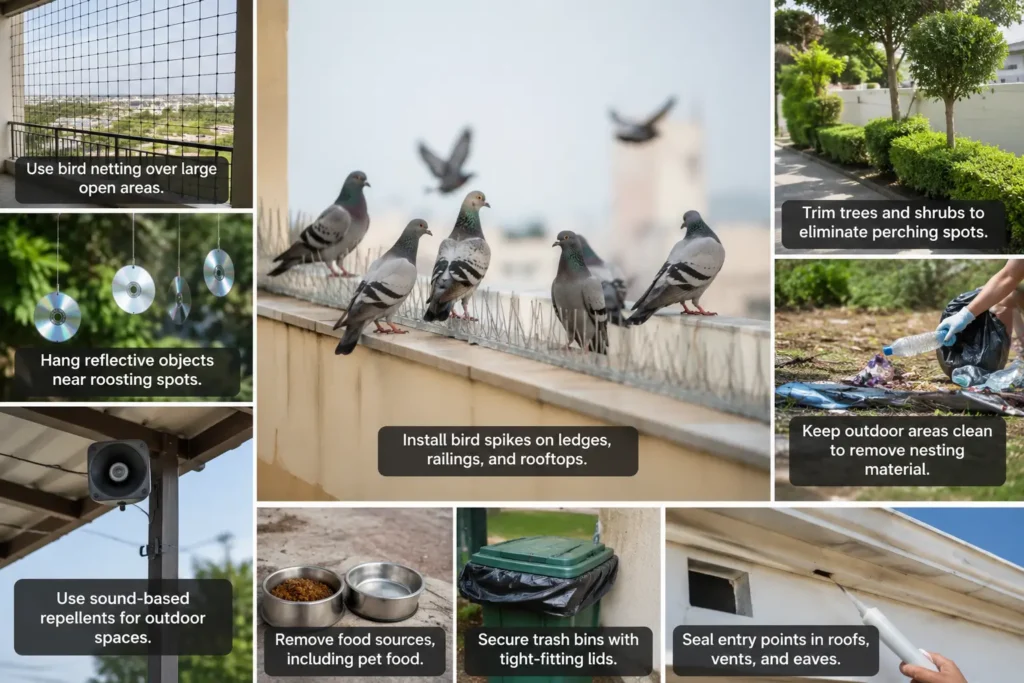
- Install bird spikes on ledges, railings, and rooftops.
- Use bird netting over large open areas like balconies and warehouses.
- Hang reflective objects near roosting spots.
- Try visual deterrents such as predator decoys.
- Use sound-based repellents for outdoor spaces.
- Remove food sources, including pet food and open bins.
- Secure trash bins with tight-fitting lids.
- Seal entry points in roofs, vents, and eaves.
- Trim trees and shrubs to eliminate perching spots.
- Keep outdoor areas clean to remove nesting material.
Install Bird Spikes
Bird spikes create an uneven surface that prevents birds from landing on ledges, signs, and rooftops. Stainless steel and polycarbonate spikes last 5–10 years outdoors and don’t harm birds on contact. Install spikes along every flat surface wider than 5 cm to block landing spots completely.
Use Bird Netting
Bird netting physically blocks birds from accessing balconies, courtyards, and warehouse interiors. Professional-grade netting with a 19mm mesh size stops sparrows and pigeons while allowing airflow and light through. Netting remains one of the most effective bird-proofing solutions for large open spaces.
Hang Reflective Objects
Reflective tape, old CDs, and mirrored discs create unpredictable light flashes that disorient birds. Birds perceive the moving light as a threat and avoid the area within 2–3 days of installation. Hang reflective objects at multiple heights and move them weekly to prevent birds from adapting.
Try Visual Bird Deterrents
Predator decoys shaped like owls or hawks trigger a bird’s natural fear response. Move decoys every 3–4 days, since stationary decoys lose effectiveness once birds realize they don’t move. Balloon decoys with large “predator eyes” work well on rooftops and open terraces.
Use Sound-Based Bird Repellents
Ultrasonic devices and distress-call speakers repel birds without affecting humans or pets in most cases. Sound repellents cover areas up to 500 square meters and work best when combined with visual deterrents. Rotate sound patterns every few days to prevent birds from growing accustomed to the noise.
Remove Food Sources
Birds return daily to locations with reliable food. Store pet food indoors, clean up spilled grains, and avoid feeding pigeons directly. Removing food access cuts bird activity in a given area by more than half within two weeks.
Secure Trash Bins
Open bins attract pigeons and seagulls searching for food scraps. Use bins with locking or tight-fitting lids, and clean bin areas weekly to remove odor trails. Secured bins eliminate one of the top three food sources driving urban bird problems.
Seal Entry Points
Birds enter buildings through gaps in rooflines, vents, and eaves as small as 2.5 cm. Use wire mesh or expanding foam to seal these gaps permanently. Inspect entry points twice yearly, especially before nesting season in spring and autumn.
Trim Trees and Shrubs
Overgrown branches near buildings give birds easy access to rooftops and windows. Trim branches back at least 1.5 meters from any structure to remove convenient perching spots. Regular trimming every 3–4 months keeps trees from becoming bird highways to your property.
Keep Outdoor Areas Clean
Nesting material like twigs, leaves, and debris signals a safe roosting spot to birds. Sweep balconies and rooftops weekly and remove any partial nests immediately. To keep birds away from outdoor areas long-term, clean these spaces regularly so birds never settle in before nesting begins.
Natural Bird Repellent Methods That Really Work
Natural ways to keep birds away rely on sensory deterrents rather than physical barriers.
Wind Chimes
Wind chimes produce irregular sounds that unsettle birds without disturbing most households. Hang chimes near entry points and roosting ledges for continuous, low-cost deterrence.
Reflective Tape
Holographic reflective tape works as an affordable outdoor bird repellent for gardens and balconies. A 50-meter roll covers most residential properties and lasts 6–12 months outdoors.
Predator Decoys
Fake owls, snakes, and hawks exploit birds’ instinctive fear of predators. Rotate decoy positions weekly for the best long-term results.
Motion-Activated Sprinklers
Motion-activated sprinklers spray water when birds land nearby, startling them without injury. These devices cover up to 90 square meters and work well in gardens and pool areas.
Bird-Proofing Your Home and Garden
Protect Roofs and Gutters
Install mesh guards over gutters to prevent nesting and blockages. Check roof edges every three months for early signs of nesting activity.
Prevent Birds from Nesting
Combine spikes, netting, and regular cleaning to stop birds from nesting before eggs are laid. Early intervention within the first week of nest-building prevents legal complications tied to protected species.
Safeguard Balconies and Patios
Install fine mesh netting and reflective deterrents together on balconies for layered protection. This combination approach reduces balcony bird activity by up to 80%.
When Should You Call a Professional Bird Control Service?
Large Bird Infestations
Flocks exceeding 20–30 birds require professional-grade equipment and coordinated removal strategies. Commercial Bird Control Services handles large-scale infestations safely and legally.
Birds Nesting in Hard-to-Reach Areas
Rooftops, high ledges, and industrial structures often need specialized access equipment. Professional technicians use certified safety gear to reach these areas without risk.
Commercial Property Bird Problems
Warehouses, malls, and offices face stricter hygiene regulations around bird droppings. Pest Control Services in Dubai offers tailored commercial bird control solutions that meet local compliance standards.
Final Thoughts
Effective bird control in Dubai combines physical barriers, sensory deterrents, and consistent property maintenance. Start with bird spikes, netting, and food source removal for immediate results. For persistent or large-scale problems, contact Allied Pest Control for professional, humane bird removal services.
Frequently Asked Questions
What is the most humane and effective way to get rid of birds?
Bird spikes combined with netting offer the most humane and effective long-term solution. These physical barriers block access without causing injury, and they keep birds away permanently when installed correctly.
What smells do birds dislike?
Birds dislike the smell of peppermint, chili, and vinegar. Spraying diluted peppermint oil near roosting spots repels birds naturally within a few days.
How do I stop birds from nesting on my roof?
Install bird spikes along roof edges and seal any gaps in the roofline. Check the roof every three months during nesting season to catch new activity early.
Do reflective objects really keep birds away?
Yes, reflective objects disrupt birds’ vision and trigger avoidance behavior. Moving the objects weekly keeps them effective, since stationary reflectors lose impact after a few weeks.
Are bird spikes harmful to birds?
No, bird spikes only block landing surfaces and don’t injure birds. They work by making ledges physically unusable, not by causing pain or harm.
How can I keep birds away permanently?
Combine multiple deterrents, remove food sources, and maintain the property consistently. Permanent bird control requires ongoing upkeep, since a single method rarely works alone for more than a few months.