Pest control in Dubai relies on a specific set of chemicals designed to eliminate insects, rodents, termites, and other pests safely and permanently. These products include insecticides, rodenticides, termiticides, fumigants, and repellents, each formulated to target a particular pest species. Understanding these chemicals helps homeowners and businesses make informed treatment decisions.
Quick Answer of Chemicals Used for Effective Pest Control in Dubai
Pest control chemicals include insecticides, rodenticides, termiticides, fungicides, and fumigants. Professionals in pest control Dubai use active ingredients like pyrethroids, fipronil, and imidacloprid to disrupt pest nervous systems, causing paralysis and death within hours of exposure.
Understanding Chemical Pest Control in Dubai
What Is Chemical Pest Control?
Chemical pest control uses synthetic or naturally derived compounds to kill, repel, or sterilize pests. Technicians apply these chemicals as sprays, baits, dust, or gas to target cockroaches, termites, rodents, and mosquitoes. This method remains the most widely used pest management approach worldwide, treating over 80% of commercial properties annually.
How do Pest Control Chemicals Work?
Pest control chemicals attack a pest’s nervous system, digestive tract, or exoskeleton. Contact insecticides penetrate the pest’s outer shell within seconds. Ingested chemicals disrupt digestion, while fumigants enter through the respiratory system and cause rapid death.
Why Different Pests Require Different Chemicals
Each pest species has a unique biology, so one chemical rarely works for all. Termites require soil-applied termiticides, while mosquitoes need airborne larvicides and adulticides. Rodents respond to ingested rodenticides, not sprays. Matching the chemical to the pest increases treatment success by up to 95%.
Types of Chemicals Used for Pest Control
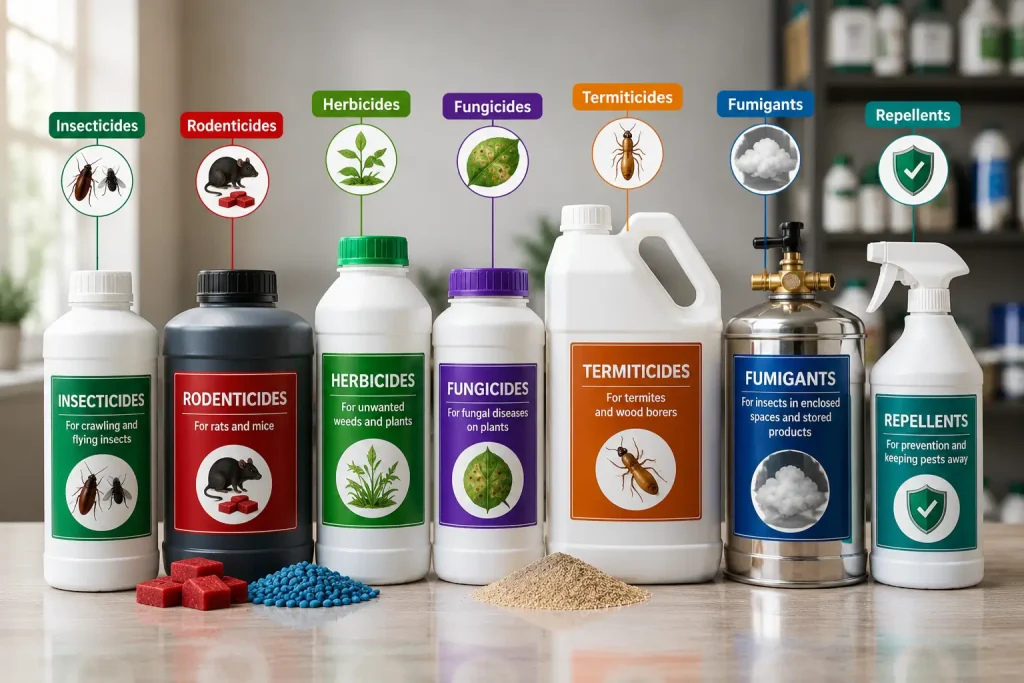
Insecticides
- Purpose: Insecticides kill crawling and flying insects such as ants, cockroaches, and flies.
- Common uses: Technicians apply insecticides in kitchens, warehouses, gardens, and building perimeters.
- Examples: Permethrin, bifenthrin, and cypermethrin are common insect control chemicals used in residential pest control programs.
Rodenticides
- Purpose: Rodenticides eliminate rats and mice through poisoned bait stations.
- How they eliminate rodents: These rodent control chemicals cause internal bleeding (anticoagulants like bromadiolone) or neurological failure, killing rodents within 3 to 7 days of ingestion.
Herbicides
Weed control: Herbicides destroy unwanted vegetation that attracts pests near building foundations, reducing hiding spots for insects and rodents.
Fungicides
Mold and fungus prevention: Fungicides stop fungal growth on wood and soil, protecting structures from decay that attracts termites and wood-boring beetles.
Termiticides
- Soil treatments: Termiticides create a chemical barrier in soil around foundations, blocking termite entry for up to 10 years.
- Wood treatments: Borate-based termiticides soak into timber, killing termites that chew through treated wood.
Fumigants
- Whole-building treatments: Fumigants like sulfuryl fluoride gas penetrate entire structures, killing pests hidden inside walls and furniture within 24 to 72 hours.
- Warehouse applications: Large commercial pest control chemical treatments use fumigation to protect stored grain and goods from insect infestations.
Repellents
- Mosquitoes: DEET and picaridin-based mosquito control chemicals repel biting insects for up to 8 hours.
- Rodents: Peppermint oil and capsaicin sprays deter rodents from entering structures.
- Wildlife: Ultrasonic and chemical repellents keep birds and larger animals away from properties.
Biological Chemical Products
- Natural pesticides: Pyrethrins, derived from chrysanthemum flowers, offer a plant-based alternative to synthetic insecticides.
- Microbial solutions: Bacillus thuringiensis (Bt) targets caterpillars and mosquito larvae without harming humans or pets.
Common Active Ingredients Used by Pest Control Professionals
| Active Ingredient | Primary Target | Mode of Action |
| Pyrethroids | Ants, cockroaches, mosquitoes | Nervous system disruption |
| Pyrethrins | General insects | Contact paralysis |
| Fipronil | Termites, ants | Slow-acting nerve poison |
| Imidacloprid | Termites, fleas | Neurotoxin |
| Boric Acid | Cockroaches, ants | Stomach and contact poison |
| Hydramethylnon | Ants, cockroaches | Metabolic disruption |
| Indoxacarb | Cockroaches, ants | Nerve blocker |
| Abamectin | Ants, cockroaches | Nervous system paralysis |
| Bifenthrin | Spiders, termites | Contact insecticide |
| Permethrin | Mosquitoes, ticks | Nerve toxin |
| Deltamethrin | Bed bugs, roaches | Fast knockdown |
| Cypermethrin | General pests | Long-residual insecticide |
| Bromadiolone | Rats, mice | Anticoagulant |
| Brodifacoum | Rats, mice | Single-feed anticoagulant |
Which Chemicals Work Best for Different Pests?
Cockroach control chemicals like fipronil and hydramethylnon work through bait stations, since roaches share food with the colony. Ant control chemicals, such as indoxacarb, use the same slow-kill method. Termite treatment chemicals rely on fipronil and imidacloprid soil barriers. Mosquito control chemicals use permethrin-based fogging. Rodent control chemicals depend on bromadiolone or brodifacoum bait blocks placed in tamper-resistant stations.
How Do Pest Control Chemicals Actually Work?
Contact Action
Contact chemicals kill pests the moment they touch treated surfaces, working within seconds to minutes.
Stomach Poison
Ingested chemicals disrupt digestion or metabolism after a pest eats treated bait, taking hours to days.
Nervous System Disruption
Neurotoxins like pyrethroids block nerve signal transmission, causing paralysis and death within minutes.
Growth Regulation
Insect growth regulators (IGRs) stop larvae from maturing into breeding adults, halting reproduction for over 2 to 3 weeks.
Reproductive Control
Some chemicals sterilize pests, reducing population growth without immediate kill.
Dehydration Mechanism
Diatomaceous earth and desiccant dusts strip a pest’s protective waxy coating, causing death through water loss within 48 hours.
Are Pest Control Chemicals Harmful to Humans?
Short-Term Health Risks
Direct exposure can cause skin irritation, headaches, nausea, and eye irritation within minutes of contact.
Long-Term Exposure Risks
Repeated, unprotected exposure to organophosphates has been linked to nervous system and hormonal effects over years of contact.
Risks for Children
Children absorb chemicals faster due to lower body weight, increasing sensitivity to standard adult-dose exposure.
Risks for Pregnant Women
Certain insecticides cross the placental barrier, so pest control while pregnant requires extra caution, and pregnant women should avoid direct contact with fresh chemical treatments.
Risks for Pets
Pets that lick treated surfaces or ingest rodenticide bait face poisoning risk; keep pets away from treated zones for 24 hours.
Common Symptoms of Chemical Exposure
Symptoms include dizziness, coughing, watery eyes, skin rash, and in severe cases, vomiting or difficulty breathing.
How to Use Pest Control Chemicals Safely
Read the Product Label First
The label lists exact dosage, target pests, and safety warnings required by law.
Wear Protective Equipment
Gloves, masks, and goggles prevent skin and respiratory exposure during application.
Prepare the Treatment Area
Remove food, dishes, and toys before spraying any indoor pest control chemicals.
Apply the Correct Dosage
Overuse increases health risk without improving pest control results.
Avoid Food Preparation Areas
Never spray insecticides directly on countertops, plates, or cooking surfaces.
Keep Children and Pets Away
Restrict access to treated areas for at least 4 hours after application.
Ventilate Indoor Spaces
Open windows for 30 minutes after spraying to clear chemical fumes.
Store Chemicals Properly
Keep pesticides in original containers, locked away from children, at temperatures below 30°C.
Dispose of Leftover Chemicals Safely
Never pour pesticides down drains; use approved hazardous waste disposal sites.
How to Apply Pest Control Chemicals
- Identify the Pest: Inspect the property to confirm the exact species causing damage.
- Choose the Correct Chemical: Match the active ingredient to the pest’s biology.
- Calculate the Required Amount: Measure dosage based on square footage and label instructions.
- Prepare Safety Equipment: Put on gloves, masks, and protective clothing.
- Mix the Product (If Required): Combine concentrate with water at the ratio listed on the label.
- Apply to Target Areas: Spray or place bait at entry points, cracks, and nesting sites.
- Allow the Product to Work: Let residual chemicals sit undisturbed for 2 to 4 hours.
- Clean Up Safely: Wash equipment and remove protective gear without touching your face.
- Monitor Results: Check treated areas after 48 to 72 hours for pest activity.
- Repeat Treatment Only If Needed: Reapply after 14 to 30 days if pests persist.
Read our full guide on how often should pest control be done for a full treatment schedule based on pest type and property size.
Indoor vs Outdoor Pest Control Chemicals
Indoor Products
Indoor pest control chemicals use low-odor, fast-drying formulas safe for enclosed spaces, such as gel baits and aerosol sprays.
Outdoor Products
Outdoor pest control chemicals include granular termiticides and perimeter sprays built to withstand rain and sun exposure.
Which One Should You Choose?
Use indoor products for kitchen and bedroom pests; use outdoor products for garden, foundation, and perimeter treatments.
Chemical Pest Control vs Natural Pest Control
| Factor | Chemical Pest Control | Natural Pest Control |
| Effectiveness | Kills pests within hours | Takes days to weeks |
| Safety | Requires protective measures | Generally lower risk |
| Cost | Moderate to high | Lower upfront cost |
| Speed of Results | Fast, 24 to 72 hours | Slow, 1 to 4 weeks |
| Environmental Impact | Higher if misused | Minimal impact |
Which Option Is Better?
Chemical treatment works best for severe infestations, while natural methods suit light, preventive maintenance.
Advantages of Chemical Pest Control
Chemical treatments offer fast action, long-lasting protection up to 90 days, and proven effectiveness against severe infestations. Professional-grade solutions used by licensed technicians deliver results unmatched by store-bought products, and wide availability makes these pest control products accessible for both homes and businesses.
Disadvantages of Chemical Pest Control
Potential health risks, environmental concerns, and chemical resistance in pest populations remain valid drawbacks. Incorrect application causes hazards, and broad-spectrum products can harm beneficial insects like bees alongside target pests.
Mistakes People Make When Using Pest Control Chemicals
Using too much product wastes money without improving results. Mixing different chemicals creates dangerous reactions. Ignoring label instructions leads to under- or over-treatment. Applying at the wrong time, such as before rain, reduces effectiveness. Skipping protective equipment increases exposure risk. Treating the wrong pest wastes chemicals and allows infestations to spread.
How Long Do Pest Control Chemicals Remain Effective?
Indoor Residual Treatments
Indoor sprays remain active for 30 to 90 days on untreated surfaces.
Outdoor Treatments
Outdoor barriers last 60 to 120 days, depending on rainfall and sun exposure.
Weather Effects
Rain washes away granular treatments faster, reducing effectiveness within 7 to 14 days after heavy storms.
Surface Type
Porous surfaces like wood absorb chemicals longer than sealed concrete or tile.
How to Reduce Chemical Exposure After Treatment
Cleaning Tips
Wipe down countertops and surfaces with soap and water 24 hours after treatment.
Air Ventilation
Run fans or open windows for at least 1 hour to clear indoor air.
Safe Re-entry Times
Wait 4 to 6 hours before re-entering a treated space without ventilation.
Protecting Food and Kitchen Items
Cover or remove food items before treatment and wash dishes before use afterward.
Environmental Impact of Pest Control Chemicals
Effects on Pollinators
Broad-spectrum insecticides can harm bees and butterflies if sprayed on flowering plants.
Soil Contamination
Overuse of termiticides can affect soil microorganisms near treated foundations.
Water Pollution
Chemical runoff into drains contaminates water systems, harming aquatic life.
Responsible Chemical Use
Licensed technicians use targeted application methods to minimize environmental exposure while maintaining pest control effectiveness, in line with standards set by the Dubai Municipality Public Health & Pest Control Section.
Signs You Should Hire a Professional Pest Control Service
Large Infestations
Visible nests, droppings, or damage across multiple rooms signal a problem beyond DIY treatment.
Recurring Pest Problems
Pests returning within weeks of self-treatment indicate an unresolved entry point or breeding site.
Dangerous Pests
Termites, venomous spiders, and disease-carrying rodents require licensed handling and commercial-grade chemicals.
Commercial Buildings
Restaurants, warehouses, and offices need scheduled treatments to meet health and safety regulations.
Final Thoughts
Chemical pest control remains the most reliable method for eliminating insects, rodents, and termites quickly and effectively. Choosing the right pest control chemicals, applying them correctly, and following safety guidelines protects both people and property.
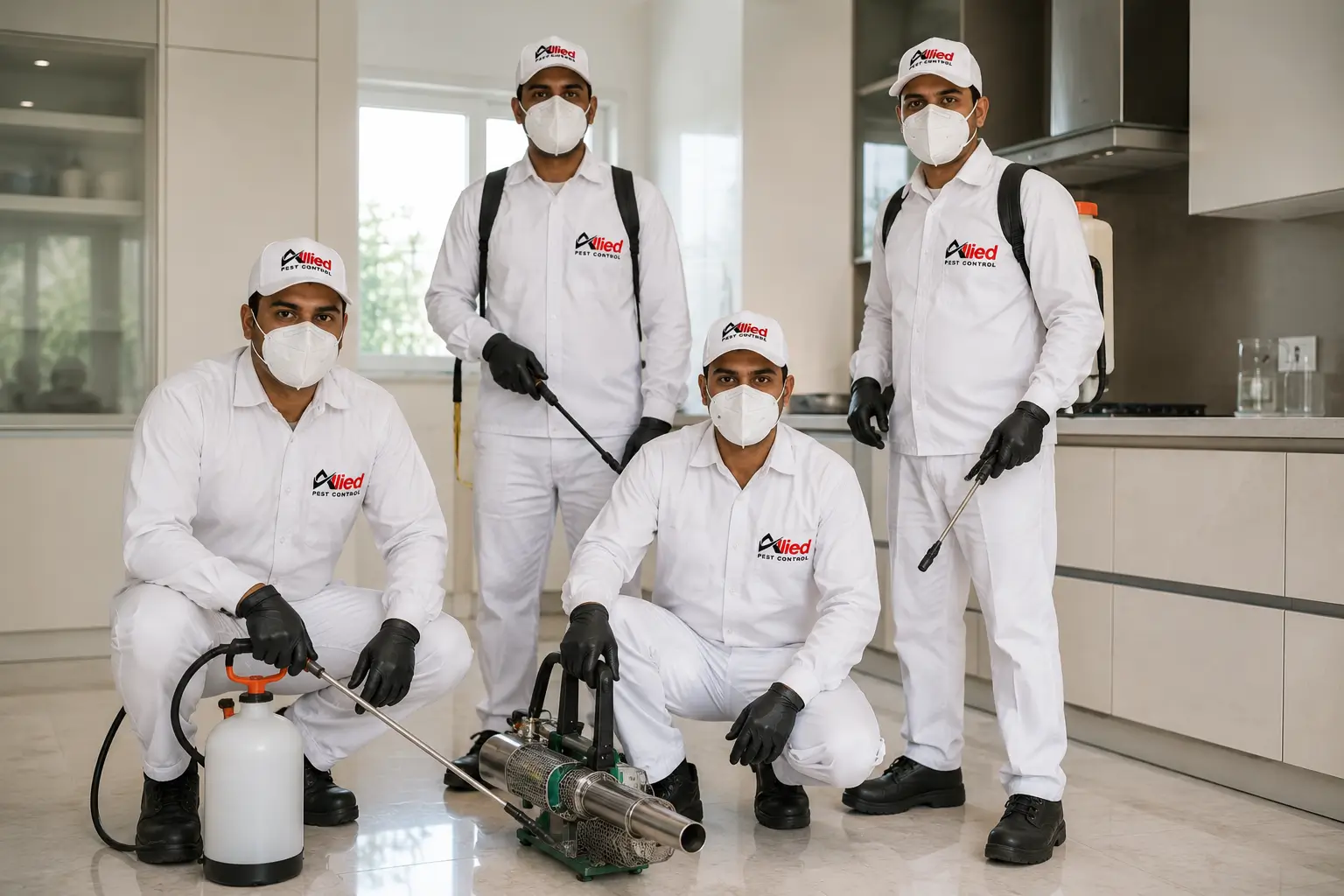
For infestations beyond basic prevention, professional pest control Dubai services from Allied Pest Control deliver targeted, licensed treatment backed by proven active ingredients.