Birds carry over 60 diseases that can spread to humans through droppings, feathers, nests, and parasites. These diseases range from respiratory infections such as histoplasmosis to bacterial illnesses such as salmonellosis. Property owners who ignore bird infestations face rising health risks, which is why effective bird control in Dubai starts with understanding these dangers.
Quick Answer of Birds Cause to Human Health
- Avoid contact with bird droppings and nests directly.
- Wear gloves and masks during cleanup.
- Disinfect contaminated surfaces with bleach solution.
- Seal entry points to prevent roosting.
- Call licensed bird control services for infestations.
Why Are Birds Considered a Health Risk?
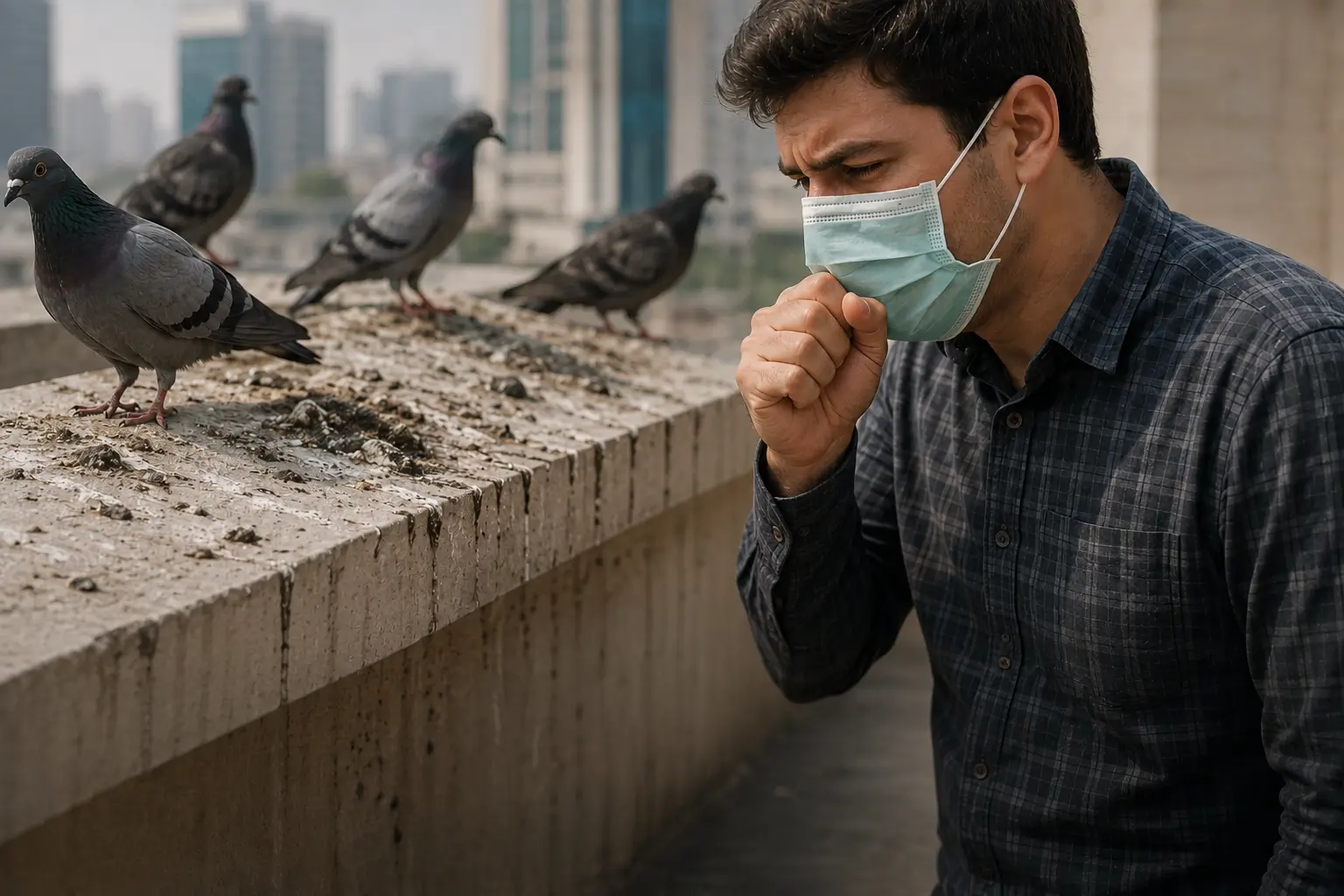
Bird nests close to human living and working spaces create direct pathways for disease transmission. Their droppings, feathers, and nesting material harbor bacteria, fungi, and parasites that survive for months. Dense urban environments like Dubai increase this risk because pigeons and sparrows roost on balconies, rooftops, and HVAC units near people.
Common Birds That Carry Diseases
Pigeons, sparrows, starlings, and crows are the most common disease carriers in urban areas. Pigeons alone carry more than 60 transmissible diseases, according to the Journal of Environmental Health. These birds nest in large colonies, which multiplies droppings and contamination across a single property.
How Birds Spread Germs to Humans
Birds transmit pathogens through three main routes: airborne dust from dried droppings, direct skin contact, and parasite bites. Wind and HVAC systems circulate contaminated dust indoors, exposing entire buildings. A single pigeon produces 25 pounds of droppings per year, creating a constant contamination source.
Why Bird Droppings Are Dangerous
Dried bird droppings release spores and bacteria into the air when disturbed. These particles cause fungal lung infections and bacterial poisoning when inhaled or ingested. Bird droppings corrode building facades, weakening paint, stone, and metal surfaces over time. This corrosion creates cracks that trap moisture and accelerate pathogen growth.
Diseases Birds Can Transmit to Humans
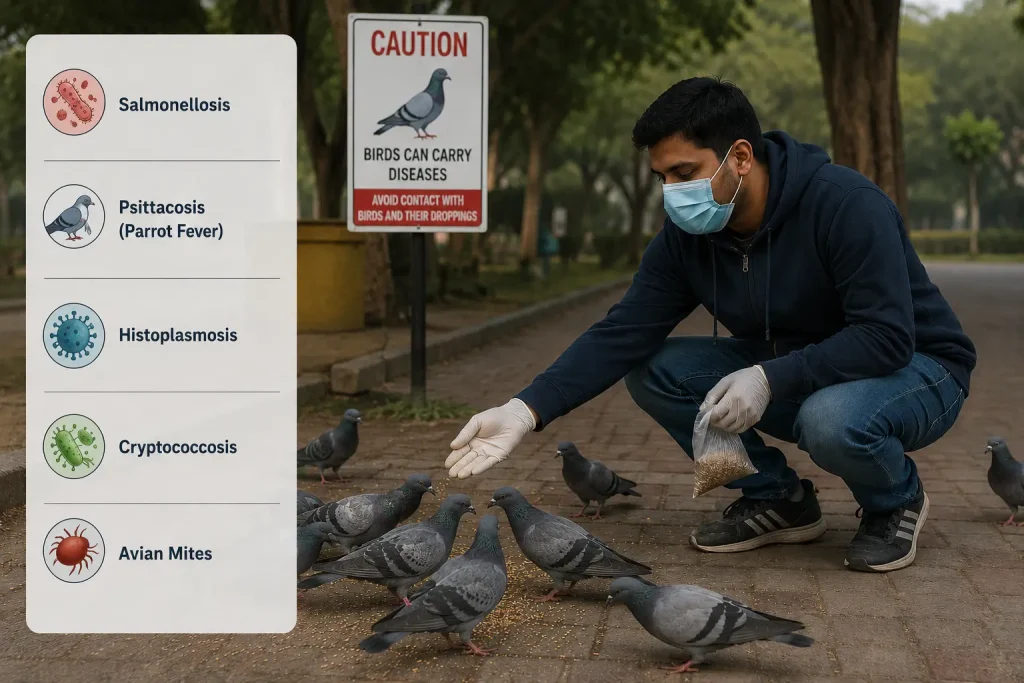
Histoplasmosis
Histoplasmosis is a fungal lung infection caused by inhaling spores from dried bird or bat droppings. Symptoms include fever, cough, and chest pain, appearing 3 to 17 days after exposure. Severe cases spread beyond the lungs in people with weakened immune systems.
Psittacosis (Parrot Fever)
Psittacosis is a bacterial infection caused by Chlamydia psittaci, found in parrots, pigeons, and poultry. Humans contract it by inhaling dust from infected droppings or feathers. Symptoms mimic pneumonia, including high fever, headache, and dry cough, starting 5 to 14 days after exposure.
Cryptococcosis
Cryptococcosis is a fungal disease transmitted through pigeon droppings, particularly in accumulated nesting sites. The fungus enters the lungs and can spread to the brain, causing meningitis in immunocompromised individuals. Cleanup crews without protective gear face the highest exposure risk.
Salmonellosis
Salmonellosis is a bacterial infection spread through bird droppings that contaminate food, water, and surfaces. Symptoms include diarrhea, fever, and abdominal cramps, lasting 4 to 7 days. Restaurants and food storage areas near bird nests face direct contamination risk.
Avian Influenza (Bird Flu)
Avian influenza is a viral infection that spreads from infected birds to humans through close contact with saliva, mucus, or droppings. The H5N1 strain causes severe respiratory illness and has a fatality rate above 50% in confirmed human cases, according to the World Health Organization. Poultry workers and bird handlers face the greatest exposure.
E. coli Infections
E. coli bacteria from bird droppings contaminate water supplies, soil, and food crops. Infected individuals develop severe stomach cramps, vomiting, and bloody diarrhea within 3 to 4 days. Children and older adults face a higher risk of kidney complications from this infection.
Campylobacter Infection
Campylobacter bacteria spread through bird droppings that contaminate water sources and food surfaces. This infection causes diarrhea, fever, and cramping, making it one of the most common bacterial foodborne illnesses worldwide. Untreated water tanks near bird nests are a frequent source.
How Do Humans Get Infected by Birds?
Humans get infected by birds through direct contact, contaminated dust, and parasite exposure. Bird control is essential in Dubai since everyday activities like cleaning balconies or inspecting attics can trigger transmission. The sections below explain each infection route in detail.
Breathing Contaminated Dust
Dried droppings crumble into fine dust that becomes airborne during cleaning or windy conditions. This dust carries fungal spores and bacteria directly into the lungs. Enclosed spaces like attics and storage rooms trap this dust, increasing exposure risk for anyone entering without a respirator mask.
Direct Contact with Bird Droppings
Touching droppings, then touching the face, mouth, or food, transfers bacteria and parasites directly into the body. Open wounds increase infection risk when exposed to contaminated surfaces. Handwashing alone does not eliminate all pathogens; disinfection is required.
Contaminated Food and Water
Birds contaminate open food storage, water tanks, and outdoor dining areas with droppings carrying salmonella and E. coli. Restaurants and warehouses near bird roosting sites face regulatory violations and health inspection failures. Covered storage reduces this risk significantly.
Bird Nests Around HVAC Systems
Nests built inside or near air conditioning units allow contaminated dust to circulate through indoor air systems. This spreads pathogens throughout entire buildings, affecting occupants who never directly contact the birds. Regular HVAC inspection catches this risk early.
Parasites Carried by Birds (Bird Mites & Ticks)
Bird mites and ticks live in nests and migrate indoors once birds leave or nests are disturbed. These parasites bite humans, causing itchy skin rashes and, in some cases, disease transmission. Mite infestations often appear weeks after birds abandon a nesting site.
Signs That Birds Cause Human Health Hazards
Excessive Bird Droppings
Accumulated droppings on balconies, windowsills, or rooftops signal an active infestation. Buildup of more than a thin layer indicates repeated roosting over weeks or months.
Nesting in Roofs or Attics
Scratching sounds, visible nesting material, and gaps in roofing indicate birds have established a nesting site indoors. These areas require immediate inspection.
Bad Odors
A persistent ammonia-like smell comes from decomposing droppings and nesting material. This odor signals bacterial and fungal growth requiring urgent cleanup.
Feathers Around the Property
Scattered feathers near entry points, vents, or storage areas confirm birds are roosting nearby. This is often the first visible sign before droppings accumulate.
Increased Insects Due to Bird Nests
Bird nests attract mites, fleas, and flies that feed on droppings and organic debris. A sudden rise in insect activity often points to a hidden nesting site.
Who Is Most at Risk of Bird-Related Diseases?
| Risk Group | Why They’re Vulnerable |
| Children | Developing immune systems, frequent hand-to-mouth contact |
| Older Adults | Weaker immune response, slower recovery |
| People with Weakened Immune Systems | Higher risk of severe fungal and bacterial infections |
| Warehouse & Factory Workers | Frequent exposure to nesting sites and dust |
| Restaurant and Food Facility Staff | Direct contact with contaminated food storage areas |
Children
Children touch surfaces frequently and put their hands near their mouths, increasing the risk of bacteria from contaminated areas.
Older Adults
Weakened immune systems in older adults slow recovery from fungal and bacterial infections, raising complication rates.
People with Weakened Immune Systems
Cancer patients, transplant recipients, and HIV-positive individuals face severe outcomes from histoplasmosis and cryptococcosis.
Warehouse & Factory Workers
Workers in facilities with open-roof structures face daily exposure to droppings, dust, and nesting debris.
Restaurant and Food Facility Staff
Food handlers near contaminated storage areas risk spreading Salmonella and E. coli to consumers.
How to Prevent Bird-Related Diseases
- Avoid Touching Bird Droppings: Use gloves and tools, never bare hands, when near nesting sites.
- Clean Contaminated Areas Safely: Wet droppings before cleaning to prevent dust from becoming airborne.
- Seal Entry Points: Close gaps in roofs, vents, and eaves larger than 1 inch.
- Remove Food Sources: Cover trash bins and outdoor food storage to stop attracting birds.
- Install Bird Deterrents: Use spikes, netting, or wire systems to block roosting spots.
How Professional Pest Control Helps Prevent Bird-Related Diseases
Bird Inspection and Risk Assessment
Licensed technicians inspect rooftops, HVAC units, and ledges to identify active nesting sites and contamination levels before starting treatment.
Safe Bird Removal Services
Professionals use humane trapping and exclusion methods to remove birds without harming them, following UAE wildlife handling regulations.
Bird Proofing Solutions (Netting, Spikes & Wire Systems)
Bird netting and spikes are popular in Dubai for their durability against heat and sandstorms. Technicians install anti-roosting spikes, tensioned wire systems, and mesh netting engineered to block access points permanently without damaging structures.
Removal of Bird Nests and Droppings
Crews wearing full protective gear remove nests and droppings using HEPA-filtered vacuums, preventing spore release into the air.
Professional Sanitization and Disinfection
Hospital-grade disinfectants neutralize bacteria and fungal spores on contaminated surfaces, reducing reinfection risk for occupants.
Long-Term Bird Prevention Plans
Ongoing maintenance contracts include quarterly inspections and deterrent upkeep, stopping birds from returning to treated sites.
When Should You Call a Pest Control Expert?
Birds Keep Returning
Repeated roosting despite DIY deterrents signals a need for professional-grade bird-proofing solutions.
Large Amounts of Bird Droppings
Thick droppings buildup requires protective equipment and disinfection beyond standard cleaning supplies.
Birds Nesting Inside Buildings
Nests inside attics, vents, or wall cavities require safe extraction to avoid structural damage and health exposure.
Health Concerns for Employees or Family Members
Respiratory symptoms or skin rashes linked to bird exposure require immediate professional intervention and testing.
Conclusion
Allied Pest Control helps property owners manage the health risks birds pose through droppings, nests, and parasites that spread diseases like histoplasmosis and salmonellosis. Early action prevents small infestations from becoming serious hazards. Contact us today for professional bird control in Dubai and protect your health.