Dubai is a city that never slows down. From five-star beachfront resorts to sprawling malls and lush public parks, the emirate welcomes millions of visitors every year. But beneath all that glitz and hospitality lies a persistent challenge that property managers and facility teams deal with quietly mosquito problems.
The combination of Dubai’s warm climate, high humidity near coastal and low-lying areas, and the inevitable presence of water features, irrigation systems, and construction sites creates conditions where mosquitoes can thrive. For hotels, resorts, and public spaces, this isn’t just a nuisance; it’s a serious operational concern that directly affects guest satisfaction, health standards, and brand reputation.
Quick Answer: How Do Hotels and Public Spaces Control Mosquitoes in Dubai?
Hotels and public spaces in Dubai control mosquitoes through a combination of scheduled fogging treatments, larvicide applications, drainage management, and professional pest inspections. Most high-end properties partner with licensed pest control providers to ensure compliance with Dubai Municipality standards while keeping guests comfortable and safe year-round.
Why Mosquito Control Is Critical in Dubai’s Hospitality Industry
Guest Experience Comes First
No guest wants to enjoy a rooftop dinner or poolside cocktail while swatting away mosquitoes. A single bad experience can translate into a scathing online review, and in today’s hospitality landscape, reviews are everything. Hotels invest heavily in ambiance, service, and comfort, all of which can be undone by an uncontrolled mosquito problem.
Luxury properties in particular cannot afford lapses. Their guests expect a certain standard, and that standard extends to the outdoor environment.
Health Concerns Are Real
While Dubai is not a high-risk zone for mosquito-borne diseases like malaria or dengue compared to other tropical destinations, the risk is never zero. Mosquito bites cause discomfort, allergic reactions, and, in rare cases, can transmit illness. Hospitality managers have a duty of care to protect their guests, staff, and the surrounding community.
Reputation and Compliance
Dubai Municipality enforces strict public health and pest management regulations for commercial properties. Hotels and public facilities that fail to meet these standards risk fines, operational warnings, or worse, negative publicity. Maintaining a mosquito-free environment isn’t just good hospitality practice; it’s a legal and regulatory obligation.
Common Mosquito Breeding Risks in Hotels and Public Spaces
Understanding where mosquitoes breed is the first step in eliminating them. Surprisingly, most infestations start small, a forgotten pot of water, a clogged drain, or a decorative fountain left untreated.
The most common breeding sites in commercial properties include:
- Standing water in ornamental water features and fountains: These are attractive design elements, but they become mosquito nurseries without proper treatment.
- Landscaping and irrigation systems: Overwatered plants and poor drainage create damp soil and pooling water that mosquitoes love.
- Rooftop drainage and HVAC condensate trays: Often overlooked during routine maintenance, these areas accumulate stagnant water regularly.
- Underground parking drainage: Dark, damp, and rarely inspected, these spots are prime breeding grounds.
- Construction areas adjacent to hotels: Ongoing development in Dubai means nearby sites with exposed soil, containers, and puddles frequently contribute to nearby infestations.
Understanding why mosquito problems keep growing in urban environments helps property managers take a more proactive stance rather than reacting after the fact.
Professional Mosquito Control Strategies Used in Dubai
Managing mosquitoes at a commercial scale requires more than the occasional spray. Professional-grade strategies are systematic, evidence-based, and adapted to the specific conditions of each property.
Regular Inspections
Certified pest control technicians conduct thorough site assessments, identifying active breeding zones, entry points, and high-risk areas. These inspections typically happen on a scheduled monthly or biweekly basis, with additional spot checks during peak mosquito season (April through October).
Fogging and Misting Systems
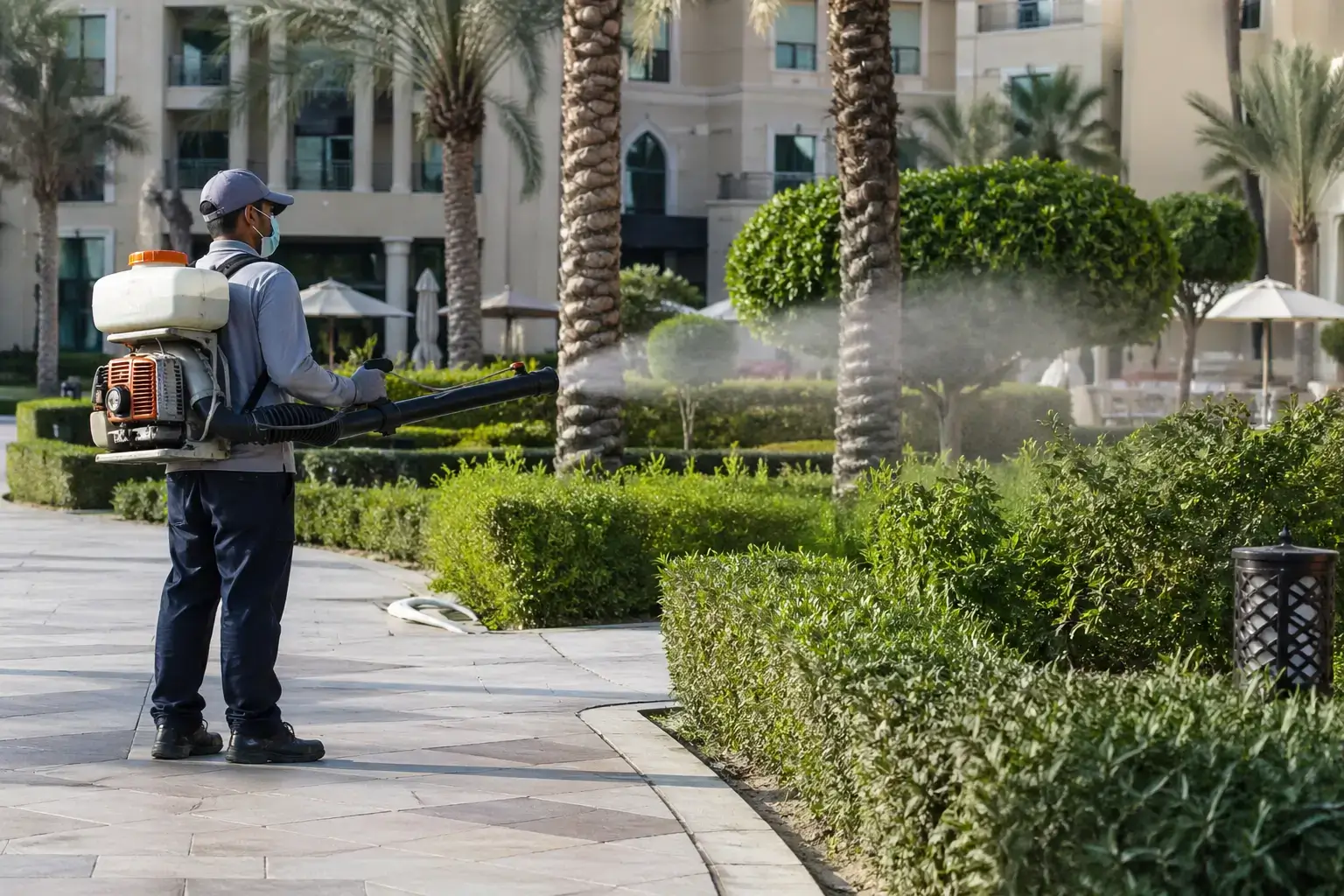
Thermal fogging and Ultra-Low Volume (ULV) misting are the most common treatment methods used across hotels and outdoor hospitality spaces. These methods disperse insecticide particles into the air and across vegetation, targeting adult mosquitoes efficiently over large areas.
Automated misting systems installed around garden perimeters and outdoor dining areas can be programmed to run at dawn and dusk, the peak activity times for most mosquito species.
Larvicide Treatments
Killing mosquitoes at the larval stage is far more effective than treating adults. Larvicides, often in the form of biological agents like Bacillus thuringiensis israelensis (Bti) or growth regulators, are applied to water features, drains, and irrigation systems to prevent larvae from developing into biting adults.
Drain Maintenance
Regular flushing and treatment of drainage systems, catch basins, and gutters disrupts the mosquito lifecycle before it begins. This is one of the most overlooked yet impactful steps in long-term mosquito management.
Smart Monitoring Systems
High-end properties in Dubai are increasingly adopting IoT-enabled mosquito traps and monitoring devices. These systems track mosquito activity in real time, allowing facility managers to respond to spikes in population before they become full infestations.
Preventive Measures Hotels Follow Daily
Professional treatments work best when supported by consistent daily hygiene and maintenance protocols.
Standard daily preventive measures include:
- Housekeeping checks for standing water in planters, buckets, trays, and outdoor furniture.
- Emptying and refreshing water features that are not chemically treated.
- Inspecting and maintaining pool areas to ensure proper chlorination and filtration.
- Closing outdoor trash receptacles tightly to avoid attracting insects and creating damp waste zones.
- Trimming vegetation regularly to reduce shaded, damp resting spots for adult mosquitoes.
Guests can also take steps to prevent mosquito breeding at home, and sharing such awareness through hotel communication channels can foster a more cooperative environment.
The Role of Professional Pest Control Services
No matter how diligent in-house teams are, there is no real substitute for trained professionals who specialize in mosquito biology and control. A licensed Mosquito Control Service in Dubai brings expertise, approved chemicals, specialized equipment, and a structured treatment plan that DIY approaches simply cannot match.
Benefits of Hiring Experts
- Access to Municipality-approved insecticides and application methods
- Trained technicians who understand the biology and behavior of local mosquito species
- Documentation and compliance reporting for regulatory audits
- Eco-friendly treatment options that minimize impact on non-target species
Allied Pest Control: A Trusted Name in Dubai
Allied Pest Control has earned a strong reputation among hotels, facility managers, and commercial operators across Dubai. Their team of certified technicians follows Dubai Municipality guidelines closely and offers customized mosquito management programs suited to the unique demands of hospitality environments, from small boutique hotels to large resort complexes.
Their approach emphasizes long-term prevention over reactive treatment, which means fewer disruptions and more consistent results for property managers and their guests.
How Public Spaces Like Parks and Malls Stay Mosquito-Free
Dubai’s public spaces, parks, promenades, outdoor malls, and waterfront developments are managed at a larger scale, typically through coordinated efforts between private management companies and Dubai Municipality.
Key strategies in public space management include:
- Scheduled municipal fogging operations: across green zones and community parks, especially during peak season.
- Biological treatments in public water bodies, such as decorative lakes and retention ponds.
- Public hygiene campaigns: that encourage residents and visitors not to leave standing water or litter in outdoor spaces.
- Strict contractor compliance: requires construction sites near public areas to manage water accumulation and pest control independently.
Major shopping destinations like Dubai Mall and Mall of the Emirates invest heavily in perimeter pest management to ensure that outdoor plazas, parking areas, and garden zones remain welcoming and free of insects.
Tips for Businesses to Avoid Mosquito Infestations
Whether you manage a small café terrace or a sprawling resort, these practical steps will help keep mosquitoes at bay:
- Audit your property for standing water every week: even small amounts in saucers and trays can support breeding.
- Install and maintain door and window screens: back-of-house areas like kitchens and laundry rooms.
- Use yellow or sodium vapor lighting outdoors: these attract fewer insects than white fluorescent lights.
- Keep drains flowing freely: with regular flushing and bio-enzyme treatments.
- Partner with a licensed pest control provider: a recurring contract rather than calling for help only when problems arise.
- Train maintenance and housekeeping staff: to recognize early signs of mosquito activity and report them promptly.
- Document all pest control activities: regulatory compliance and internal records.
Conclusion
Keeping mosquitoes under control in Dubai’s hotels and public spaces isn’t a one-time fix; it’s an ongoing effort that combines professional treatments, daily maintenance routines, and expert partnerships. Properties that take a proactive approach consistently deliver better guest experiences and stay ahead of compliance requirements.
Allied Pest Control is ready to help your property stay protected year-round with tailored, Municipality-approved mosquito management solutions. Don’t wait for complaints to take action, reach out today and make mosquito control a seamless part of your operations.