
Mosquito problems keep growing because standing water, dense vegetation, and warm temperatures create ideal breeding conditions that most homeowners overlook. A single female mosquito lays up to 300 eggs in just one bottle cap of water. Without systematically targeting breeding sites, standard sprays only temporarily reduce the adult mosquito population, which rebounds within 7–10 days.
What Is a Mosquito Problem and Why Does It Keep Growing?
A mosquito problem usually grows when breeding conditions are left uncontrolled. Even a small amount of stagnant water, such as in flower pots, clogged gutters, bird baths, or tire tracks, can become a breeding site. In warm regions like Dubai and the Gulf, mosquito populations can multiply rapidly during peak seasons.
Many homeowners only target adult mosquitoes with sprays, but the real issue begins at the larval stage. Without proper larval control, the breeding cycle continues within 7–14 days, causing repeated infestations. You can learn more about prevention in this guide on mosquito breeding prevention at home.
Here is a quick table summarizing tasks, methods, and estimated time needed.
| Task | Method | Frequency | Time Needed |
| Remove standing water | Manual drainage + inspection | Weekly | 15–30 min |
| Larvicide application | Bti dunks or granules | Every 30 days | 10–20 min |
| Adult mosquito spraying | Residual pyrethroid spray | Every 21 days | 30–60 min |
| Vegetation management | Trimming + fogging | Monthly | 45–90 min |
| Trap deployment | CO₂ or UV light traps | Ongoing (24/7) | Setup: 20 min |
| Professional inspection | Full property audit | Every 3–4 weeks | 60–90 min |
What is the Solution of Mosquito Growing Problem?
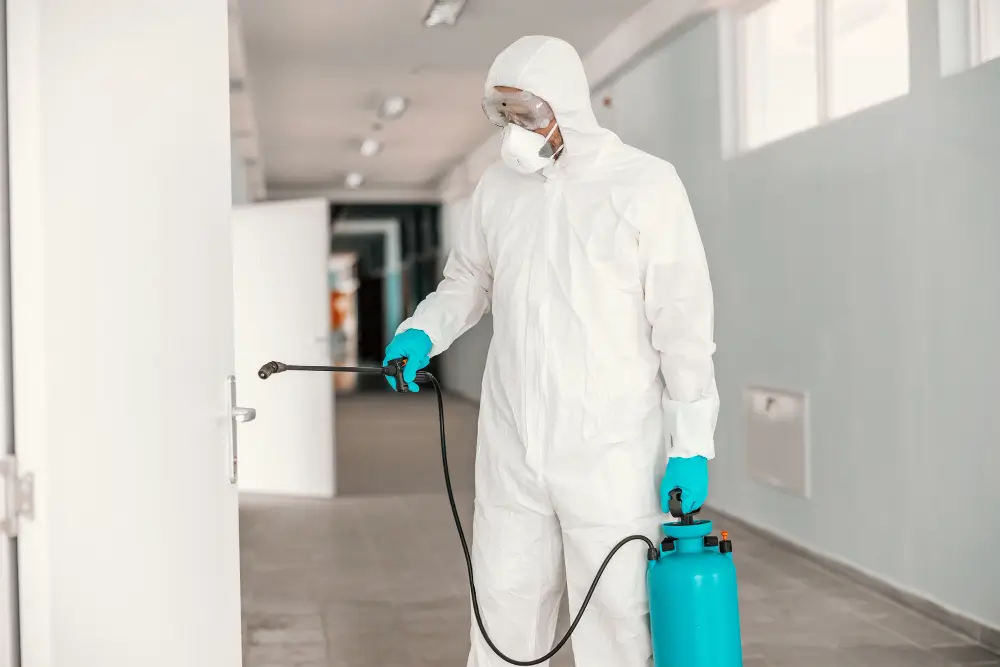
Allied Pest Control has treated thousands of properties across Dubai using a proven, systematic approach that targets every stage of the mosquito life cycle. Using the correct mosquito control method in Dubai eliminates breeding at the source. I will explain step by step, as given below.
Step 1: Conduct a Full Property Inspection for Breeding Sites
Walk the entire perimeter of your property with a flashlight. Check gutters, AC condensate trays, plant saucers, pool covers, and any ground depressions that hold water after rain. Document every site. Studies show that 80% of mosquito breeding occurs within 100 meters of the infestation source.
Step 2: Eliminate or Treat Every Standing Water Source
Drain all removable water sources. For water you cannot drain, decorative ponds, irrigation channels, or roof drains, apply Bti larvicide dunks at a rate of 1 dunk per 100 square feet of water surface. Bti kills mosquito larvae within 24 hours and remains effective for 30 days.
Step 3: Apply Residual Insecticide to Resting Sites
Adult mosquitoes rest in shaded, cool areas during the day beneath shrubs, on fence undersides, and in dense ground cover. Apply a pyrethroid-based residual spray (Suspend SC diluted at 0.75 oz per gallon) to all foliage surfaces, focusing on the undersides of leaves. This treatment kills resting adults within 15 minutes of contact and remains active for 21 days.
Step 4: Fog Dense Vegetation at Dusk
Mosquito activity peaks at dusk. Use a ULV (ultra-low volume) fogger loaded with a pyrethrin-based solution to treat thick vegetation, hedges, and tree canopies. Fogging at dusk maximizes contact with active adult mosquitoes. A standard quarter-acre property requires 10–15 minutes of fogging coverage.
Step 5: Install Mosquito Traps for Ongoing Population Control
Deploy CO₂-baited mosquito traps (Mosquito Magnet Patriot Plus or equivalent) at the perimeter of the property, 30 feet from common outdoor activity areas. These traps mimic human breath and body heat, attracting and capturing mosquitoes 24 hours a day. Research from the American Mosquito Control Association shows CO₂ traps reduce local populations by 70–90% within 6 weeks.
Step 6: Trim Vegetation and Improve Air Circulation
Mosquitoes prefer high-humidity environments. Cut back overgrown shrubs, tall grass, and dense hedges to reduce resting habitat. Maintain lawn height at 3 inches or below. Improved airflow lowers localized humidity by 10–15%, making the area significantly less hospitable to mosquito populations.
Step 7: Seal Indoor Entry Points
Repair window screens with holes larger than 1.2 mm, the minimum entry size for Aedes aegypti. Apply weather stripping to door gaps. Install screen doors on balcony entries. Check that air conditioning drainage lines do not create interior water pools. This step prevents indoor mosquito infestations entirely.
Step 8: Schedule a Professional Follow-Up Every 21–30 Days
Mosquito control is not a one-time event. A licensed pest control technician re-inspects breeding sites, reapplies larvicide, and re-treats resting zones on a 21–30 day rotation that matches the mosquito life cycle. This maintains 85–95% suppression rates year-round.
How Long Does Mosquito Control Take to Work?
Residual sprays kill adult mosquitoes within 15–60 minutes of contact. Larvicide (Bti) eliminates larvae within 24 hours. A noticeable reduction in mosquito activity, typically 70–80% fewer bites, takes 5–7 days after the first full treatment cycle. Complete population suppression requires 4–6 weeks of consistent treatment following the 8-step protocol above.

Advanced Mosquito Control Techniques That Actually Work
- Eliminate all standing water sources around your property immediately.
- Apply larvicide (Bacillus thuringiensis israelensis) to water you cannot drain.
- Trim dense vegetation where adult mosquitoes rest during the day.
- Use residual insecticide sprays on shaded shrubs every 21 days.
- Install CO₂-baited traps to reduce adult mosquito populations by up to 90%.
- Seal or repair window and door screens to prevent indoor entry.
- Schedule professional mosquito control inspections every 3–4 weeks.
How Often Should You Treat for Mosquitoes?
Treat for mosquitoes every 21 days during peak season (warm, humid months) and every 30–45 days during cooler periods. Standing water inspections should happen weekly regardless of the season. In high-risk areas like Dubai, where temperatures exceed 30°C for 8+ months of the year, monthly professional mosquito control treatments deliver the most consistent protection.
Conclusion
Mosquito problems keep growing because breeding cycles are fast, breeding sites are hidden, and surface-level sprays do not interrupt the larval stage. The solution is a structured, multi-stage approach: find every water source, apply Bti larvicide, spray adult resting zones, fog at dusk, and follow up every 21–30 days.
For properties across Dubai and the wider UAE, Allied Pest Control provides certified Mosquito Control Dubai services combining residual treatment, larviciding, fogging, and CO₂ trap deployment for year-round mosquito suppression. A professionally managed program is the fastest and most reliable path to a bite-free outdoor environment.