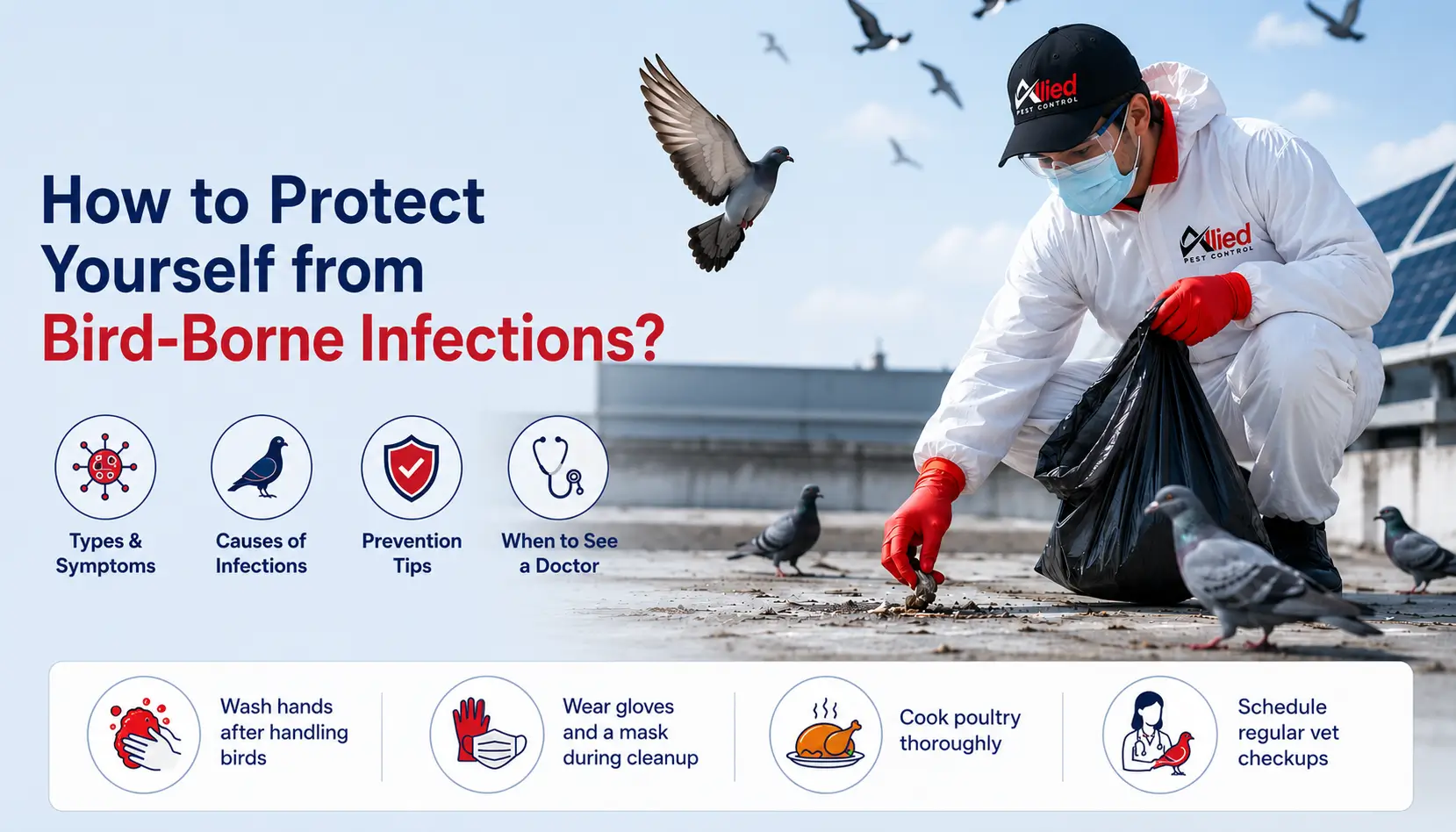
Bird-borne infections spread from birds to humans through droppings, feathers, dust, or direct contact. Protect yourself by washing hands after handling birds, wearing gloves and a mask during cleanup, cooking poultry thoroughly, and scheduling regular vet checkups. This guide covers types, symptoms, causes, and prevention.
Bird-Borne Infections in Humans: Types, Symptoms, and Prevention
What Are Bird-Borne Infections?
Bird-borne infections are zoonotic diseases passed from birds to humans. Common types include psittacosis, avian influenza, histoplasmosis, and salmonellosis.
How Do Birds Spread Infections to Humans?
Birds spread pathogens through droppings, secretions, feathers, and bites. Dried droppings release spores into the air when disturbed.
Who Is Most at Risk?
Poultry workers, pet bird owners, and pigeon keepers face the highest risk. Children, older adults, and people with weak immune systems get severe symptoms more often.
Types of Bird-Borne Infections in Humans
Psittacosis (Parrot Fever)
Psittacosis is a bacterial infection from Chlamydia psittaci, found in parrots and pigeons. Symptoms appear 5 to 14 days after exposure as fever and dry cough.
Avian Influenza (Bird Flu)
Avian influenza spreads through wild waterfowl and poultry. The WHO reports the H5N1 strain has a fatality rate of roughly 50% in confirmed human cases.
Histoplasmosis
Histoplasmosis is a fungal lung infection caused by Histoplasma capsulatum, which is found in soil contaminated with bird droppings. Immunocompromised people risk severe lung disease.
Cryptococcosis
Cryptococcosis results from inhaling the fungus Cryptococcus neoformans, which is common in pigeon droppings. It can spread to the brain and cause meningitis.
Salmonellosis
Salmonella spreads through bird droppings and undercooked eggs. Symptoms include diarrhea and fever within 6 to 72 hours.
Campylobacter Infection
Campylobacter spreads through raw poultry and bird feces. The CDC ranks it a leading cause of bacterial foodborne illness.
Newcastle Disease
Newcastle disease mainly infects poultry but can cause mild conjunctivitis in handlers. Symptoms usually clear within days.
Symptoms of Bird-Borne Infections in Humans
Respiratory Symptoms
Fever, dry cough, and shortness of breath signal infections like psittacosis. A cough lasting beyond 7 days needs medical evaluation.
Digestive Symptoms
Diarrhea, nausea, and cramping indicate infections like salmonellosis. Symptoms usually start within hours to a few days.
Eye and Skin Symptoms
Conjunctivitis and skin irritation follow direct contact with infected birds. Symptoms typically clear within a week.
Severe Symptoms That Need Immediate Medical Attention
High fever above 103°F, breathing trouble, and confusion need emergency care. These signal the infection has become serious.
How Do Humans Get Bird-Borne Infections?
Contact with Infected Birds
Touching or handling sick birds transfers pathogens to the skin. Bites and scratches can introduce bacteria into the bloodstream.
Exposure to Bird Droppings
Dried droppings release spores when swept or disturbed. Balconies and rooftops with nesting birds carry ongoing risk.
Inhaling Contaminated Dust
Dust from feathers and nests carries fungal spores into the lungs. Enclosed spaces like coops concentrate this risk.
Handling Bird Cages, Feathers, or Nests
Cage bars and perches harbor bacteria for days. Bare-hand contact transfers pathogens to the mouth or eyes.
Contaminated Food or Water
Droppings in water and undercooked eggs both transmit Salmonella. Cooking poultry to 165°F kills these pathogens.
How to Protect Yourself from Bird-Borne Infections
Wash Your Hands After Handling Birds
Wash hands with soap and water for 20 seconds after touching birds or droppings. This one habit prevents most bacterial transmission.
Wear Gloves and a Mask When Cleaning Bird Areas
Disposable gloves and an N95 mask block skin contact and spore inhalation. This step prevents histoplasmosis and cryptococcosis.
Clean Bird Cages and Equipment Properly
Clean cages and perches twice a week with a bird-safe disinfectant. Soak droppings first so dust doesn’t become airborne.
Avoid Direct Contact with Wild Birds
Never touch wild birds, especially sick or dead ones. Keep children and pets away from pigeons in public spaces.
Cook Poultry and Eggs Thoroughly
Cook chicken and turkey to 165°F to kill Salmonella and Campylobacter. Avoid cross-contaminating other foods with raw juices.
Keep Pet Birds Healthy with Regular Veterinary Care
Schedule checkups every 6 to 12 months to catch infections early. Isolate any bird showing lethargy or discharge right away.
Prevent Birds from Nesting Around Your Home
Install bird spikes or netting on balconies and ledges. Professional bird control services remove nests and droppings safely.
How to Safely Clean Bird Droppings
Bird droppings need careful handling to avoid breathing in bacteria or fungal spores. Left uncleaned, they also damage surfaces over time.
Learn more about how bird droppings corrode in Dubai.
Protective Equipment You Should Wear
Wear disposable gloves, an N95 mask, and safety goggles before cleanup. Never sweep dry droppings without this gear.
Safe Cleaning and Disinfection Steps
Spray droppings with water first, then wipe with paper towels. Disinfect with 1 part bleach to 10 parts water.
Proper Disposal of Contaminated Waste
Seal used gloves and towels in a plastic bag before disposal. Wash reusable tools and hands thoroughly afterward.
Learn more about safe bird control methods in the UAE.
Prevention Tips for Pet Bird Owners
Maintain Good Cage Hygiene
Replace cage lining daily and disinfect the cage weekly. Clean food and water dishes every day.
Schedule Regular Veterinary Checkups
Annual wellness exams catch psittacosis and other infections early.
Quarantine Newly Purchased Birds
Isolate new birds for 30 to 45 days before introducing them to existing pets.
Protect Children and Older Adults Around Birds
Supervise children during bird interaction and teach hand washing. Assign cage-cleaning to healthy household members instead.
Prevention Tips for Poultry Farmers and Bird Handlers
Use Personal Protective Equipment (PPE)
Wear coveralls, gloves, and respirators inside coops or processing areas. Change PPE after each shift.
Follow Farm Biosecurity Measures
Limit visitor access and separate sick birds from healthy flocks immediately. The USDA recommends disinfecting equipment between uses.
Handle Sick or Dead Birds Safely
Use gloves and a mask when removing sick or dead birds. Double-bag carcasses before disposal.
Report Suspected Bird Disease Outbreaks
Contact local agricultural authorities if multiple birds show sudden illness or death.
Diagnosis and Treatment of Bird-Borne Infections
How Doctors Diagnose Bird-Borne Diseases
Doctors diagnose these infections through blood tests and chest X-rays. Sharing bird exposure history speeds up diagnosis.
Available Treatment Options
Antibiotics like doxycycline treat psittacosis within 10 to 14 days. Antivirals like oseltamivir treat avian influenza when started early.
Recovery and Follow-Up Care
Most patients recover within 1 to 3 weeks with proper treatment. Severe cases need extended monitoring.
When Should You See a Doctor?
Warning Signs That Require Medical Attention
See a doctor if fever exceeds 101°F for more than 2 days or breathing becomes difficult.
Information to Share About Recent Bird Exposure
Tell your doctor about recent contact with birds, poultry, or droppings, and any travel to farms or aviaries.
Frequently Asked Questions (FAQs)
Can pet birds transmit diseases to humans?
Yes, pet birds transmit psittacosis and salmonellosis through droppings and bites. Regular vet care and hygiene reduce this risk.
Is bird poop harmful to human health?
Yes, droppings carry bacteria and fungal spores that cause histoplasmosis and salmonellosis. They become dangerous once disturbed and inhaled.
What are the first symptoms of a bird-borne infection?
Early symptoms include fever, headache, and dry cough, appearing 5 to 14 days after exposure. Digestive infections cause diarrhea sooner.
How can I safely clean bird droppings?
Wet droppings before cleaning, wear gloves and an N95 mask, and disinfect with bleach solution. Never sweep them dry.
Can bird-borne infections be treated successfully?
Yes, most respond well to antibiotics, antifungals, or antivirals when treated early. Recovery usually takes 1 to 3 weeks.
Conclusion
Bird-borne infections are manageable with the right precautions. Washing hands, wearing protective gear, and scheduling vet checkups form the foundation of prevention. If bird nesting or droppings are a recurring problem, Allied Pest Control‘s bird control services in Dubai can safely remove them.