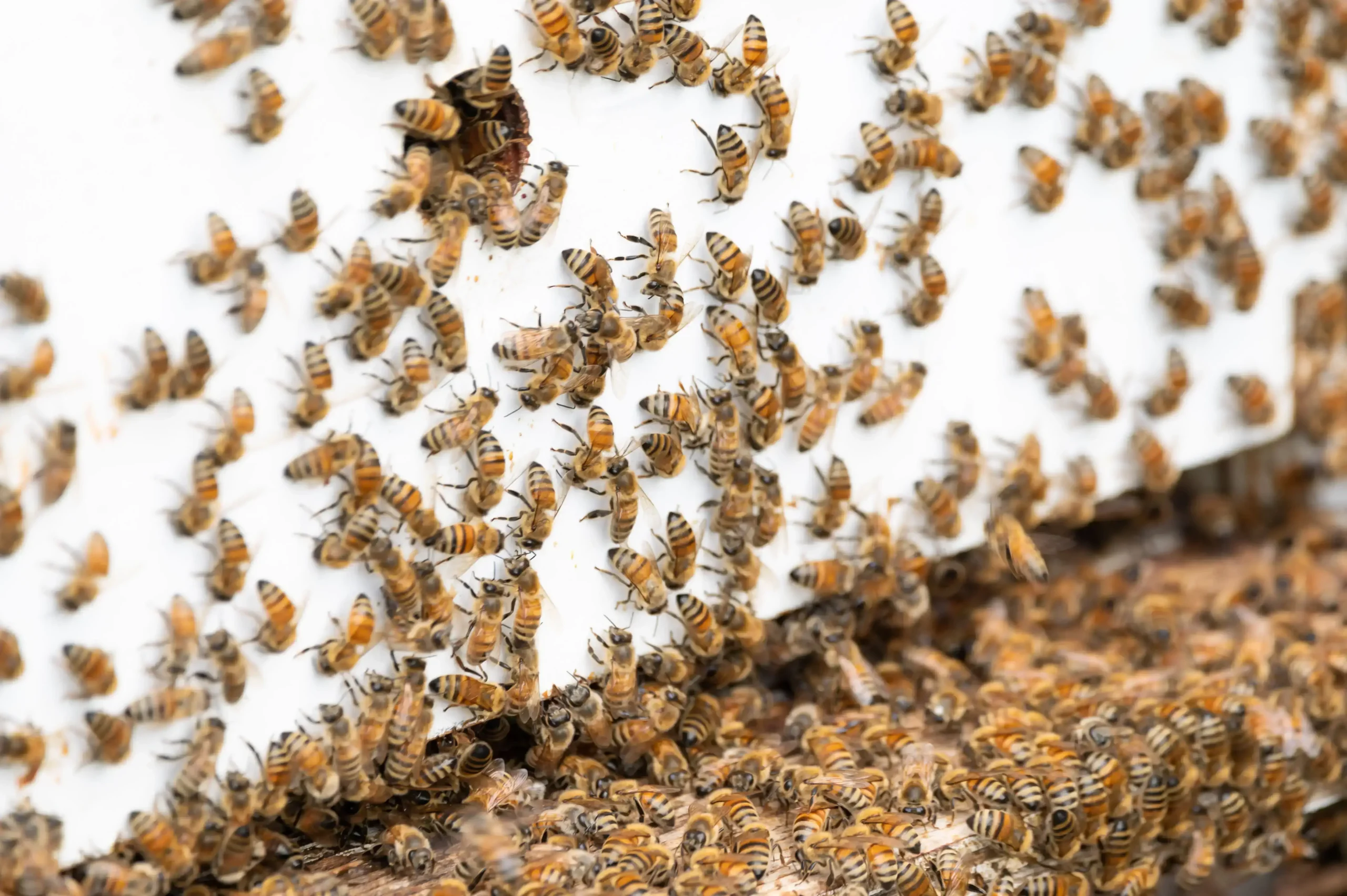
You walk past your garden wall and notice bees buzzing in and out of a small crack. A day later, there are dozens. Before long, you have a full colony setting up home inside your wall cavity.
This is a common situation for homeowners across Dubai and the wider UAE. The warm climate and year-round sunshine make our walls, roof cavities, and outdoor structures ideal nesting spots for honey bees.
The good news? You don’t always need harsh chemicals or expensive services right away. Many small or early-stage nests can be managed naturally, safely, and humanely.
This guide walks you through exactly how to do that.
Quick Answer: Natural Honey Bee Nest Removal
- Use smoke: calm bees before attempting any removal. This is the oldest and most effective natural method
- Apply vinegar spray: directly at the nest entry point to deter bees without killing them
- Citronella or garlic repellents: create an environment that bees want to leave on their own
- Expose the nest to light: bees prefer dark, sheltered spaces; removing that cover encourages relocation
- Seal entry points: only after the nest is empty to prevent future infestations
- Call a professional: if the nest is large, deep inside the wall, or the bees are aggressive
Quick Comparison: Natural Bee Removal Methods
| Method | Best For | Time to Work | Difficulty | Safety Level |
| Smoke | Calming bees before any action | Minutes | Easy | High |
| Vinegar Spray | Deterring re-entry at surface nests | 3–5 days | Easy | High |
| Garlic / Citronella | Gradual, humane colony relocation | 5–10 days | Easy | High |
| Light Exposure | Open/renovation-accessible walls | 1–2 weeks | Moderate | High |
| Professional Removal | Large, deep, or aggressive colonies | Same day | N/A (expert) | Highest |
Why Bees Build Nests in Walls
Honey bees look for three things in a nesting spot: shelter, darkness, and protection from the wind. Your wall cavity ticks every box.
Small cracks around window frames, gaps in brickwork, and holes near pipes are all common entry points. Once a scout bee finds a suitable gap, it returns to the colony and signals the others. Within days, you can have hundreds or thousands of bees moving in.
In the UAE, the Apis florea (dwarf honey bee) and Apis mellifera are both common species that nest in residential structures. They’re not aggressive by nature, but they will defend their colony if disturbed without preparation.
Understanding why they choose your wall helps you prevent it from happening again after removal.
Is It Safe to Remove a Bee Nest Yourself?
DIY bee removal is possible, but only under the right conditions.
It may be safe if:
- The nest is newly formed (less than a few weeks old)
- The entry point is accessible and near the surface
- You have protective clothing (gloves, long sleeves, face covering)
- Bees are calm and not showing defensive behavior
Do NOT attempt DIY removal if:
- The nest is large or deeply embedded in the wall
- You or anyone nearby has a bee sting allergy
- The bees are swarming or highly aggressive
- You don’t know the exact location of the nest inside the wall
In cases like these, it’s far safer to contact a certified bee removal service in Dubai that can handle the situation without harming the colony unnecessarily.
Natural Methods to Remove a Honey Bee Nest from a Wall
These eco-friendly bee control methods work best on smaller, newer nests. Always wear protective gear before starting.
Smoke Method
Smoke is the oldest, most trusted natural bee removal technique in the world. Beekeepers have used it for centuries for good reason, it works.
When bees detect smoke, they instinctively think there’s a fire nearby. They shift focus to consuming honey and preparing to evacuate, which makes them far calmer and less likely to sting.
How to do it:
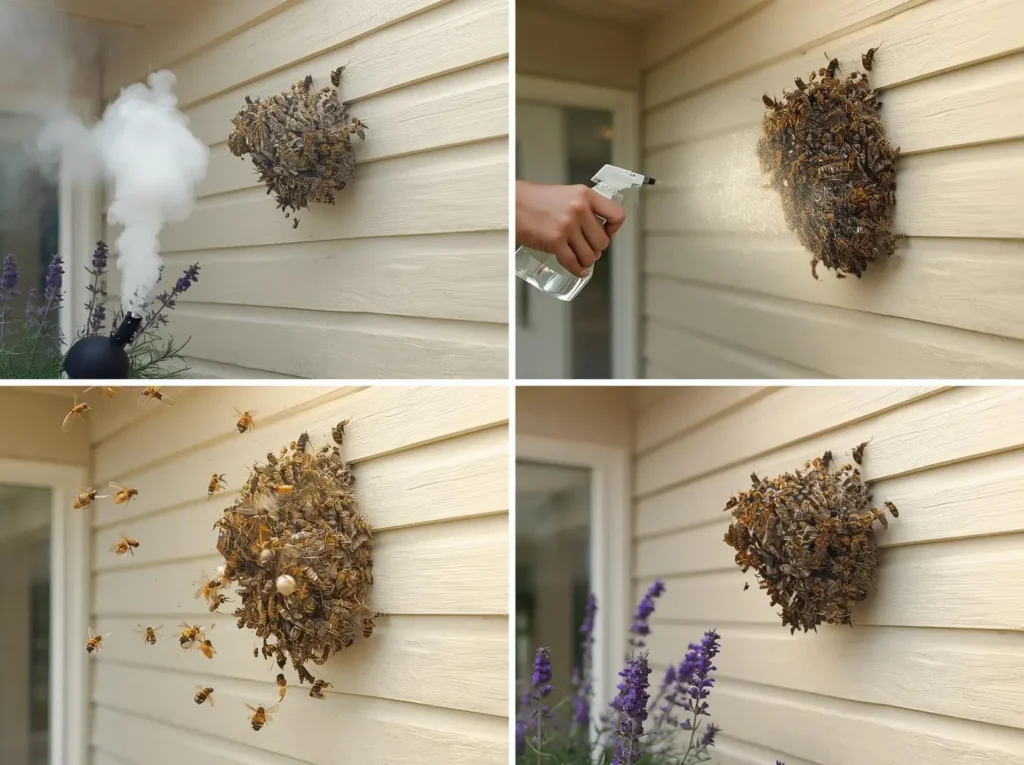
- Use a smoker tool or a small fire of dry wood chips, cardboard, or pine needles
- Direct the smoke toward the nest entry point, not directly into it
- Wait 8–10 minutes for the smoke to take effect
- Use this window to assess or begin discouraging the bees from returning
This method does not remove the nest by itself, but it gives you safe working conditions to apply other natural methods.
Vinegar Spray
White vinegar is a powerful natural bee repellent. Its sharp, acidic scent overwhelms the bees’ sense of smell and disrupts the pheromone signals they rely on to navigate back to the nest.
How to apply it:
- Mix equal parts water and white vinegar in a spray bottle
- Apply generously around the nest entry point, especially at dusk when bees are less active
- Repeat daily for 3–5 days
This method is most effective for deterring bees from re-entering a nest rather than removing an established colony. Pair it with the smoke method for better results.
Garlic or Citronella Repellent
Bees have a highly sensitive olfactory system. Strong smells like garlic and citronella interfere with their communication and make the nesting site feel hostile.
Garlic method: Crush several garlic cloves and place them near the nest entry points. Replace every two days.
Citronella method: Burn citronella candles or use citronella essential oil diluted in water as a spray around the nest area.
These methods work gradually. They encourage the colony to relocate rather than forcing a sudden removal, which is actually the more humane approach.
Light Exposure Technique
Honey bees are hardwired to nest in dark, enclosed spaces. If you can safely remove part of the wall covering or open up the cavity to natural sunlight, the bees will feel exposed and begin looking for a new home.
This technique is more practical during a renovation or if you already have access to the wall cavity. It’s slow, it may take 1–2 weeks, but it’s completely chemical-free and non-disruptive to the colony.
What NOT to Do When Removing Bees
Avoid these common mistakes that can make the situation worse and more dangerous.
- Don’t use water: to flood the nest, it agitates bees instantly and triggers defensive stinging
- Don’t seal the entry point while bees are still inside: trapped bees will chew through walls looking for a way out
- Don’t use pesticides on honey bees: it’s harmful to the environment, and in some regions, honey bee protection is encouraged, given their role as pollinators
- Don’t disturb the nest suddenly: without protective gear, even calm bees will defend when startled
- Don’t ignore the honeycomb: even after bees leave, the remaining wax and honey will attract new swarms and pests
How Long Does Natural Honey Bee Nest Removal Take?
Natural methods typically take between 3 and 14 days to fully work.
The smoke method can calm bees within minutes, but relocating the colony naturally using repellents and light exposure takes longer. A small, newly formed nest may respond in 3–5 days. A more established colony can take up to two weeks.
If you’ve seen no improvement after 14 days of consistent natural treatment, the nest is likely too large or deep for DIY methods. At that point, professional help is the right call.
Allied Pest Control, one of Dubai’s trusted pest management companies, offers humane bee removal solutions that relocate colonies safely without destroying them.
How Often Should You Check and Maintain After Removal?
Once the bees have left, your job isn’t done. Here’s a simple maintenance schedule to keep bees from returning:
- Immediately after removal: Remove all remaining honeycomb and wax from the cavity
- Within the first week: Seal all cracks, gaps, and entry points with weatherproof sealant
- Every 3 months: Inspect your external walls, roof edges, and window frames for new gaps
- Annually: Apply a natural citronella-based spray around common entry points as a preventive measure
Staying proactive is far easier and cheaper than dealing with a full re-infestation.
Conclusion
Removing a honey bee nest from a wall naturally is easiest when the issue is detected early. Use light smoke to calm the bees and apply gentle repellents like vinegar or citronella near the entry point to encourage them to relocate.
You can also try garlic or controlled light exposure to make the area less attractive. Once the hive is inactive, seal all openings, and if the nest is large or hidden, consider contacting a professional bee removal service in Dubai for safe handling.
Frequently Asked Questions
Will bees leave a wall cavity on their own without any treatment?
Bees rarely abandon a wall nest on their own. Once a colony is established, it will defend and expand it. Natural repellents like citronella or vinegar can encourage them to leave, but most nests require active removal steps.
Is it dangerous to leave a honey bee nest inside a wall untreated?
Leaving a bee nest untreated inside a wall is risky. Over time, the honeycomb grows heavy, leaks wax and honey into the wall structure, attracts other pests, and can cause significant damage to plaster, wood, and insulation.
Can I use essential oils to repel bees from my wall naturally?
Yes, essential oils like peppermint, eucalyptus, and citronella are effective natural bee repellents. Apply diluted oil near the nest entry point daily. These scents disrupt bee navigation and make the nesting site feel inhospitable over time.
How do I know if the bees inside my wall are honey bees or wasps?
Honey bees are golden-brown and fuzzy, while wasps are smooth, slender, and more brightly striped. Honey bees are generally calmer. If you are unsure, observe from a safe distance or contact a pest control expert to identify the species before treatment.
What should I do after the bees have left to stop them coming back?
After bees vacate, remove all remaining honeycomb and wax immediately. Then seal every crack and gap with weatherproof filler. Leftover wax and honey scent will attract new swarms, so thorough cleaning and sealing are essential for long-term prevention.