Dubai may be known for its modern architecture and luxury living, but hidden beneath many properties is a serious threat termites. These pests silently damage homes, villas, and commercial spaces, often going unnoticed for months or even years. Because termites feed from the inside out, visible signs like warped wood or peeling paint usually appear too late.
In Dubai’s climate, moisture is the key factor that attracts termite activity. Leaking pipes, AC condensation, and poor drainage create the perfect environment for colonies to thrive. Identifying and controlling these moisture sources early, along with professional pest control, can help prevent costly structural damage before it begins.
Quick Answer
Moisture attracts termites by softening wood, making it easier to tunnel through and digest. Dubai properties are at high risk due to a combination of extreme humidity, frequent AC condensation, and plumbing leaks in densely built structures.
These moisture sources saturate wood and soil near foundations, creating the perfect breeding ground for termites. Early prevention through leak repairs, waterproofing, and regular inspections is essential to protect your property.
What Attracts Termites in Dubai?
1. Climate Conditions
Dubai’s climate is characterised by high temperatures and significant humidity, particularly during the summer months from June to September. Relative humidity can exceed 90% on certain nights, creating warm, moist air that permeates building materials. Termites, especially the subterranean species common in the UAE, thrive in this kind of environment, as warmth accelerates their reproductive cycle and moisture keeps their bodies hydrated.
2. Construction Materials
A large number of Dubai’s buildings use timber framing, wooden fixtures, MDF boards, and cellulose-based insulation, all of which are prime food sources for termites. When these materials are combined with moisture from leaks or condensation, they become irresistible to foraging termites searching for a new colony site.
3. Urban Environment and Rapid Construction
Dubai’s rapid construction pace means buildings often have compacted soil near foundations, interrupted natural drainage paths, and layers of buried organic material, all of which create ideal underground conditions for subterranean termite colonies to establish themselves close to inhabited buildings.
How Moisture Leads to Termite Infestation
Moisture does not simply attract termites; it changes the physical properties of building materials in ways that make termite colonisation far more likely and far more destructive.
Damp Wood Is Easier to Infest
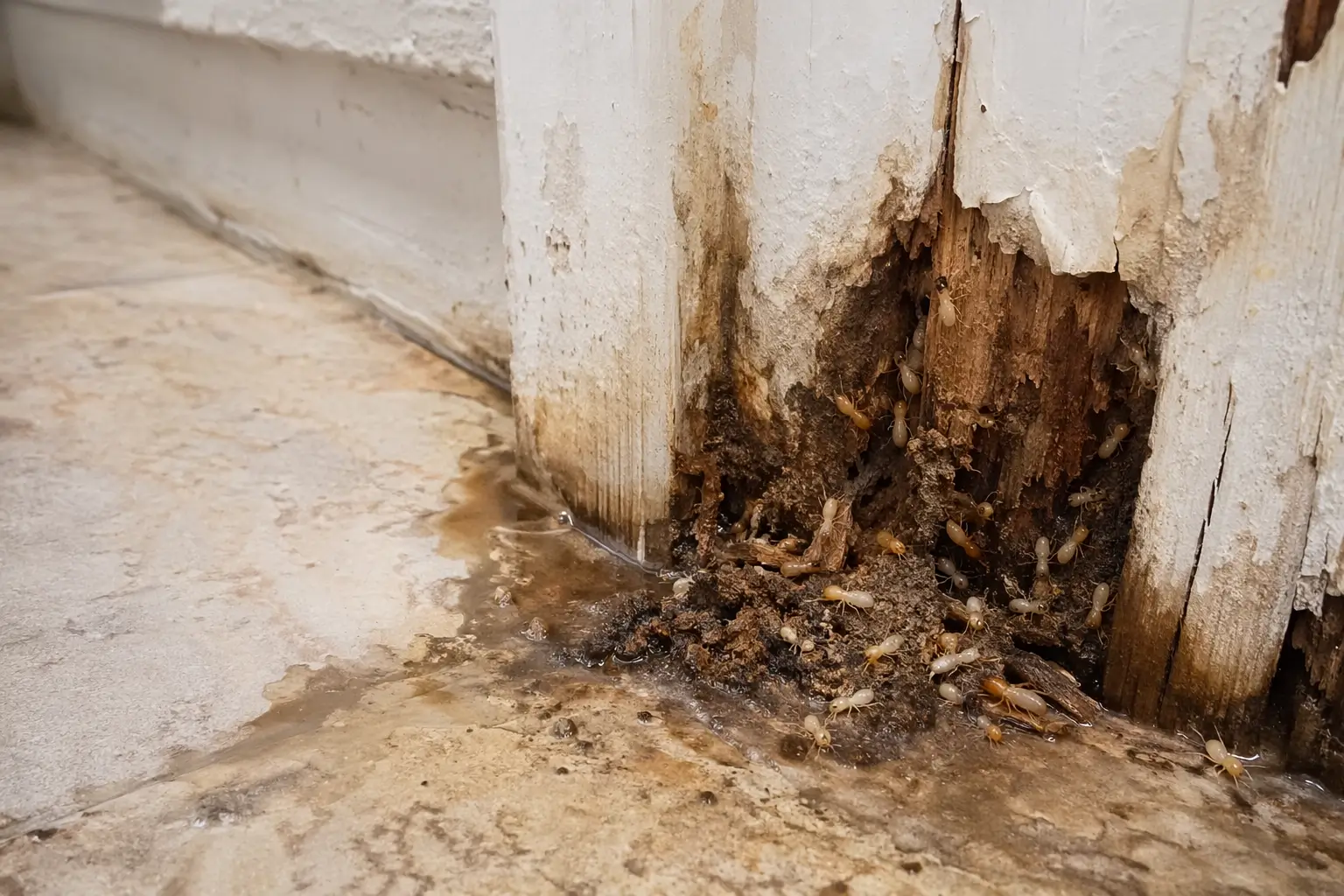
Dry wood is dense, hard, and difficult for termites to penetrate. But when wood absorbs moisture from leaks or humidity, it softens, swells, and begins to break down at the cellular level. This makes it significantly easier for termite workers to excavate tunnels, deposit their eggs, and establish a feeding site. A leak anywhere near timber is essentially an open invitation.
Leaking Pipes Behind Walls
One of the most common and most hidden causes of termite infestations in Dubai is slow leaks from water supply pipes embedded in walls or under floors. These leaks may be too small to show on your water bill, but they are significant enough to keep surrounding building materials continuously damp. Over weeks and months, this creates a persistent moisture zone that subterranean termites can detect from metres away.
AC Condensation
Dubai properties run their air conditioning systems nearly year-round. This creates a constant source of condensation, cold surfaces meeting warm, humid air, particularly around AC units, ducts, and vents built into walls. When condensation drips onto wooden wall studs or when pooling occurs in duct pathways, termites moving through soil or wall cavities quickly identify these moisture pockets as suitable nesting zones.
Poor Drainage Near Foundations
When rainwater or irrigation water does not drain away from a building’s foundation efficiently, it saturates the soil surrounding the structure. Subterranean termites, which build colonies underground, use this moist soil as a travel highway into the building. Once they locate a moisture source connected to wood, such as a wooden door frame sitting in damp soil, they begin constructing mud tubes and entering the structure.
Humidity Inside Walls and Foundations
Even without a visible leak, humidity can accumulate inside wall cavities and below concrete slabs, particularly in older buildings with inadequate damp-proof courses. This trapped moisture creates invisible pockets of dampness that are undetectable without specialist equipment but perfectly detectable to termites using their moisture-sensing antennae.
Common Moisture Sources in Dubai Properties
Moisture in Dubai properties comes from many directions. Here is a breakdown of the most common sources that property owners must monitor:
- Plumbing Leaks: Supply pipes, waste pipes, and joints within walls and under floors are a top source. Even a drip rate of a few drops per minute is enough to keep surrounding materials perpetually damp.
- Roof Seepage: Roof membranes and waterproofing in Dubai degrade faster than in temperate climates due to intense UV exposure and temperature cycling. Cracked or failed roof waterproofing allows water to seep into roof spaces and down through structural walls.
- Bathrooms and Kitchens: Failed silicone joints around baths, showers, sinks, and dishwashers allow water to penetrate tiling and saturate the substrates and timber beneath.
- HVAC Systems: Condensation from ducted air conditioning systems, fan coil units, and split AC installations can accumulate inside wall cavities and ceiling spaces if drainage channels are blocked or inadequately sloped.
- Irrigation Systems: Garden irrigation pipes installed close to external walls continuously add moisture to the soil adjacent to foundations, if leaking a direct gateway for subterranean termites.
- Construction Defects: Poorly installed damp-proof courses, inadequate floor screeds, and gaps in external renders allow ground moisture to wick upwards into walls through a process known as rising damp.
Moisture Sources vs. Termite Risk: Quick Reference Table
| Moisture Source | Risk Level | Termite Attraction | Prevention Priority |
| Leaking Pipes | Very High | Direct contact with wet wood | Immediate fix required |
| AC Condensation | High | Creates damp zones near walls | Install proper drainage |
| Poor Drainage | High | Saturates soil near foundations | Improve slope & drainage |
| Roof Seepage | High | Wet structural timber | Waterproofing essential |
| Bathroom Leaks | Medium-High | Attracts subterranean termites | Seal grout & joints |
| Irrigation Runoff | Medium | Moistens the perimeter soil | Redirect away from walls |
| HVAC Condensation | Medium | Wall moisture behind units | Check insulation regularly |
Signs of Moisture-Related Termite Activity
Detecting a termite infestation early can be the difference between a simple treatment and costly structural repairs. Pay close attention to moisture-prone areas in your property, as these are the most likely spots for termite activity. If you’re unsure what to look for, check out this detailed guide on signs of termites in your home to identify the warning signals before serious damage occurs.
- Mud Tubes on Walls or Foundations: These narrow, pencil-thick tunnels made of soil and termite secretions are the clearest sign of subterranean termite activity. They are typically found running up external walls, along skirting boards, or near plumbing penetrations.
- Hollow-Sounding Wood: Tap wooden door frames, skirting boards, and floor panels. If the sound is hollow rather than solid, termites may have eaten the interior.
- Peeling or Bubbling Paint: When moisture and termite activity combine beneath painted surfaces, the paint loses adhesion and begins to peel or bubble in a pattern that resembles water damage.
- Damp Patches and Staining on Walls: Discoloured patches, tide marks, or soft spots on walls are indicators of hidden moisture and therefore of elevated termite risk.
- Discarded Wings Near Windows or Lights: Discovering piles of tiny wings near window sills or light fittings is a strong indicator of a nearby active swarming termite colony.
- Tight-Fitting Doors and Windows: As termites and moisture degrade wooden frames, they can warp slightly, causing doors and windows to become difficult to open or close smoothly.
How to Prevent Termites by Controlling Moisture
The single most effective long-term strategy for termite prevention in Dubai is moisture control. Here are the most impactful preventive measures:
Fix All Plumbing Leaks Immediately
Any dripping tap, weeping joint, or damp patch should be investigated and repaired without delay. Even a minor supply pipe leak inside a wall can create months of moisture accumulation before it becomes visible.
Improve Ventilation in Enclosed Spaces
Subfloor spaces, roof voids, and enclosed utility cupboards should all have adequate ventilation to prevent moisture from building up. Ensure that air bricks and vents are clear and unobstructed.
Invest in Professional Waterproofing
Bathrooms, kitchens, balconies, and roof terraces should be professionally waterproofed with high-quality membrane systems. This prevents water from seeping through into structural elements and creating the hidden damp zones that termites exploit.
Ensure Proper Drainage Around the Building
Make sure the ground around your property slopes away from the foundation and that drainage channels are clear and functional. Irrigation systems should be checked regularly for leaks, and heads should be directed away from the building.
Maintain HVAC Systems Regularly
Have your AC system serviced at least once a year. Clean or replace condensation drain pans and lines, check ductwork for signs of moisture accumulation, and ensure all units are adequately insulated to minimise condensation.
Schedule Regular Property Inspections
Annual or biannual moisture audits and termite inspections by a qualified professional are one of the most cost-effective investments a Dubai property owner can make. Many infestations are discovered during routine inspections before any visible damage has occurred.
Conclusion: Don’t Let Moisture Open the Door to Termites
Termite infestations in Dubai are not random; they are mainly caused by excess moisture from leaking pipes, AC condensation, poor drainage, and high humidity. These conditions quietly create an ideal environment for termites, leading to serious structural damage over time, especially in properties without proper maintenance.
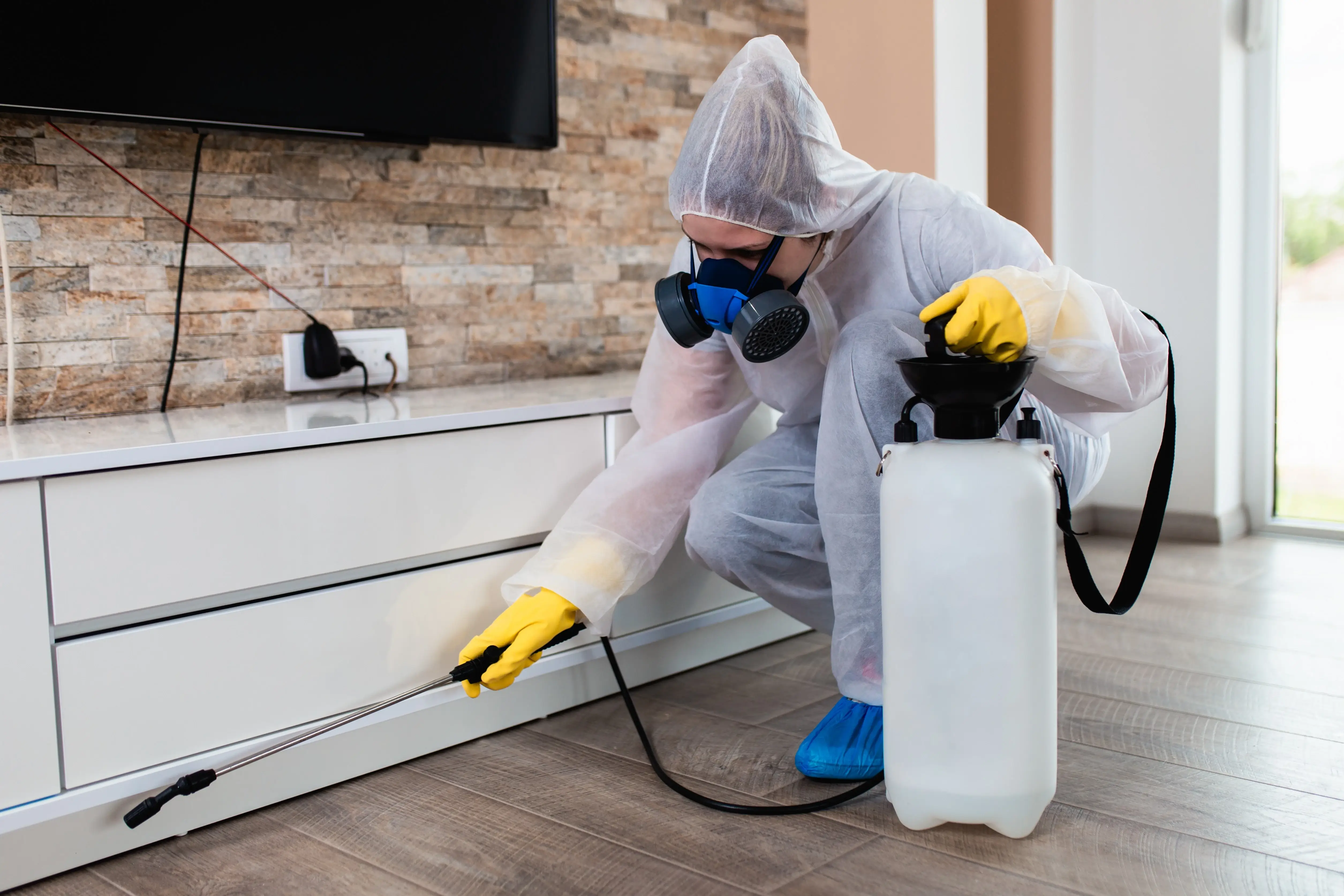
The good news is that termites can be prevented with proper care and regular inspections. With Allied Pest Control, you can control moisture sources effectively and choose a professional termite control service in Dubai to protect your property and avoid costly repairs.