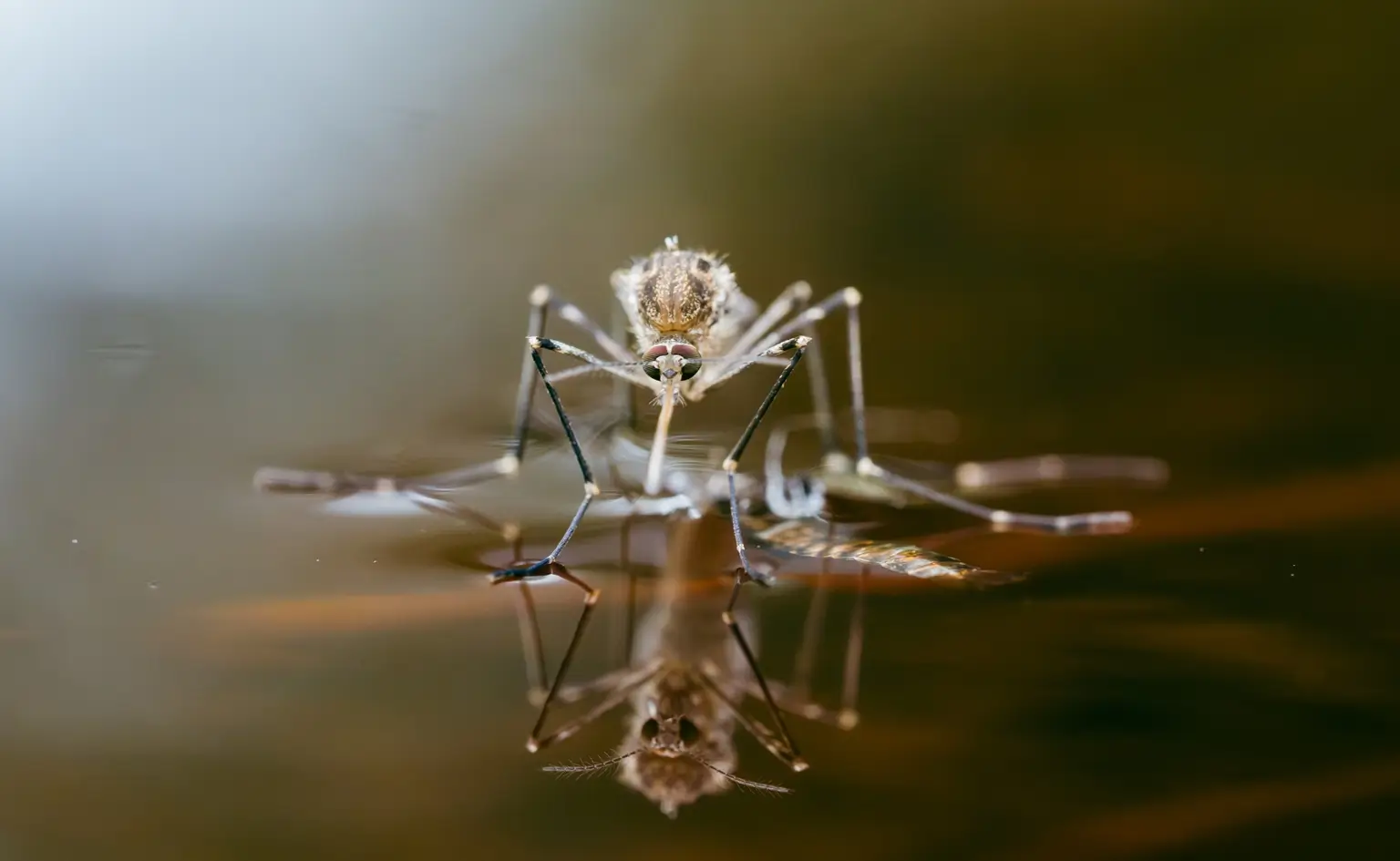
Standing water increases the mosquito problem in Dubai by creating the perfect breeding environment mosquitoes need to reproduce. Female mosquitoes lay eggs directly on the surface of stagnant water, and larvae develop into adults within 7 to 10 days. Dubai’s intense heat, construction sites, and irrigation systems produce widespread standing water, driving mosquito populations year-round.
Quick Answer:
Standing water is the single biggest driver of mosquito populations in Dubai. Even 1 teaspoon of stagnant water supports egg-laying. Remove or treat standing water every 7 days to break the breeding cycle and cut mosquito numbers by up to 80%.
What Is Standing Water and Why Does It Drive Dubai’s Mosquito Problem?
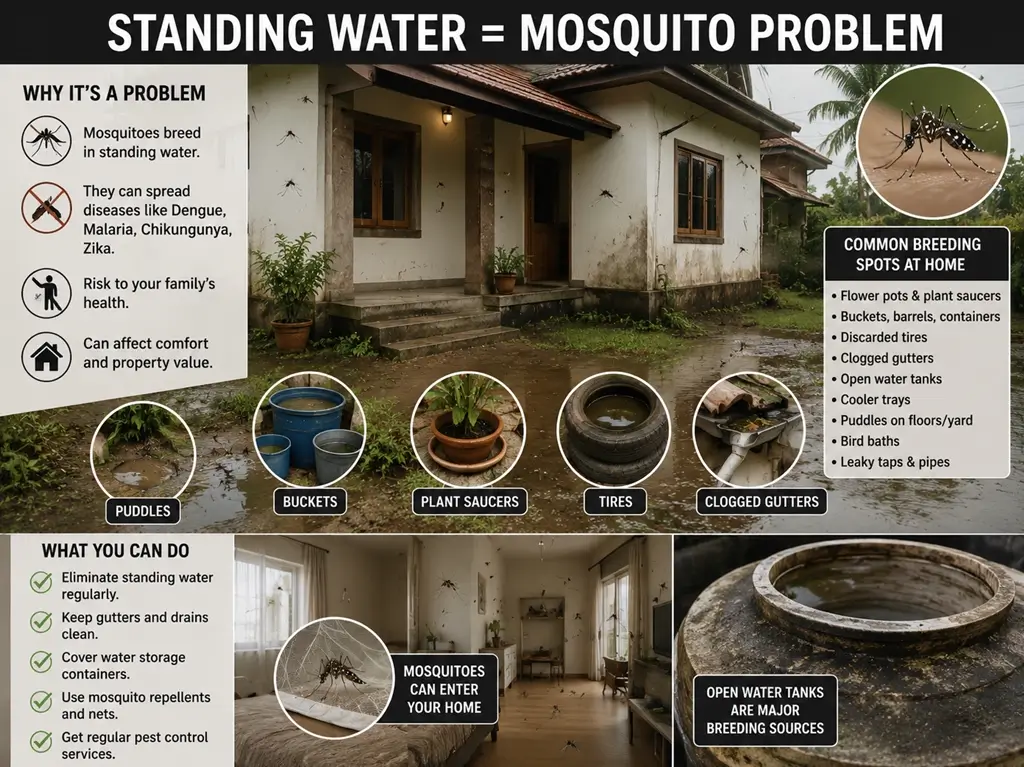
Standing water is any collected water that stops flowing or draining within 48 hours. In Dubai, it forms in flower pots, AC drip trays, rooftop puddles, construction excavations, clogged gutters, and ornamental ponds. Mosquitoes cannot breed in moving water; they need still, stagnant surfaces to lay viable eggs.
Dubai’s climate makes the problem worse. Summer temperatures exceed 45°C, and humidity rises sharply from June to September. Stagnant water between 25°C and 35°C speeds up egg hatching to as little as 24 hours. One puddle left unattended for a single week can produce hundreds of adult mosquitoes.
Three mosquito species cause the most problems in Dubai:
- Aedes aegypti: transmits dengue and chikungunya
- Culex quinquefasciatus: transmits West Nile virus
- Anopheles stephensi: transmits malaria
All three depend entirely on standing water to complete their life cycle.
Standing Water and Mosquito Risk: Summary
| Task / Scenario | Method | Frequency | Time Needed |
| Flower pots & saucers | Empty and dry completely | Every 3–4 days | 2 minutes |
| AC condensate drip trays | Drain and flush with soap water | Weekly | 5 minutes |
| Roof puddles & flat surfaces | Clear drains, use sand fill | After every rain | 15–30 minutes |
| Construction site pools | Pump out + larvicide treatment | Bi-weekly | 1–2 hours |
| Ornamental ponds | Install a pump or add Bti larvicide | Monthly | 30 minutes |
| Swimming pools (unused) | Maintain chlorine above 1 ppm | Weekly | 20 minutes |
| Clogged gutters | Flush and clear debris | Monthly | 30 minutes |
What You Need Before Starting Mosquito Control in Dubai
Before tackling standing water and mosquito breeding sites, gather these materials:
- Bti (Bacillus thuringiensis israelensis): biological larvicide, safe for humans and pets
- Mosquito dunks or granular larvicide tablets: for ponds and large water bodies
- Insect growth regulators (IGR): such as methoprene, disrupt larval development
- Residual pyrethroid insecticide spray: for adult mosquito knockdown
- Drain covers and mesh screens: openings smaller than 1.2 mm to block mosquito access
- Submersible pump: keeps ornamental pond water circulating
- Protective gloves, clothing, and eye protection for chemical handling
Important: Dubai Municipality mandates that property owners eliminate mosquito breeding sites under Public Health Law No. 29 of 2009. Fines range from AED 500 to AED 5,000 for non-compliance.
How to Eliminate Standing Water and Control Mosquitoes in Dubai
Allied Pest Control, a leading mosquito control Dubai specialist, recommends this structured process to reduce mosquito breeding by up to 85%. I will explain each step in detail, given below.
Step 1: Conduct a Full Property Inspection for Standing Water
Walk the entire property and mark every water-holding surface. Check flower pot saucers, AC drip trays, roof drainage points, bird baths, underground tank lids, and low-lying ground areas. Photograph each site. Inspections must cover both indoor and outdoor areas. Aedes aegypti mosquitoes breed indoors in containers that hold as little as a bottle cap of water.
Step 2: Remove or Drain All Non-Essential Standing Water
Empty every removable container that holds water unnecessarily. Turn flower pot saucers upside down when not in use. Dispose of old tyres, buckets, and unused planters. For flat roofs, clear all drain outlets so water drains within 24 hours of rain. Dubai receives an average of 94.7 mm of annual rainfall, most of which falls between November and March and pools on flat urban surfaces.
Step 3: Treat Water That Cannot Be Removed
For water that must remain in ornamental ponds, swimming pools, or construction dewatering pools, apply Bti larvicide at 1 dunk per 100 square feet of water surface. Bti kills mosquito larvae within 24 hours and stays effective for 30 days. Reapply monthly or after heavy rain. For swimming pools, keep free chlorine above 1 ppm to prevent any larval survival.
Step 4: Install Physical Barriers
Fit mesh screens with openings smaller than 1.2 mm on water tanks, cisterns, and rain barrels. Install submersible pumps in ornamental ponds, so mosquitoes cannot breed in moving water. Seal cracks in underground storage tanks where water collects in inaccessible voids.
Step 5: Apply Adult Mosquito Treatments
Spray residual pyrethroid insecticides on vegetation, walls, fences, and shaded resting areas. Adult mosquitoes rest in cool, dark spots during Dubai’s intense midday heat. Bifenthrin and deltamethrin-based products deliver 4 to 8 weeks of residual control. For large properties, mosquito misting systems and automated timed sprayers apply treatments at dawn and dusk, which are peak mosquito activity periods.
Step 6: Schedule Professional Mosquito Fogging Dubai
Mosquito fogging in Dubai uses thermal or ULV (ultra-low volume) cold foggers to disperse insecticide across large areas. Professional technicians apply permethrin or malathion at controlled doses. Dubai Municipality recommends professional fogging for areas larger than 500 square metres. Book monthly fogging treatments between April and October for continuous protection.
Step 7: Maintain a 7-Day Inspection and Treatment Cycle
Mosquitoes complete their full life cycle in 7 to 14 days, depending on temperature. A weekly inspection and treatment routine ensures no new breeding sites develop before adults emerge. Document treated sites, reapply larvicide on schedule, and use calendar reminders for recurring checks. Consistent 7-day maintenance reduces mosquito populations by 70% to 85% within 30 days.
How Long Until Stagnant Water Becomes a Mosquito Breeding Ground?
Stagnant water becomes a viable mosquito breeding site within 24 to 48 hours of becoming still. Eggs hatch into larvae within 24 to 72 hours. Larvae develop through four growth stages over 4 to 7 days in Dubai’s warm conditions, then pupate for 1 to 2 days before emerging as adult mosquitoes. The full cycle from egg to adult takes just 7 to 10 days at temperatures between 28°C and 35°C, the typical Dubai summer water temperature.
Even a puddle the size of a bottle cap holds enough water for 100 to 300 mosquito eggs. One week of neglect creates a new generation of biting adults.
Can Mosquitoes Survive Without Standing Water?
Adult mosquitoes survive without standing water for several days to weeks they feed on nectar and plant sugars for energy. However, female mosquitoes cannot reproduce without standing water. Without a still water surface to lay eggs on, the population collapses within 2 to 3 weeks as adults die without producing offspring.
This is why removing standing water is the most effective long-term strategy. Chemical treatments kill adults but cannot prevent reinfestation if breeding sites remain. Water removal breaks the reproductive cycle permanently.
Conclusion
Standing water is the root cause of Dubai’s mosquito problem. Every unchecked puddle, drip tray, and clogged drain becomes a production site for hundreds of mosquitoes within 7 to 10 days. The solution combines standing water removal, larvicide treatment, physical barriers, adult mosquito spraying, and a consistent 7-day inspection cycle.
For properties where DIY control falls short, large villas, commercial compounds, and construction sites. Mosquito Control Services Dubai provides the equipment, expertise, and regulatory compliance needed for lasting results.
Allied Pest Control delivers certified treatments, including mosquito fogging in Dubai, misting systems, larvicide application, and monthly maintenance contracts across all areas of the UAE.
Frequently Asked Questions (FAQ)
Why is tap water not drinkable in Dubai?
Tap water in Dubai is not recommended for drinking because desalination and distribution processes can introduce mineral imbalances and trace contaminants. Residents rely on bottled or filtered water for consumption.
How to protect standing water from mosquitoes?
Protect standing water from mosquitoes by applying Bti larvicide dunks, fitting mesh covers with openings under 1.2 mm, or adding a submersible pump to keep water circulating and unsuitable for egg-laying.
Why is stagnant water good for mosquitoes?
Stagnant water is ideal for mosquitoes because it provides a stable, still surface for egg-laying and warm conditions that accelerate larval development. Moving water disrupts eggs and larvae, making it unsuitable for breeding.
Why should stagnant water be removed?
Stagnant water should be removed because it directly enables mosquito reproduction. A single stagnant water source produces hundreds of mosquitoes per week, raising the risk of dengue, malaria, and West Nile virus.
What kills mosquitoes in stagnant water?
Bti (Bacillus thuringiensis israelensis) kills mosquito larvae in stagnant water within 24 hours and is completely safe for humans, pets, and wildlife. Larvicide tablets containing methoprene also prevent larvae from developing into adult mosquitoes.