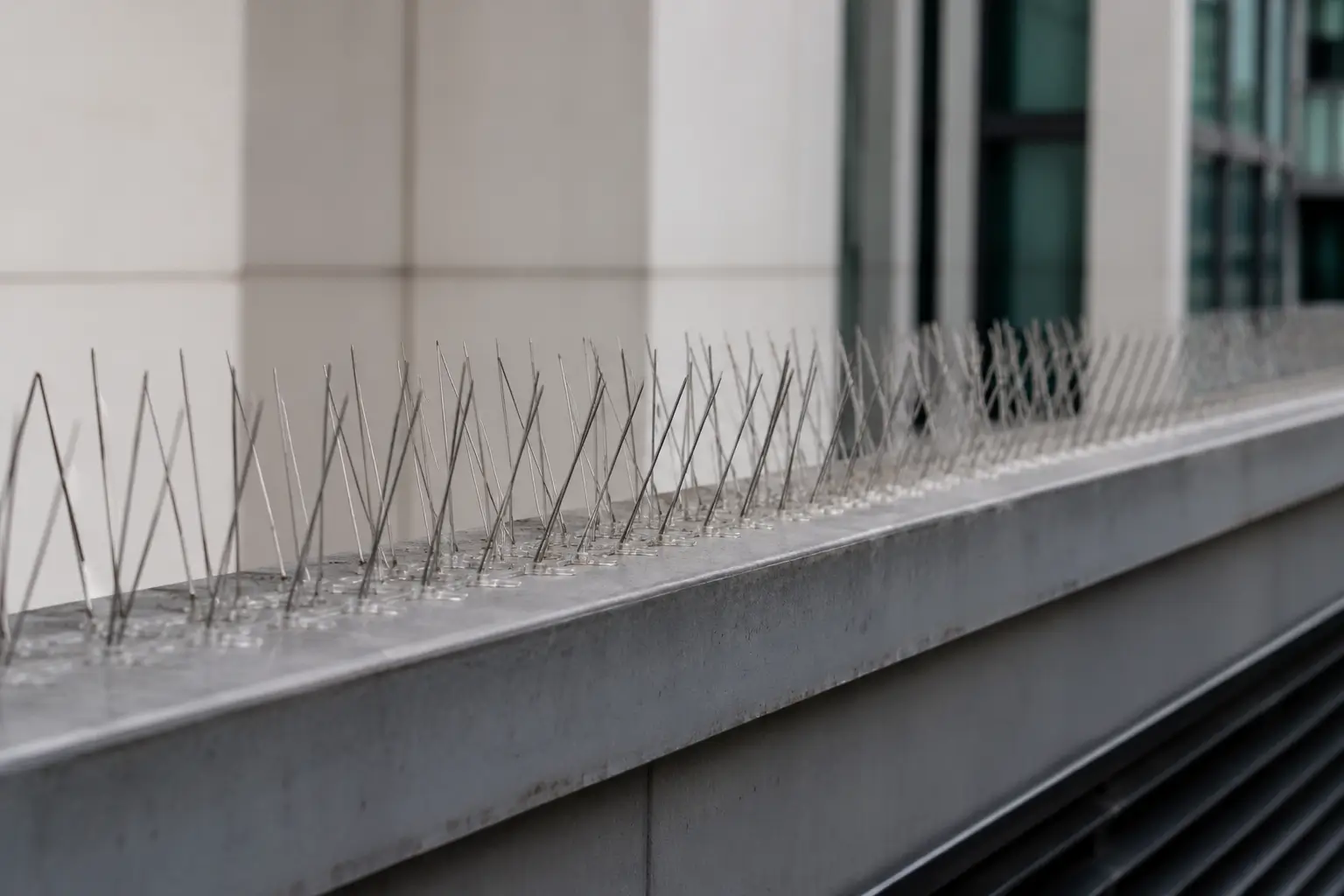
Bird spikes help with the bird control problem by physically preventing birds from landing or roosting on ledges, rooftops, signs, and beams. They create an unstable surface without harming birds. Used in residential, commercial, and industrial settings, they eliminate property damage and health hazards caused by pest birds like pigeons and sparrows.
Quick Answer
Install bird spikes on all flat horizontal surfaces where birds land. Choose stainless steel or polycarbonate spikes. Clean the surface, apply adhesive or screws, and press the base firmly. Cover every inch to block all roosting points completely.
Bird Spikes Installation Facts
| Task | Method | Time Needed | Frequency |
| Surface cleaning | Wire brush + detergent | 15–30 minutes | Before every install |
| Spike installation | Adhesive or screws | 30–60 minutes per 10 ft | One-time |
| Inspection | Visual check | 10 minutes | Every 6 months |
| Replacement | Remove and reattach | 20–40 minutes | Every 5–10 years |
What Are Bird Spikes and How to Install Them?
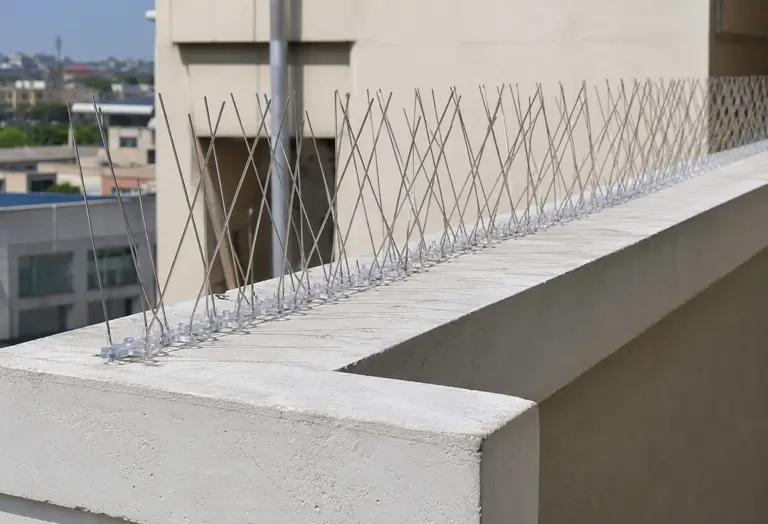
Bird spikes are physical deterrent devices made of stainless steel pins or polycarbonate rods mounted on a flat base strip. Each strip typically measures 1 to 2 feet in length. The pins angle outward and upward, making it impossible for pigeons, starlings, seagulls, and sparrows to land or roost.
They do not injure birds. Birds simply cannot grip the surface, so they relocate within days. This makes bird spikes one of the most humane and legally compliant bird control solutions in Dubai available today.
Everything You Need Before Installing Bird Spikes on Your Property
Before installing bird spikes, gather the following:
- Bird spike strips (stainless steel or polycarbonate sold per linear foot)
- Heavy-duty waterproof adhesive (e.g., Bostik or Geocel sealant)
- Stainless steel screws (for permanent or high-wind installations)
- Wire brush or scraper (for surface cleaning)
- Measuring tape and marker
- Safety gloves (steel spikes are sharp)
- Ladder (for elevated surfaces)
- Caulk gun (for adhesive application)
Prerequisite: The surface must be dry, clean, and free of bird droppings before installation. Always wear gloves and a dust mask during surface cleaning.
How to Install Bird Spikes: A Complete Bird Control Guide
Allied Pest Control installs bird spikes in Dubai across hundreds of properties each year using proven methods. If you want to permanently solve your bird control problem with bird spikes, I will explain the full process step by step, as given below.
Step 1: Measure the Target Surface
Measure the total length of every ledge, beam, parapet, or rooftop edge where birds land. Record measurements in linear feet. Buy 10–15% more spike strips than your total measurement to account for corners and overlaps.
Step 2: Clean the Surface Thoroughly
Scrub all bird droppings, feathers, and dirt using a wire brush and detergent solution. Rinse with water and allow the surface to dry for at least 2 hours in direct sunlight. Wet surfaces reduce adhesive bond strength by up to 60%.
Step 3: Choose Your Attachment Method
Two standard methods exist:
- Adhesive method: Apply waterproof adhesive along the base strip, press firmly onto smooth surfaces like metal or stone, and hold for 30 seconds.
- Screw method: Pre-drill holes every 6 inches and fasten with stainless steel screws. Best for wood, brick, or high-wind rooftop locations.
Step 4: Install Spike Strips End-to-End
Press each strip directly against the next, leaving zero gaps. Even a 2-inch gap gives pigeons enough space to roost. Overlap strips at corners by at least 1 inch. For wide ledges over 8 inches, install a second parallel row of spikes.
Step 5: Inspect and Secure All Strips
Walk the entire installed line and press down any raised edges. Confirm adhesive has bonded fully. Check all corners and joints for any accessible gaps. Fill remaining gaps with additional half-length strips to ensure complete coverage.
Step 6: Schedule a Follow-Up Inspection
Inspect bird spikes every 6 months. Remove debris, nesting material, or dirt from the base channel. Debris buildup provides birds with a foothold on top of the spikes, reducing the spikes’ deterrent effectiveness over time.
Where Bird Spikes Are Most Effective
Bird spikes deliver the highest performance in these specific locations:
- Rooftop ledges and parapets: Primary roosting zones for pigeons and seagulls
- Window sills and AC units: High-traffic perching spots in urban buildings
- Signage and billboards: Metal frames attract large roosting flocks
- Beams and rafters: Warehouses, parking structures, and transit hubs
- Solar panels and HVAC equipment: Nesting causes equipment damage and fire risk
- Bridges and overpasses: Droppings accelerate structural corrosion at these sites
Bird spikes work best on surfaces 3 to 10 inches wide. For wider flat roofs, combine them with bird netting or bird wire systems.
How Bird Spikes Solve the Bird Control Problem
Bird spikes solve the problem of effective bird control in Dubai through four direct mechanisms:
- Denial of landing zones: Spikes eliminate every flat surface birds need to perch. Birds relocate within 3 to 7 days.
- Prevention of nesting: No roosting surface means no nest-building, stopping property contamination at the source.
- Reduction of disease risk: Bird droppings spread histoplasmosis, cryptococcosis, and salmonella. Eliminating roosting cuts the droppings volume to near zero.
- Property damage prevention: Bird droppings carry a pH of 3 to 4.5, making them as corrosive as acid on metal, stone, and painted surfaces.
Cost fact: Professional bird spike installation in Dubai costs AED 50–180 per linear foot. Structural repairs from bird damage can cost AED 1,800–36,000+ per incident.
Conclusion
Bird spikes are the most reliable, durable, and humane solution for the bird control problem on buildings, ledges, and outdoor equipment. Installed correctly, clean surface, full coverage, zero gaps, they permanently stop roosting and nesting. Allied Pest Control recommends bird spikes as the first line of defense for any property facing persistent pest bird activity.
Frequently Asked Questions (FAQ) About Bird Spikes
What is an alternative to bird spikes?
Alternatives to bird spikes include bird netting, electric track deterrents, and bird wire systems. Netting suits large open areas, while electric tracks work on curved or irregular surfaces.
How long do bird spikes last?
Bird spikes last 5 to 10 years on average. Stainless steel spikes endure up to 10 years, while polycarbonate spikes last 5 to 7 years before needing replacement.
Do bird spikes keep birds away?
Bird spikes effectively keep birds away by removing every usable landing point. Properly installed spikes redirect birds within 3 to 7 days and reduce roosting by over 95%.
What are the benefits of using bird spikes?
Benefits of bird spikes include zero harm to birds, low maintenance, long lifespan, and immediate results. They prevent property damage and reduce disease risk from bird droppings significantly.
Do spikes hurt pigeons?
Bird spikes do not hurt pigeons. The pins create discomfort without injury, pigeons cannot land but are never punctured or trapped. Wildlife organizations endorse them as humane deterrents.
Are rubber spikes better than metal spikes?
Metal spikes outperform rubber spikes in durability. Stainless steel resists UV and corrosion for up to 10 years. Rubber spikes degrade faster and suit only short-term, low-traffic installations.