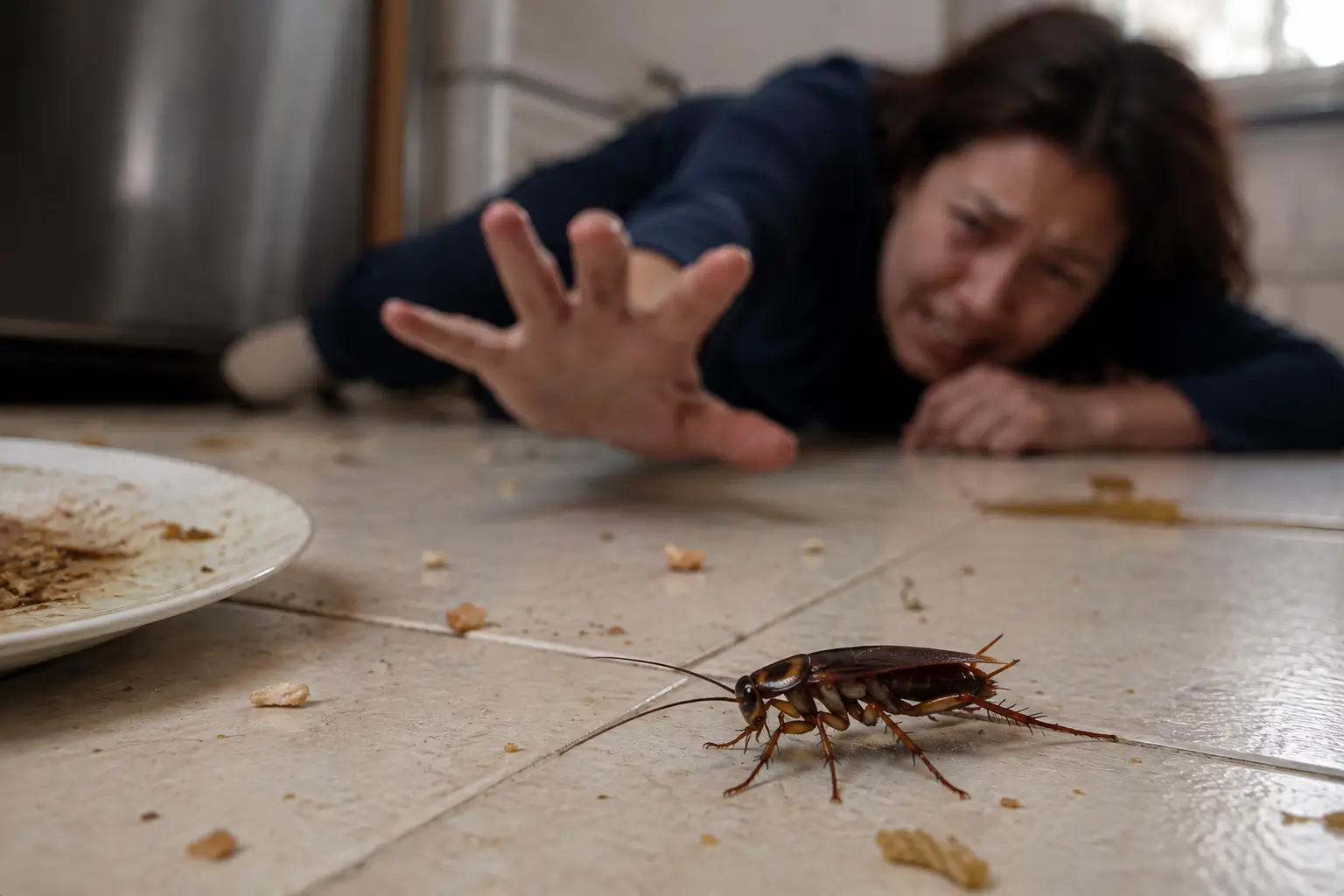
Seeing a cockroach running across your kitchen can make you wonder: can cockroaches kill you?
A cockroach is extremely unlikely to kill a person directly. Cockroaches do not hunt humans, inject venom, or normally feed on human blood. The bigger concern is indirect exposure.
Our cockroach pest control team explains that cockroaches can pick up microorganisms from sewage, rubbish, drains, and contaminated materials and mechanically transfer them to food or surfaces. Their droppings, saliva, and body parts can also trigger allergic reactions and worsen asthma in susceptible people.
So, while seeing one cockroach does not mean your life is in immediate danger, a persistent infestation should not be treated as harmless.
Can a Cockroach Kill a Human Directly?
Under normal circumstances, no.
Cockroaches are not venomous and generally avoid people. Unlike mosquitoes or ticks, they are not blood-feeding insects that normally transmit pathogens through a bite.
Cases of cockroaches biting people are considered unusual and are more associated with severe infestations than normal household encounters.
The more realistic health concern comes from what cockroaches may carry, contaminate, and leave behind.
Think of the risk this way:
Cockroach → contaminated environment → food/surface → human exposure
This distinction is important because claims that cockroaches routinely “give people diseases” can oversimplify the evidence. Their public-health importance is largely associated with their ability to act as mechanical carriers of contaminants. WHO guidance describes cockroaches as mechanical carriers of disease organisms.
What Diseases Can Cockroaches Carry?
Cockroaches move through drains, rubbish, sewage, food waste, and other contaminated environments. Microorganisms can be picked up on their bodies and later transferred to food or food-contact surfaces.
WHO identifies cockroaches as potential mechanical carriers of organisms associated with enteric illnesses, including diarrhoea, dysentery, typhoid fever, foodborne disease, and cholera.
This doesn’t mean every cockroach carries these pathogens or that touching a cockroach automatically causes disease.
It means an infestation can create a route for contamination, particularly where cockroaches have access to both contaminated areas and food.
Salmonellosis
Salmonella bacteria can cause diarrhoea, fever, abdominal cramps, nausea, and other gastrointestinal symptoms.
Cockroaches that encounter contaminated materials may mechanically transfer bacteria to food-preparation surfaces or food.
The concern is therefore not usually a cockroach attacking you. It is contaminated food or surfaces creating an opportunity for exposure.
Diarrhoeal and Gastrointestinal Illness
WHO also associates cockroach mechanical transmission with organisms responsible for diarrhoeal and other enteric diseases.
This makes cockroach activity particularly concerning in:
- Kitchens
- Restaurants
- Food-storage rooms
- Commercial kitchens
- Hospitals
- Schools and nurseries
Food hygiene and pest management therefore go together.
Cockroaches Can Trigger Indoor Allergies
Cockroach infestations can affect indoor air quality and trigger allergic reactions in sensitive people. Proteins found in cockroach droppings, saliva, shed skins, and body debris can become airborne and settle in household dust. Exposure may cause symptoms such as sneezing, nasal congestion, itchy or watery eyes, coughing, and wheezing. Cockroach allergens are also recognized asthma triggers and may worsen symptoms in people who already have asthma.
Regular cleaning and effective cockroach control can help reduce both the infestation and allergen buildup inside the property.
Can Cockroaches Trigger Asthma?
This is one of the best-established health concerns associated with cockroach infestations.
The U.S. Environmental Protection Agency states that proteins found in cockroach feces and saliva can cause allergic reactions or trigger asthma symptoms in susceptible people. Cockroach droppings and body parts can also contribute to indoor allergen exposure.
Research involving inner-city children with asthma found substantially worse outcomes among children who were both allergic to cockroaches and exposed to high levels of cockroach allergens.
Those children experienced more hospitalizations, unscheduled medical visits, wheezing, missed school days, and disturbed sleep than the comparison group.
This is a much stronger evidence-based reason to take an infestation seriously than sensational claims that cockroaches directly kill people.
Can a Cockroach Bite You?
Technically, cockroaches can bite, but bites are uncommon.
Cockroaches are scavengers rather than predators of humans. They normally search for accessible food and organic material instead of attacking people.
Even when cockroach bites occur, the larger concern in a heavily infested environment remains hygiene, allergens, and contamination rather than the bite itself.
If you develop significant swelling, breathing difficulty, signs of infection, or another serious reaction after any suspected insect exposure, seek medical care rather than trying to identify the cause yourself.
Also Read: Do Cockroaches Lay Eggs When Killed
Can Cockroaches Poison Your Food?
They don’t inject poison into food, but they can contaminate it.
A cockroach can travel from a drain, rubbish area, or contaminated surface onto:
- Kitchen counters
- Cutting boards
- Plates and utensils
- Open food
- Food packaging
- Pantry shelves
WHO explains that disease organisms can be picked up from filth on a cockroach’s legs and other body parts and subsequently transferred to human food.
If you find cockroaches directly inside uncovered food, the safer option is to discard the contaminated food rather than simply remove the insect and continue eating it.
Food-contact surfaces should also be properly cleaned.
Are Cockroach Droppings Dangerous?
Cockroach droppings shouldn’t be ignored.
The health concern isn’t only bacteria. Cockroach feces contain proteins that can become indoor allergens.
EPA specifically identifies proteins in cockroach feces and saliva as potential causes of allergic reactions and asthma symptoms.
A heavy infestation can leave droppings and shed body material in cabinets, behind appliances, under sinks, and other hidden areas.
This is one reason eliminating an infestation should include cleaning contaminated harbourages, rather than simply killing visible cockroaches.
Who Is More Vulnerable to Cockroach Health Risks?
Cockroaches don’t affect everyone equally.
People with cockroach allergies or asthma may be particularly sensitive to cockroach allergens. Children with asthma are also an important concern because research has associated combined sensitization and high exposure with increased asthma morbidity.
The level of risk also depends on the infestation.
One cockroach that accidentally enters a property does not represent the same exposure as hundreds of German cockroaches breeding around a kitchen.
Pay particular attention when you notice:
- Cockroaches during daylight
- Numerous nymphs
- Egg cases
- Droppings in cabinets
- Cockroaches around food
- Persistent activity despite treatment
These signs can indicate a more established infestation.
Can Cockroaches Kill You Through Disease?
This requires a careful answer.
Cockroaches can carry organisms associated with potentially serious diseases, but that is different from saying a cockroach directly causes or routinely kills people.
The transmission chain requires the relevant pathogen to be present, transferred, survive, reach a person, and cause infection.
That’s why statements such as “cockroaches spread deadly diseases and can kill you” are too simplistic for an evidence-based article.
A more accurate conclusion is:
Cockroaches rarely pose a direct lethal threat, but infestations can create meaningful health risks through food contamination and allergen exposure.
That is the distinction your article should make clear.
How to Reduce Health Risks from Cockroaches
Effective cockroach management starts by removing the conditions that allow them to survive.
EPA recommends measures such as cleaning crumbs and spills promptly, storing food in airtight containers, keeping sinks and surfaces clean, and sealing cracks or openings around cabinets.
Also:
- Repair leaking pipes and taps.
- Remove rubbish regularly.
- Clean underneath kitchen appliances.
- Don’t leave pet food overnight.
- Seal gaps around plumbing.
- Monitor cockroach activity.
- Treat established infestations appropriately.
Allied Pest Control experts advise to avoid assuming that applying more pesticide automatically means better control. Integrated pest management combines sanitation, exclusion, monitoring, and targeted treatment while reducing unnecessary pesticide exposure.
When Does a Cockroach Infestation Need Professional Treatment?
An occasional cockroach can sometimes be managed through sanitation, exclusion, monitoring, and appropriate baiting.
Professional treatment from a company like Allied Pest Control becomes more important when cockroaches:
- Keep returning after DIY treatment
- Appear throughout the day
- Infest kitchens or food-storage areas
- Spread across multiple rooms
- Produce visible nymphs and egg cases
- Affect restaurants or commercial kitchens
- Continue despite cleaning and baiting
In Dubai properties, treatment should focus on identifying the species and locating harbourages and potential entry routes rather than simply spraying every visible insect.
Frequently Asked Questions
Can one cockroach make you sick?
One cockroach does not automatically make you sick. The risk depends on whether it has encountered harmful microorganisms and subsequently contaminates food or surfaces.
Are cockroaches poisonous?
No. Cockroaches are not poisonous or venomous to humans. Their main health significance comes from potential contamination and allergen exposure.
Can cockroach droppings make you sick?
Cockroach droppings contain allergens that can trigger allergic reactions and asthma symptoms in susceptible individuals. Contaminated environments should therefore be cleaned carefully.
Can cockroaches cause asthma?
Cockroaches do not “cause” every case of asthma, but their allergens are recognized asthma triggers. Exposure can worsen symptoms, particularly in people sensitized to cockroach allergens.
Can cockroaches kill you in your sleep?
There is no good evidence that ordinary household cockroaches hunt or kill sleeping humans. The meaningful health risks are indirect, particularly allergen exposure and contamination.