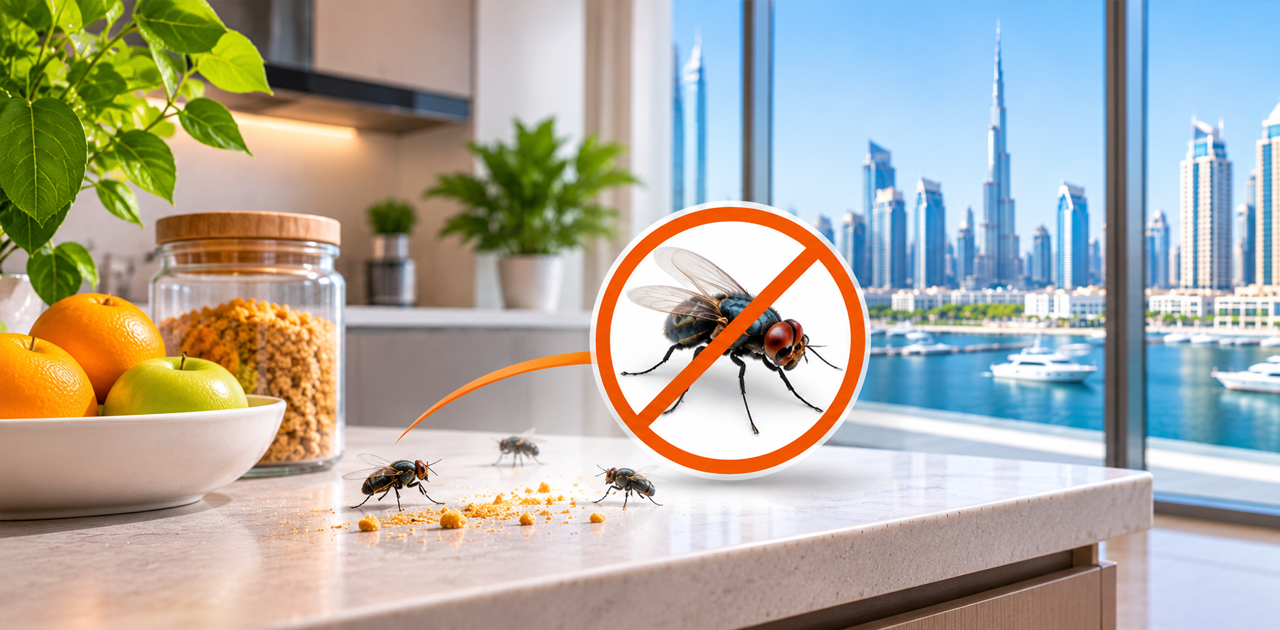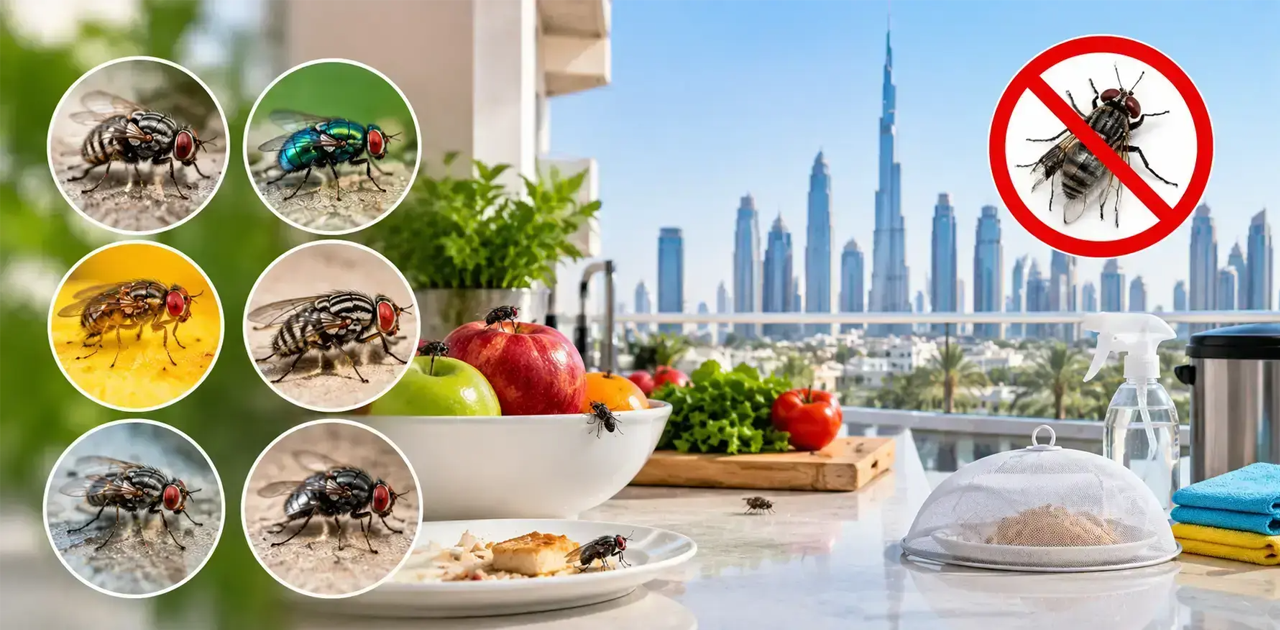

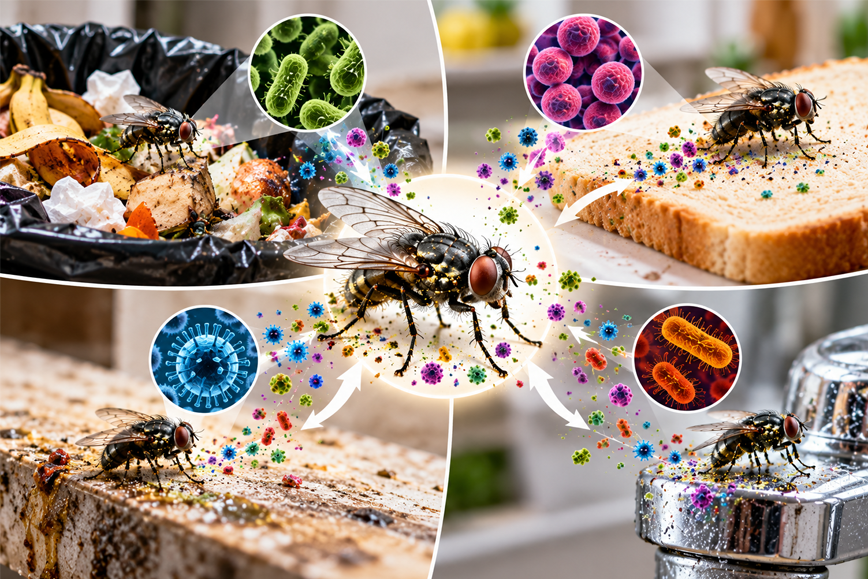
Flies spread diseases by carrying bacteria, viruses, and parasites on their legs, bodies, and mouthparts, then landing on your food and surfaces. Houseflies feed on garbage, sewage, and feces, and they transfer those germs within seconds of landing. This contact causes illnesses such as salmonellosis, typhoid, cholera, and dysentery.
Why Flies Spread Diseases: The Problem Behind the Buzz
Flies look harmless, but they travel between the dirtiest places in a city and the cleanest surfaces in your kitchen. A single housefly picks up germs from rubbish bins, drains, animal waste, and rotting food. It then lands on your plate, your baby’s bottle, or your restaurant counter. Scientists have linked houseflies to more than 100 different pathogens.
Dubai’s climate worsens the problem. Summer temperatures above 40°C speed up fly breeding, and in warm conditions, a housefly completes its life cycle in as little as 7 days. A female lays 75 to 150 eggs per batch and up to 500 eggs in her lifetime. One neglected bin produces hundreds of new flies within a week.
If flies are already inside your property, professional fly pest control in Dubai removes the breeding source and the adult population together. Allied Pest Control treats the cause of the infestation, not just the flies you see. The sections below explain the problem first, then the exact steps that solve it.
How Flies Spread Germs: 4 Transmission Routes
Flies transmit pathogens through four main routes. Each route works in seconds, and each one puts germs directly on food or surfaces. Understanding these routes shows why one fly in a kitchen is a real health risk.
1. Body and leg contact: A housefly’s legs and body hairs trap bacteria like a sponge. Every landing deposits some of those germs on the surface. A single fly carries millions of bacteria on its body surfaces.
2. Vomiting on food: Flies cannot chew solid food. They spit digestive fluid onto it, dissolve it, and suck the liquid back up. This fluid contains germs from the fly’s last meal, so every fly meal contaminates the food it touches.
3. Defecating while feeding: Flies defecate every few minutes, often while eating. Their feces carry bacteria such as Salmonella and E. coli. The droppings appear as tiny dark specks on walls, windows, and food.
4. Breeding in filth: Female flies lay eggs in manure, garbage, and decaying matter. Larvae (maggots) grow in that material, and the new adults leave covered in germs. The cycle repeats every 7 to 14 days.
Germs Carried by Flies: Bacteria, Viruses, and Parasites
Flies carry three types of harmful germs: bacteria, viruses, and parasites. The type depends on where the fly fed last. Flies that breed near sewage carry more intestinal pathogens than flies that breed near fruit waste.
Bacteria carried by houseflies include:
- Salmonella, which causes salmonellosis and food poisoning
- Escherichia coli (E. coli), which causes severe diarrhea and stomach cramps
- Shigella, which causes shigellosis (bacterial dysentery)
- Vibrio cholerae, which causes cholera
- Salmonella typhi, which causes typhoid fever
- Campylobacter, which causes gastroenteritis
Other germs carried by flies include:
- Parasite eggs, such as roundworm and tapeworm eggs
- Giardia and Entamoeba histolytica, which cause intestinal infections
- Chlamydia trachomatis, the bacterium behind trachoma, an eye infection
- Viruses such as rotavirus and norovirus, which cause stomach illness
Diseases Spread by Flies: Fly-Borne Diseases in Humans
Diseases spread by flies mostly attack the digestive system. The World Health Organization links houseflies to diarrheal diseases and trachoma. Children, older adults, and people with weak immune systems face the highest risk.
| Disease | Germ | Main Symptoms |
| Typhoid fever | Salmonella typhi | High fever, weakness, stomach pain |
| Cholera | Vibrio cholerae | Severe watery diarrhea, dehydration |
| Dysentery | Shigella | Bloody diarrhea, fever, cramps |
| Salmonellosis | Salmonella | Vomiting, diarrhea, fever |
| E. coli infection | E. coli | Cramps, diarrhea, vomiting |
| Trachoma | Chlamydia trachomatis | Eye irritation, swelling, vision damage |
Diseases caused by houseflies spread fastest in places where food is served or stored. One contaminated meal sickens many people at once. This is why fly control is a legal and safety priority for restaurants, hotels, and food factories.
How Flies Contaminate Food in Homes and Restaurants
Flies contaminate food within seconds of landing. A fly walks across a plate, tastes the food with its feet, vomits on it, and often defecates before it leaves. The food then carries live bacteria into your mouth.
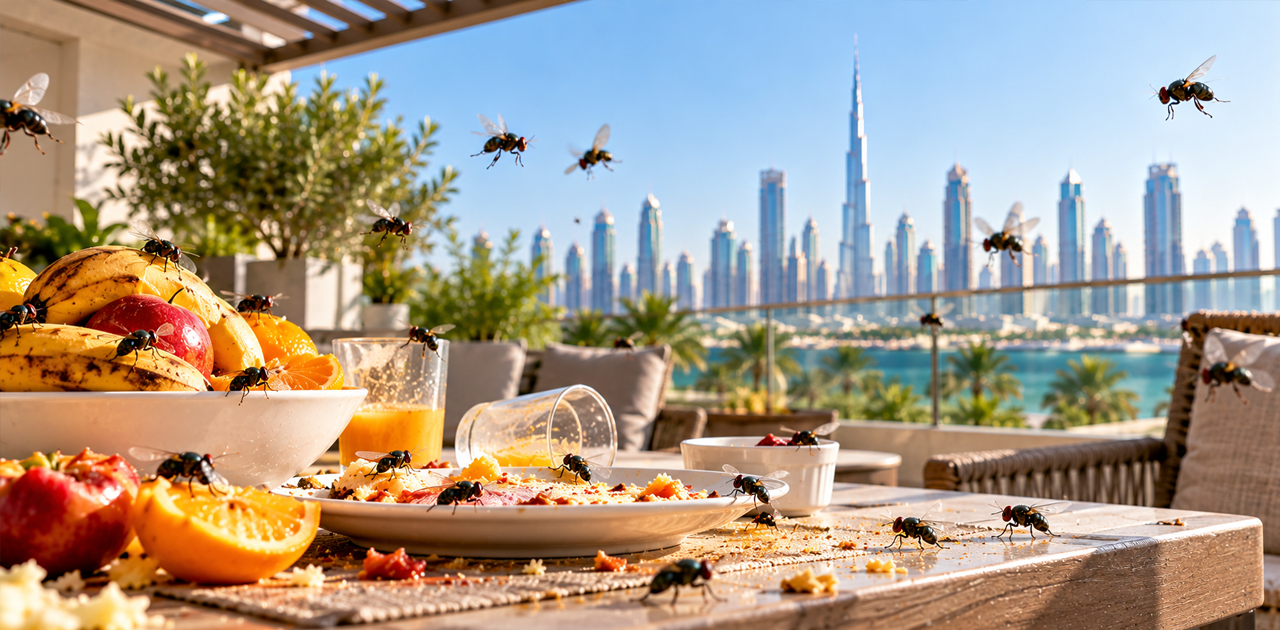
Open food is the most vulnerable target. Fruit bowls, cooked rice, salads, desserts, and uncovered drinks attract flies in Dubai kitchens. Pet food bowls and kitchen waste bins also attract them. Cooked food held at room temperature gives transferred bacteria the ideal conditions to multiply.
Commercial kitchens face a bigger risk. Flies enter through open delivery doors, drains, and waste areas, then reach prep surfaces. A single contamination event leads to food poisoning complaints, failed inspections, and lost customers. If this describes your business, our guide on fly infestation in Dubai explains the most common entry points and breeding sites.
Signs That Flies Spread Diseases in Your Property
Certain signs show that flies are breeding and contaminating your space. Spot them early to stop the health risk before illness starts.
- Fly specks: Small dark spots on walls, ceilings, and light fixtures
- Maggots: White, rice-shaped larvae in bins, drains, or soil
- Constant buzzing: More than a few flies indoors every day
- Foul odor: A rotting smell from drains, bins, or hidden waste
- Clusters: Flies gathering near windows, bins, or food prep areas
Five or more flies indoors at once points to a breeding source nearby. Finding that source is the key step in any treatment.
How to Stop Flies Spreading Diseases?
The solution works in two stages: remove what attracts flies, then eliminate the flies already inside. Follow these steps for the best results.
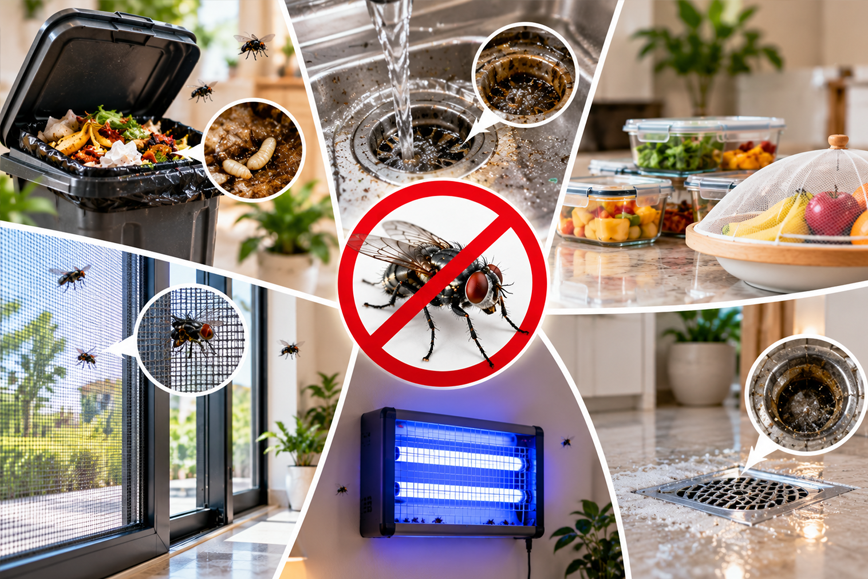
Find the breeding source: Check bins, drains, pet waste, compost, and food storage areas. Flies breed in moist, rotting material, so the source is usually within a few meters of where you see them.
Seal and empty waste daily: Use bins with tight lids. Empty them every day in summer, and wash them weekly with hot water and disinfectant.
Clean drains and floor gaps: Pour boiling water mixed with an enzyme drain cleaner down floor drains once a week. This kills larvae and removes the organic film that feeds them.
Cover all food: Store cooked food in sealed containers or refrigerate it within two hours. Cover fruit bowls and drinks.
Block entry points: Install fine mesh screens on windows and doors. Fit door sweeps and fix torn screens. Use air curtains at commercial entrances.
Add traps and light barriers: Place UV light fly traps (insect light traps) away from food areas and near entrances. Replace glue boards every 4 to 6 weeks.
Call a licensed pest control provider: DIY methods reduce flies but rarely end an infestation. Professionals apply residual insecticides, larvicides, and baits to target flies at every life stage.
Fly Prevention Checklist for Dubai Homes and Businesses
Use this checklist weekly to keep your property fly-free.
- Empty and wash kitchen bins daily
- Wipe counters and tables after every meal
- Clean floor drains and sinks weekly
- Store food in sealed containers
- Remove pet waste and wash pet bowls daily
- Repair window and door screens
- Keep outdoor bins away from entrances
- Check UV traps and replace glue boards monthly
- Book a professional inspection every quarter
Practical Tips to Reduce Fly Risk in Hot Weather
Dubai’s heat demands extra care from May to October. These tips cut fly activity quickly.
- Wash bins with vinegar solution: Vinegar removes odors that attract flies.
- Close doors quickly: Flies enter in seconds when doors stay open.
- Clean up spills immediately: Sugary drinks and food crumbs feed adult flies.
- Keep outdoor dining areas clean: Clear plates fast and cover leftover food.
- Wrap fruit waste before disposal: Overripe fruit attracts fruit flies and houseflies.
For home-specific methods, read our practical guide on how to control flies in Dubai homes.
How Allied Pest Control Treats Fly Infestations
Allied Pest Control follows a four-part process in every property in Dubai.
- First: our technicians inspect the site and identify the fly species and breeding sources.
- Second: they treat breeding areas with larvicides to stop new flies from emerging.
- Third: they apply residual treatments to walls, window frames, and resting areas to kill adult flies.
- Fourth: they advise you on sanitation and proofing so the problem stays solved.
Treatments use approved products that are safe for families, pets, and food areas when applied correctly.
Conclusion
Flies spread diseases through body contact, vomit, feces, and breeding in waste. They carry dangerous bacteria like Salmonella, E. coli, and Shigella, and they contaminate food in seconds. In Dubai’s heat, one small problem becomes a major infestation within a week.
The solution is simple and works in order: find the breeding source, clean and seal your space, block entry points, and bring in experts for full elimination. Allied Pest Control protects Dubai homes, restaurants, and businesses with targeted fly treatments. Contact our team today for an inspection and keep your family and customers safe.
Frequently Asked Questions
Can flies spread bacteria?
Yes. Flies spread bacteria through their legs, body hairs, vomit, and feces. A single housefly carries millions of bacteria, including Salmonella and E. coli.
What diseases do houseflies spread?
Houseflies spread typhoid, cholera, dysentery, salmonellosis, E. coli infections, and trachoma. These diseases mostly affect the digestive system.
How do flies transmit pathogens to food?
Flies transmit pathogens by landing on food, vomiting digestive fluid onto it, and defecating on it. Each landing deposits germs.
How long do flies live?
Adult houseflies live 15 to 30 days. They lay hundreds of eggs during that time, so one fly becomes a large infestation quickly.
How do I stop flies from spreading germs in my home?
Remove waste daily, cover food, clean drains, screen windows, and use fly traps. A professional treatment removes the flies that remain.