
Fly infestations in Dubai affect indoor hygiene and health because flies carry bacteria from garbage, drains, and waste onto food and surfaces. A single house fly carries over 100 pathogens, including Salmonella, E. coli, and Shigella. Early detection and professional treatment stop contamination before it spreads through a home or business.
What Is a Fly Infestation in Dubai?
A fly infestation in Dubai occurs when flies breed and multiply inside or around a home, restaurant, or commercial property. Dubai’s summer temperatures above 40°C speed up the fly life cycle. A house fly (Musca domestica) grows from egg to adult in 7 to 10 days.
Female house flies lay up to 500 eggs in batches of 100 to 150. They choose rotting food, garbage bins, animal waste, and damp organic matter. A small problem becomes a full infestation within two weeks.
Allied Pest Control treats both adult flies and breeding sites through its house fly pest control Dubai service. This combined approach removes the source, not just the visible flies.
Common Fly Species Found in Dubai
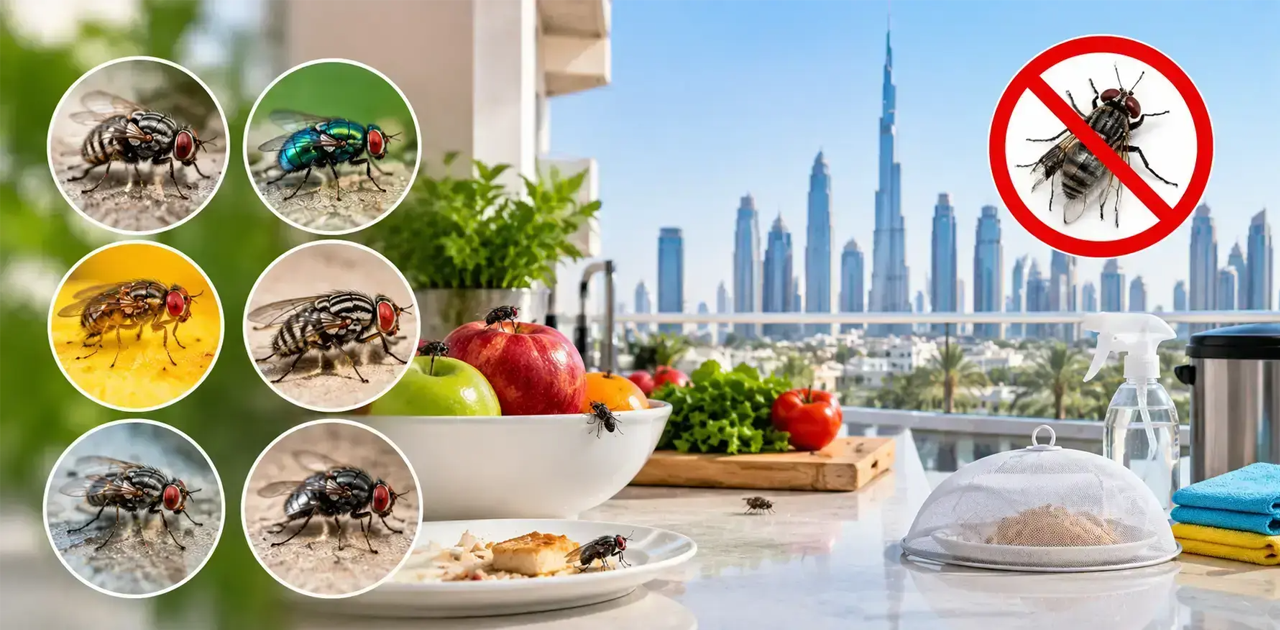
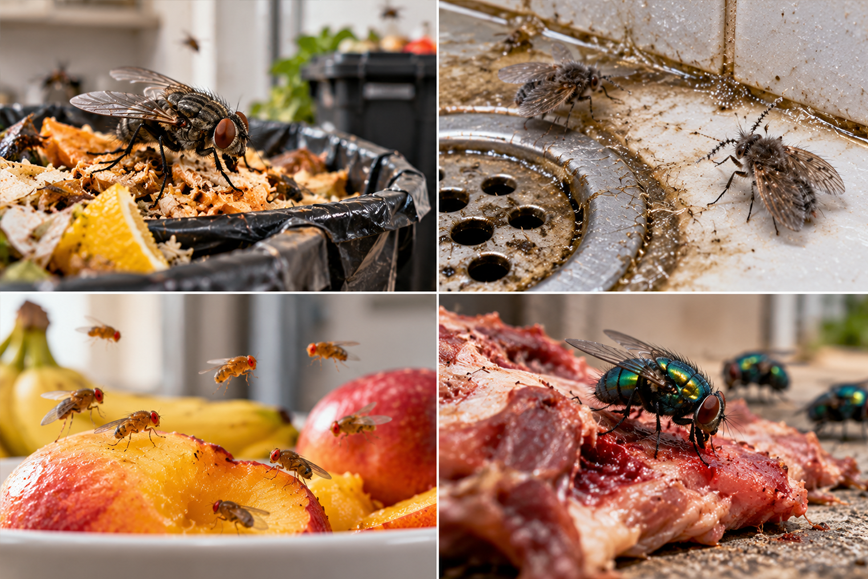
Dubai properties face four main fly species. Each species breeds in different conditions.
- House flies breed in garbage, food waste, and animal manure.
- Drain flies breed in the slime layer inside drains and pipes.
- Fruit flies breed in ripe fruit, vegetables, and sugary liquids.
- Blow flies breed in decaying meat and dead animals.
Correct identification decides which treatment works. Drain flies need drain cleaning and biological treatment. House flies need sanitation and residual insecticide. Our technicians identify the species first, then match the treatment to the breeding source.
Why Does a Fly Infestation in Dubai Damage Indoor Hygiene?
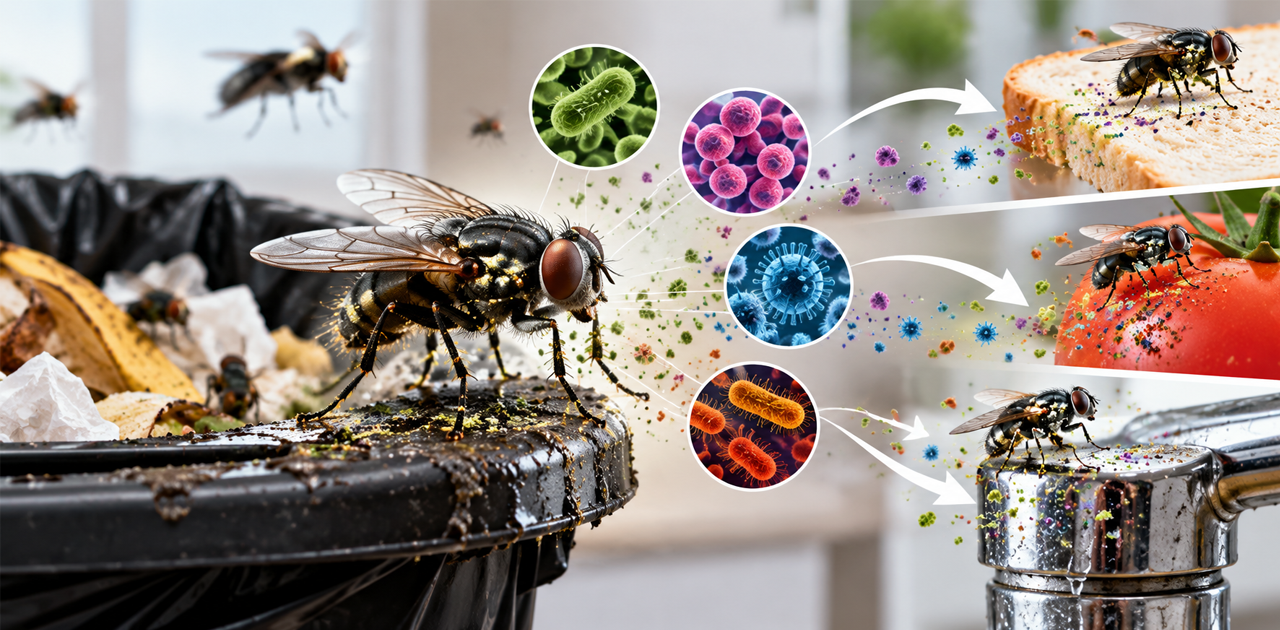
Flies damage indoor hygiene because they feed on filth and then land on clean surfaces. Their legs and mouthparts hold bacteria. They also vomit digestive fluid on food to dissolve it, which transfers germs directly onto meals.
Flies contaminate counters, utensils, and stored food within minutes of landing. A kitchen with repeated fly activity fails basic food safety standards. Dubai Municipality inspects restaurants and food outlets for fly activity, and violations lead to fines or closure.
Indoor hygiene in Dubai homes suffers in the same way. Open bins, pet food bowls, and unsealed windows attract flies fast. Each landing leaves fecal spots and bacteria behind. A fly infestation in Dubai villas and apartments turns clean kitchens into contamination zones.
What Are the Health Risks of Fly Infestations?
The health risks of fly infestations include food poisoning, diarrhea, typhoid, and eye infections. Flies move pathogens from waste to people through food and skin contact. Children, elderly residents, and people with weak immune systems face the highest risk. A fly infestation in Dubai raises these risks every day it continues.
Fly-Borne Diseases Linked to House Flies
Fly-borne diseases spread through contaminated food, water, and surfaces. The World Health Organization links house flies to several serious illnesses.
- Salmonellosis causes fever, cramps, and diarrhea.
- Typhoid fever spreads through food contaminated with Salmonella typhi.
- Cholera spreads through food and water contaminated with Vibrio cholerae.
- Dysentery results from Shigella bacteria on food and utensils.
- Trachoma spreads through flies that feed on eye secretions.
- E. coli infections cause severe stomach illness.
Flies also trigger allergies and asthma in sensitive people. Their droppings and body fragments become airborne allergens indoors.
What Causes a Fly Infestation in Dubai Homes and Businesses?
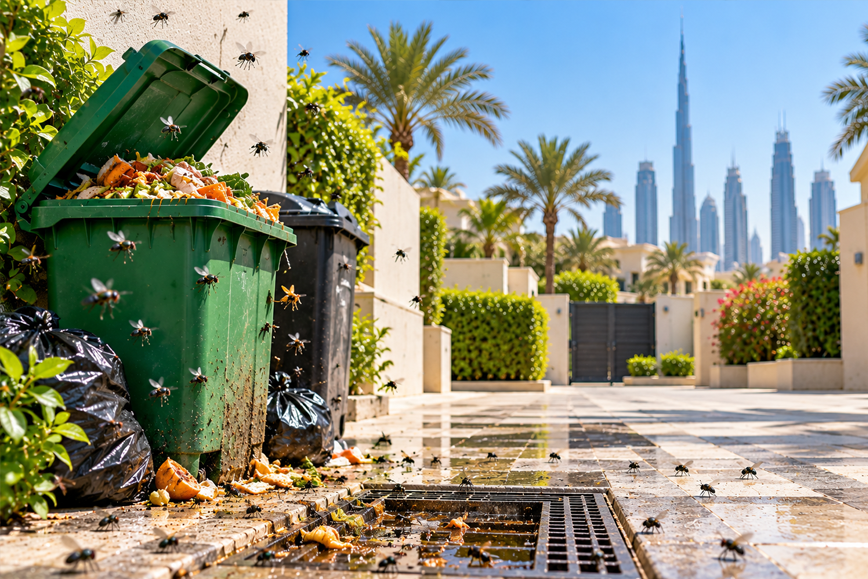
Fly infestations start when flies find food, moisture, and shelter. Most cases of fly infestation in Dubai trace back to five causes.
- Uncovered garbage bins release odors that attract flies from 1 kilometer away.
- Poor drain maintenance lets organic sludge build up inside pipes.
- Open windows and doors without mesh screens give flies free entry.
- Leftover food and spills supply protein and sugar.
- Nearby waste sites, farms, or construction areas push large fly populations toward buildings.
High humidity near Dubai Marina and Jumeirah also supports breeding. Villas with gardens and pet waste face higher risk than apartments.
How to Treat a Fly Infestation in Dubai?
Treating a fly infestation in Dubai requires three actions: find the source, remove it, and kill the adult flies. This step-by-step guide shows how Allied Pest Control handles fly control.
- Inspect the property: Check bins, drains, storage rooms, and outdoor areas for larvae (maggots) and breeding sites.
- Remove breeding material: Dispose of rotting food, clean bins with disinfectant, and clear animal waste.
- Treat drains: Pour enzyme-based drain cleaner into floor drains and sinks to dissolve organic buildup.
- Apply residual insecticide: Spray walls, ceilings, and entry points with a licensed pyrethroid-based product.
- Install UV fly light traps: Place them in kitchens and food storage areas to catch adult flies.
- Apply larvicide: Use insect growth regulators (IGRs) to stop larvae from becoming adults.
- Schedule a follow-up visit: Re-inspect after 7 to 14 days to confirm the infestation has ended.
DIY sprays kill visible flies but ignore larvae and hidden breeding sites. We use Dubai Municipality-approved products, which keep families and pets safe.
Fly Infestation in Dubai: Prevention Tips and Checklist
These fly infestation prevention tips focus on sanitation, exclusion, and routine inspection. Follow this checklist to stop a fly infestation in Dubai before it starts.
Daily checklist:
- Seal garbage bags and empty bins every 24 hours.
- Wipe counters, tables, and stovetops after meals.
- Store food in airtight containers.
- Keep doors and windows closed or fitted with mesh screens.
Weekly checklist:
- Wash and disinfect garbage bins.
- Flush drains with hot water and enzyme cleaner.
- Clean pet bowls and remove pet waste.
- Discard overripe fruit.
Monthly checklist:
- Check door seals and window screens for gaps.
- Schedule a professional inspection for restaurants and commercial kitchens.
Fine-mesh screens (16 mesh or finer) block house flies and fruit flies. Air curtains at entrances reduce fly entry in restaurants and shops.
When Should You Call a Professional for Fly Infestation in Dubai?
Call a professional when flies return within days of cleaning, when you find maggots, or when you see more than 10 flies indoors. Repeated infestations signal a hidden breeding source such as a damaged drain or wall void.
Businesses in food, hospitality, and healthcare need regular treatment to meet hygiene standards. Allied Pest Control offers monthly and quarterly plans that prevent violations and protect customers. Property owners can explore the full range of pest control services in Dubai for homes and commercial sites.
Conclusion
Fly infestation in Dubai harms indoor hygiene and creates real health risks. Flies spread bacteria, contaminate food, and carry diseases such as typhoid, salmonellosis, and dysentery. Dubai’s heat speeds up breeding, so small problems grow fast.
Sanitation, sealed bins, drain care, and window screens prevent most cases of fly infestation in Dubai. When flies persist, Allied Pest Control removes breeding sites and adult flies. Acting within the first week protects your family, your food, and your property.