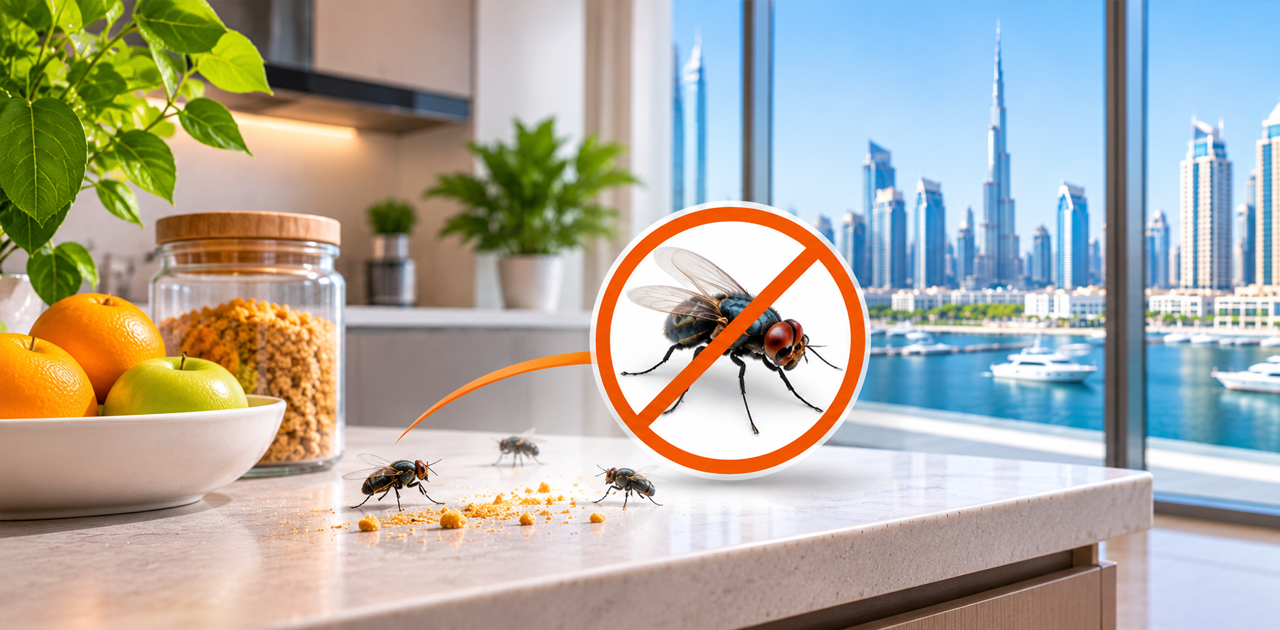

The types of flies in Dubai include house flies, fruit flies, drain flies, blow flies, flesh flies, stable flies, and sand flies. You identify them by size, color, and breeding site, then prevent them by removing food waste, sealing entry points, fixing drains, and treating breeding areas with approved pest control methods.
Why You Must Identify the Types of Flies in Dubai First
Each fly species breeds in a different place, so one treatment does not fit all. A fruit fly needs fermenting produce. A drain fly needs slime inside pipes. A blow fly needs rotting meat or waste. Correct identification points you to the exact breeding source, which is the only way to stop the problem for good.
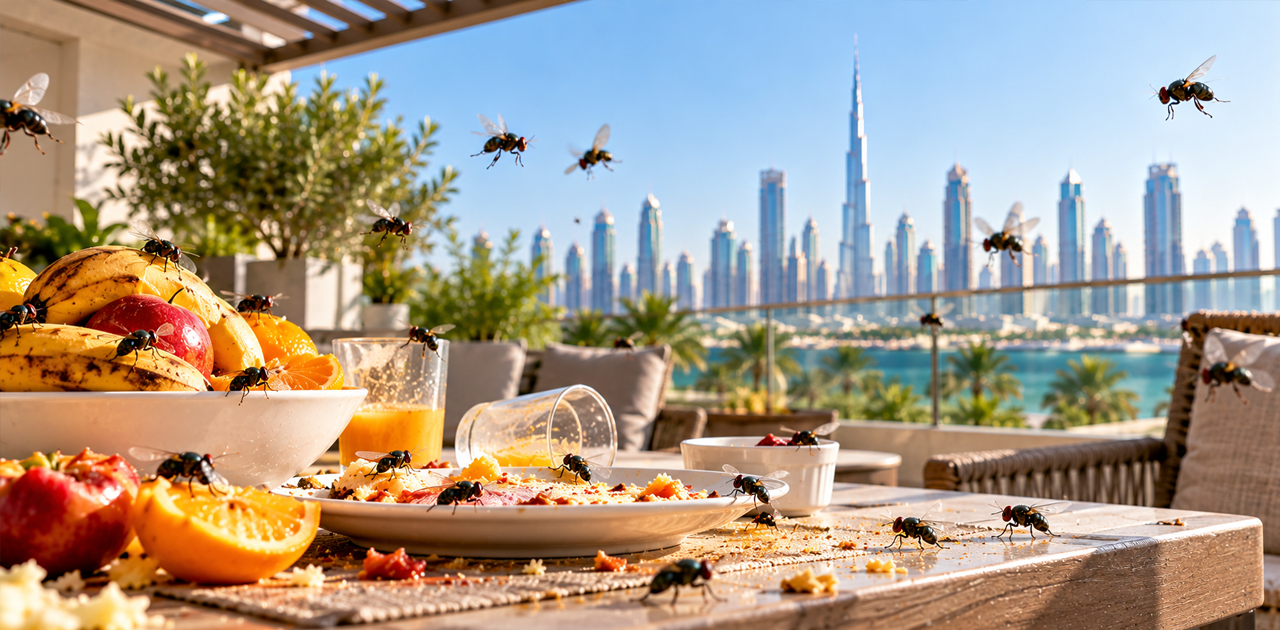
Dubai’s climate speeds up the problem. Temperatures above 30°C shorten the fly life cycle to 7–10 days, and indoor air conditioning keeps flies active all year. Professional fly pest control in Dubai starts with species identification for this reason.
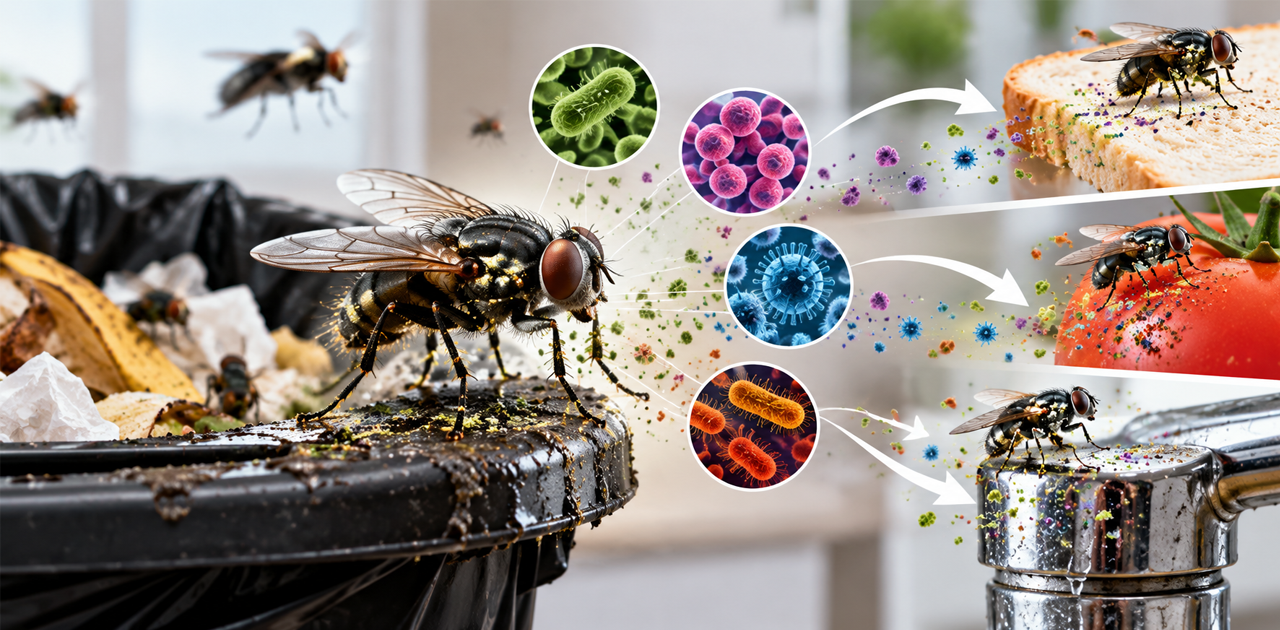
Flies also carry real health risks. House flies and blow flies transfer bacteria such as Salmonella and E. coli from waste to food surfaces. This guide covers the different types of flies, how to spot each one, and a step-by-step plan to prevent them.
Quick Identification Chart: Types of Flies in Dubai
| Fly Type | Size | Appearance | Common Breeding Site | Bites? |
| House fly | 6–7 mm | Gray, four dark stripes on the back | Garbage, animal waste | No |
| Fruit fly | 3 mm | Tan body, red eyes | Ripe fruit, drinks, drains | No |
| Drain fly | 2–5 mm | Fuzzy, moth-like wings | Slime in drains | No |
| Blow fly | 6–14 mm | Shiny metallic blue or green | Rotting meat, dead animals | No |
| Flesh fly | 10–15 mm | Gray, checkered abdomen | Carrion, waste | No |
| Phorid fly | 2–4 mm | Dark, humpbacked | Drains, damp organic matter | No |
| Stable fly | 5–7 mm | Looks like a house fly, pointed mouthpart | Wet hay, manure | Yes |
| Horse fly | 10–25 mm | Large, big green or black eyes | Wet soil, ponds | Yes |
| Sand fly | 2–3 mm | Tiny, hairy, pale | Sandy soil, burrows | Yes |
Common Types of Flies in Dubai and How to Identify Them
Dubai homes, restaurants, and warehouses face nine main fly species, and one missed breeding source turns a few flies into a full fly infestation in Dubai within two weeks. The sections below describe each species so you can match what you see to the right name.
1. House Fly (Musca domestica)
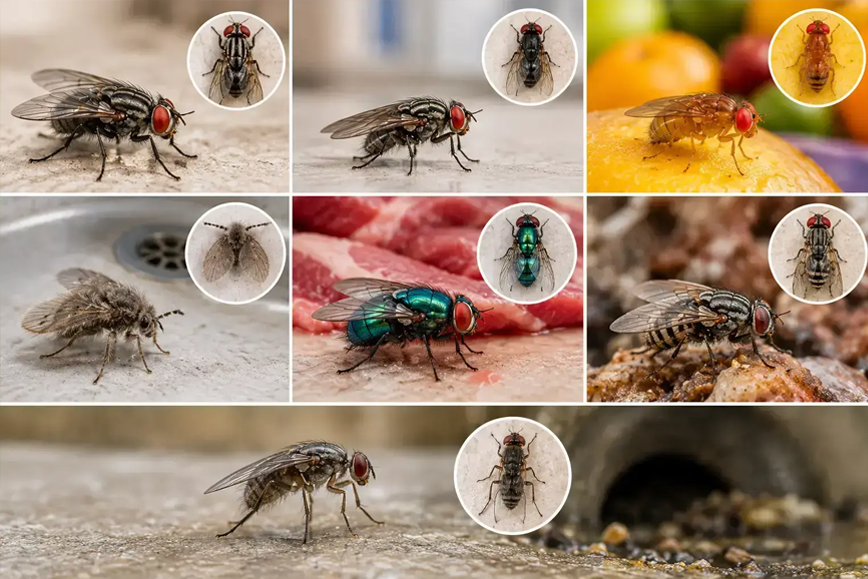
The house fly is the most common fly in Dubai. It measures 6–7 mm, has a gray body, and shows four dark stripes behind the head. A female lays 100–150 eggs per batch and up to 500 eggs in her lifetime. House flies breed in garbage bins, pet waste, and food scraps.
2. Different Types of House Flies
Two look-alikes often get mistaken for the common house fly. The lesser house fly (Fannia canicularis) is smaller at 4–6 mm and flies in slow circles under lights. The false stable fly (Muscina stabulans) is larger and breeds in decaying vegetables. Both enter homes through open doors and gaps.
3. Types of Fruit Flies
The common fruit fly (Drosophila melanogaster) measures 3 mm and has red eyes and a tan body. It breeds in ripe fruit, juice spills, and wet bar waste. The Mediterranean fruit fly (Ceratitis capitata) is a larger agricultural pest that damages dates, citrus, and other crops in the region. Fruit flies complete their life cycle in 8–10 days.
4. Drain Fly (Moth Fly)
Drain flies measure 2–5 mm and have fuzzy, moth-like wings. They rest on bathroom and kitchen walls near sinks and floor drains. Larvae feed on the organic slime inside pipes. A single clogged drain produces hundreds of adults.
5. Blow Fly (Bottle Fly)
Blow flies shine metallic blue or green and measure 6–14 mm. They locate rotting meat, dead rodents, and exposed garbage within minutes. A sudden swarm of blow flies indoors signals a dead animal inside a wall, duct, or ceiling void.
6. Flesh Fly
Flesh flies reach 10–15 mm and show a checkered gray abdomen. Females deposit live larvae instead of eggs on carrion, waste, and open wounds. They commonly appear near poorly managed waste areas and food markets.
7. Phorid Fly (Humpbacked Fly)
Phorid flies measure 2–4 mm and run in quick, erratic bursts across surfaces instead of flying away. They breed in broken drain lines, wet soil, and damp organic debris. Phorid flies are often confused with fruit flies, but their humpbacked shape sets them apart.
Types of Flies That Bite in Dubai
Only a few species bite people. Stable flies, horse flies, and sand flies all feed on blood and cause painful bites. Knowing these species protects outdoor workers, pet owners, and families near gardens, farms, and beaches.
What Type of Blood Do Flies Bite For?
Biting flies feed on the blood of mammals, including humans, horses, camels, cattle, and dogs. Only female flies bite. Females need blood protein to produce eggs. Males feed on plant nectar.
Stable Fly (Stomoxys calcitrans)
The stable fly looks like a house fly but carries a sharp, piercing mouthpart. It bites ankles and lower legs, usually outdoors near stables, farms, and animal enclosures. Bites feel like a sharp needle prick.
Horse Fly
Horse flies measure 10–25 mm and have large green or black eyes. Females slice the skin and lap up blood, which causes sharp pain and swelling. They breed in wet soil and stay active in daylight.
Sand Fly (Phlebotomine)
Sand flies measure only 2–3 mm and slip through standard window screens. They bite at dusk and night near sandy soil and rodent burrows. In parts of the Middle East, sand flies transmit leishmaniasis, a parasitic skin disease.
Different Types of Flying Insects Often Confused With Flies
Several flying insects look like flies but belong to other groups. Mosquitoes are true flies but have long, thin legs and a needle-like proboscis. Gnats are tiny flies that swarm near damp soil and houseplants. Bees, wasps, and moths have two pairs of wings, while true flies have only one pair. Counting the wings gives you a fast, reliable test.
How to Prevent Types of Flies in Dubai: Step-by-Step Guide
Follow these seven steps to learn how to control flies in Dubai homes and stop them from entering and breeding in your property.
- Seal all garbage in lidded bins: Use bins with tight lids and empty them every 24 hours. Wash the bin weekly with hot water and a disinfectant.
- Clean drains every week: Pour 1 cup of baking soda followed by 1 cup of white vinegar down each drain. Wait 15 minutes, then flush with boiling water. Scrub the pipe walls with a drain brush to remove slime.
- Store fruit properly: Refrigerate ripe fruit and cover juice, wine, and soda. Remove overripe produce the same day.
- Seal entry points: Install 16-mesh window screens, fit door sweeps, and close gaps around pipes and AC lines with silicone sealant.
- Install UV light traps: Place electric fly light traps 2–3 meters above the floor in kitchens, storage rooms, and restaurant prep areas. Replace the UV tubes every 12 months.
- Clean pet and animal waste daily: Bag and dispose of waste immediately. Hose down animal areas to remove moisture and organic matter.
- Inspect for hidden breeding sites: Check under appliances, inside AC drip trays, behind cabinets, and in ceiling voids. A dead rodent inside a wall causes a blow fly outbreak within days.
Fly Prevention Checklist for Dubai Homes and Businesses
Use this checklist weekly to keep flies out:
- Empty indoor and outdoor trash bins every day.
- Wipe kitchen counters, tables, and floors after every meal.
- Flush all drains with hot water and a drain cleaner once a week.
- Cover all food and drinks, including pet food.
- Check window and door screens for holes and gaps.
- Remove standing water from plant trays, AC trays, and buckets.
- Clean grease traps and floor drains in commercial kitchens.
- Test UV light traps and replace dirty glue boards monthly.
- Schedule a professional pest inspection every 3 months.
Health Risks of Flies in the UAE
Knowing how flies spread diseases and bacteria shows why control matters: flies land on waste and then on food. House flies carry more than 100 pathogens, including Salmonella, E. coli, and Shigella. These germs cause food poisoning, diarrhea, and stomach infections. Biting species add skin infections and, in the case of sand flies, parasitic disease.
Commercial kitchens face extra pressure. Dubai Municipality food safety rules require food businesses to control pests, and a fly sighting can trigger inspection failures.
When to Call a Professional Fly Control Service
Call a professional when you see more than 10 flies a day indoors, repeated outbreaks after cleaning, or flies in food areas. Licensed technicians identify the species, locate the breeding source, and apply targeted treatments. Common methods include residual insecticide spraying, larvicide for drains, ULV fogging, and commercial UV light traps.
Allied Pest Control provides inspection and treatment for homes, restaurants, hotels, and warehouses across Dubai. Technicians use approved, low-odor products that are safe for families and pets. Visit the main site for pest control services in Dubai to book an inspection.
Conclusion
Identifying the types of flies in Dubai is the first step toward controlling them. House flies, fruit flies, drain flies, and blow flies breed in different places, so each one needs a targeted fix. Sealed garbage, clean drains, covered food, and screened windows block most outbreaks.
Use the step-by-step guide and weekly checklist above to keep your property fly-free. When flies keep returning, a licensed pest control team finds the hidden source and removes it. Early action protects your health, your food, and your business reputation.
Frequently Asked Questions About Types of Flies in Dubai
What are the most common types of flies in Dubai?
The most common types of flies in Dubai are house flies, fruit flies, drain flies, and blow flies. Stable flies and sand flies are the main biting species.
Which types of flies bite humans?
Stable flies, horse flies, sand flies, and biting midges bite humans. House flies, fruit flies, and blow flies do not bite.
What type of flies are in the UAE kitchen?
House flies, fruit flies, drain flies, and phorid flies are the typical kitchen species in the UAE. They breed in garbage, ripe produce, and clogged drains.
How do you tell a fruit fly from a house fly?
A fruit fly measures about 3 mm and has red eyes. A house fly measures 6–7 mm and has gray stripes on its back. Fruit flies hover near fruit and drains, while house flies land on waste and food.
How fast do flies multiply in Dubai?
Flies complete their life cycle in 7–10 days in warm weather. One house fly lays up to 500 eggs, so a small problem becomes an infestation within two weeks.