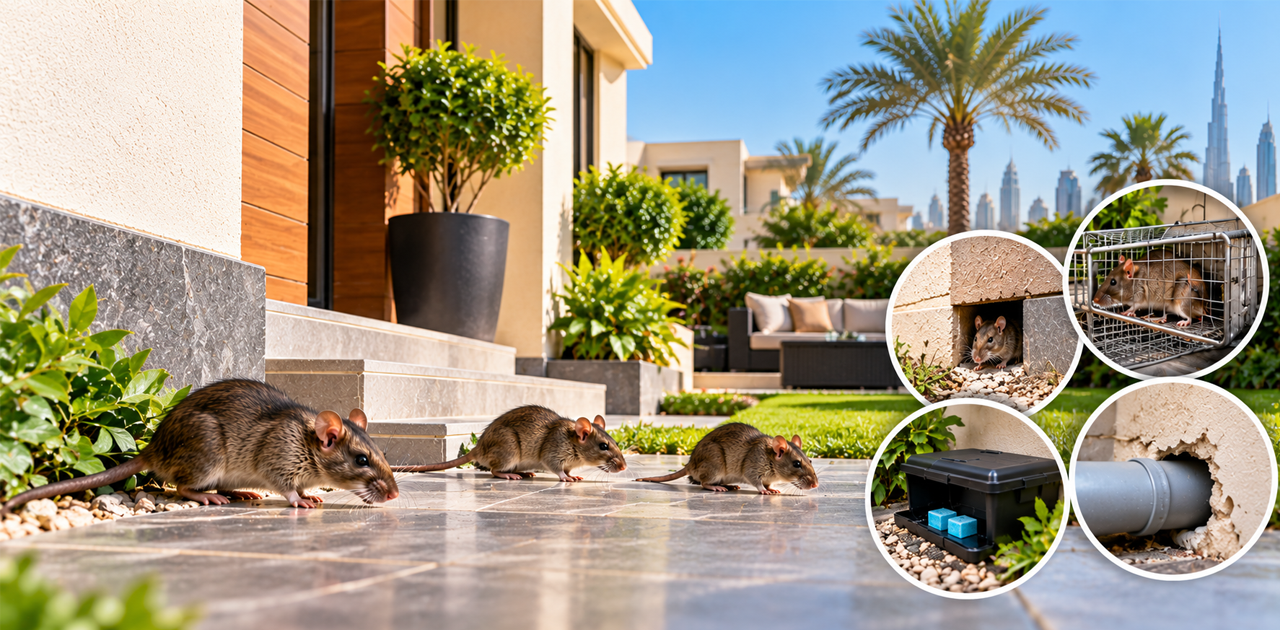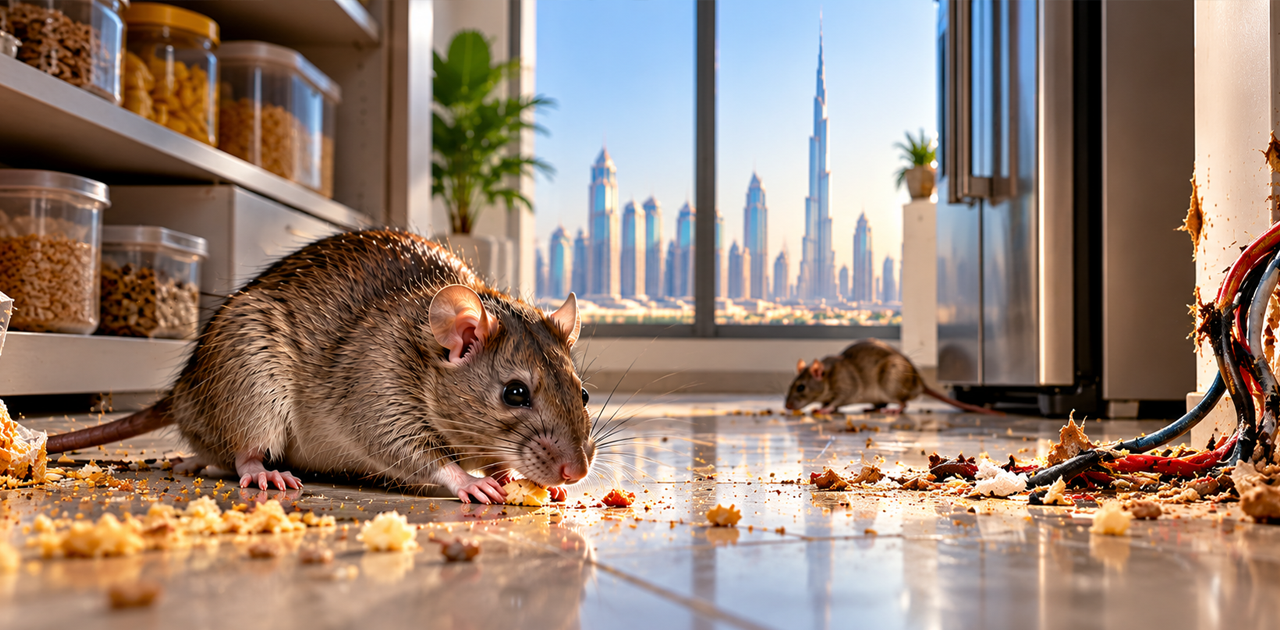

Rat control in Dubai prevents recurring infestations by removing food, water, and entry points, then eliminating the existing colony with baiting, trapping, and proofing. Professional treatment targets the root cause, not just visible rats. Regular inspections every 3 months keep Roof Rats and Norway Rats from returning to homes, restaurants, and warehouses.
What Is Rat Control in Dubai and How Does It Work?
Rat control in Dubai is a structured process that inspects a property, removes active rodents, and blocks their return. Technicians identify the species, locate nesting areas, and apply targeted treatments. They then seal entry points and set up long-term monitoring.
Allied Pest Control delivers professional rat control services in Dubai for villas, apartments, restaurants, warehouses, and labor camps. Our technicians inspect the full property before they start any treatment. They find the rat species, the nesting areas, and the entry points first. Treatment then targets the exact cause of the infestation, so rats do not return.
A single trap or a block of bait kills a few rats. It does not stop new rats from arriving. Effective rat control in Dubai combines elimination with prevention, and that combination is what ends the cycle.
Why Rat Infestations Keep Coming Back in Dubai
Rat infestations return because the conditions that attract rats stay in place. Rats need three things: food, water, and shelter. Dubai properties often supply all three through open waste bins, AC condensation lines, and gaps in building structures.
Rats also breed fast. A female rat produces up to 7 litters per year, with 6 to 12 pups in each litter. Pups reach maturity in about 3 months. A missed nest restarts the infestation within weeks.
Entry points make the problem worse. A rat squeezes through a gap of 12 mm, and a mouse needs only 6 mm. Gaps around pipes, ventilation ducts, door frames, and false ceilings give rodents easy access.
DIY methods fail for the same reason. Store-bought poison kills some rats but leaves the nest, the entry points, and the food source untouched. This is why rat control in Dubai must address the causes, not only the symptoms.
Common Rat Species Found in Dubai
Three rodent species cause most infestations in the UAE. Each species behaves differently, so each needs a different treatment.
- Roof Rat (Rattus rattus): Roof Rats climb palm trees, walls, and cables. They nest in false ceilings, attics, and tree crowns. Villas and high-rise buildings face the highest risk.
- Norway Rat (Rattus norvegicus): Norway Rats burrow near drains, basements, and garbage areas. They weigh up to 500 g and cause heavy structural damage.
- House Mouse (Mus musculus): House Mice nest in wall voids, storage rooms, and kitchens. They eat small amounts but contaminate large areas.
Correct identification decides the bait type, trap placement, and proofing method. Technicians trained in rat pest control confirm the species before treatment starts.
Health and Property Risks of Rat Infestations
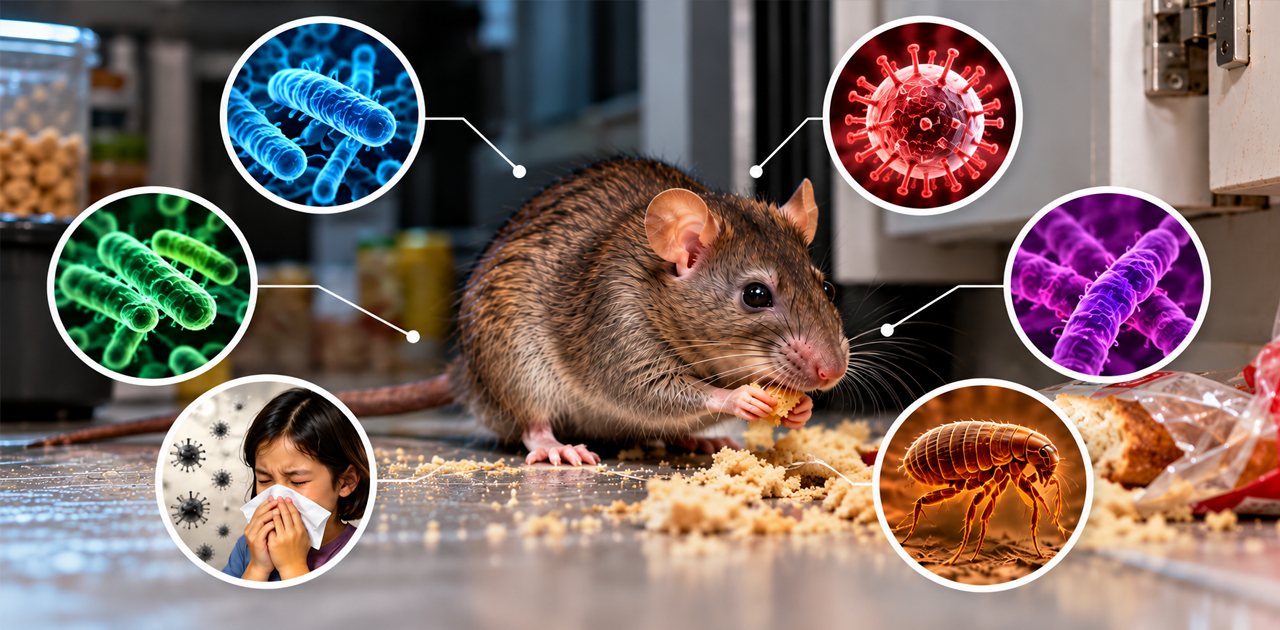
Rats carry serious diseases. They spread leptospirosis, salmonellosis, and rat-bite fever through urine, droppings, and saliva. They also carry fleas and mites that bite humans and pets.
Rats damage property. Their incisors grow about 12 cm per year, so they gnaw constantly on wood, plastic, and electrical cables. Chewed wiring creates short circuits and fire hazards.
Businesses face extra risk. Dubai Municipality requires food establishments to maintain licensed pest control. A rodent sighting can trigger fines, inspection failures, and closure orders. Reliable rat control in Dubai protects health, property, and business licenses.
Signs of Rodent Infestations in Dubai Homes
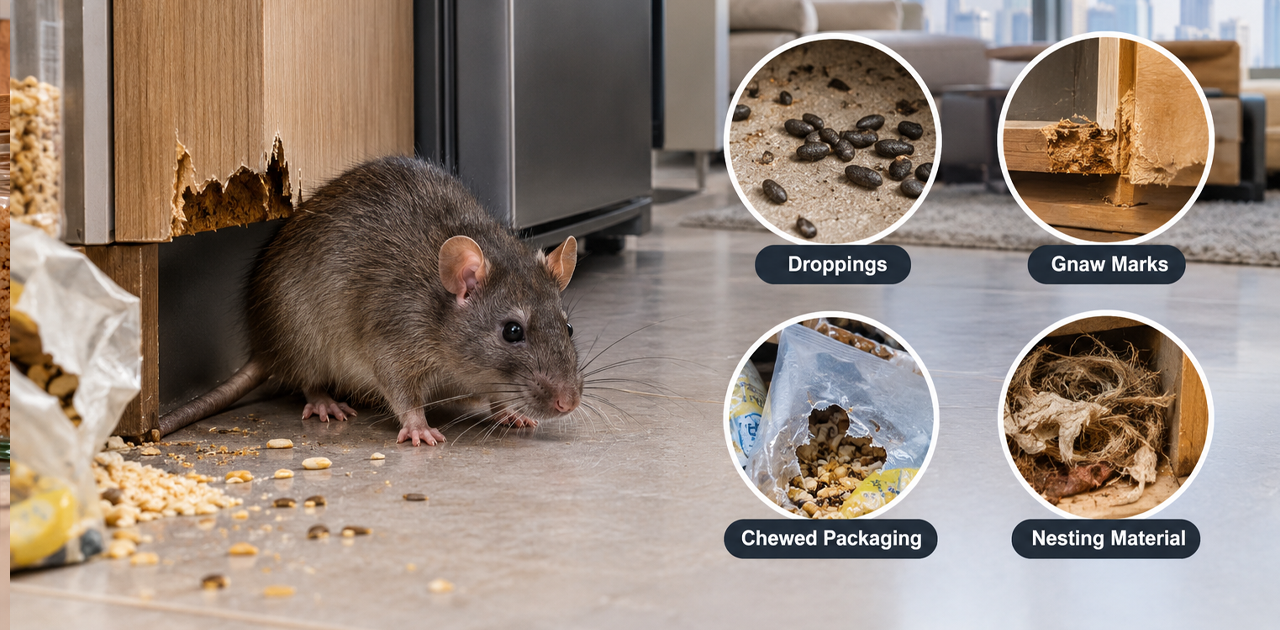
Early detection shortens treatment and lowers cost. Property owners should check for the common early signs of rodent infestation in Dubai homes, such as droppings, gnaw marks, and night noises. Two or more confirmed signs mean an active infestation, so call a professional right away.
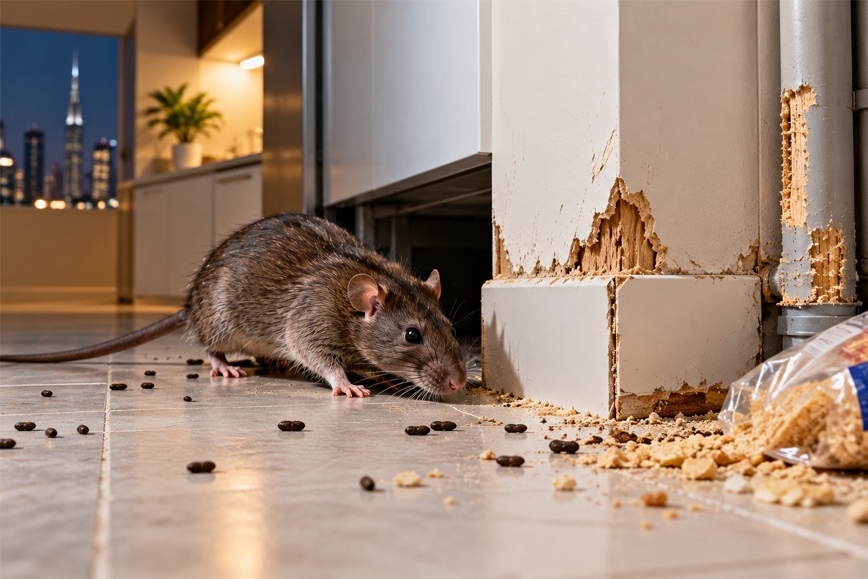
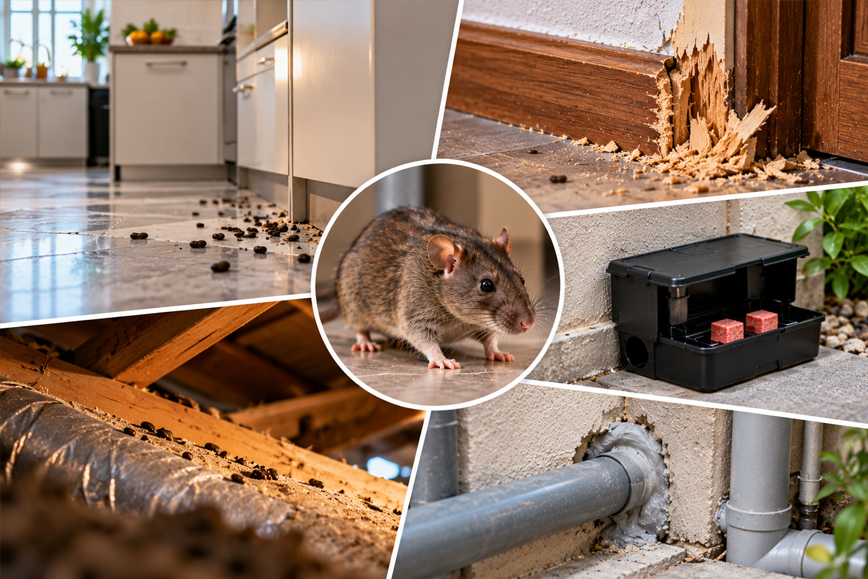
- Droppings: Rat droppings measure 12 to 18 mm. Mouse droppings measure 3 to 6 mm.
- Gnaw marks: Fresh marks on wood, pipes, and packaging look pale and clean.
- Grease trails: Rats leave dark, oily smears along walls and skirting boards.
- Night noises: Scratching and scurrying in ceilings and walls signal active nests.
- Nesting material: Shredded paper, fabric, and insulation indicate a nest.
- Burrows: Holes near foundations, drains, and gardens point to Norway Rats.
How Rat Control in Dubai Prevents Recurring Infestations
Professional treatment stops reinfestation through four actions. Each action removes one reason rats return.
1. Colony elimination: Technicians place tamper-resistant bait stations loaded with anticoagulant rodenticides such as bromadiolone or brodifacoum. Rats eat the bait and return to the nest, which spreads the effect through the colony. This removes the breeding population, not only single rats.
2. Exclusion and proofing: Technicians seal gaps with steel wool, copper mesh, cement, and metal flashing. They fit door sweeps and cover ventilation openings with fine wire mesh. Sealed buildings give rats no way back in.
3. Sanitation correction: Technicians identify food and water sources and recommend fixes. Examples include sealed waste bins, repaired leaks, and covered food storage. Rats leave areas that offer no food.
4. Ongoing monitoring: Follow-up visits every 30 to 90 days check bait consumption, trap catches, and new activity. Early detection catches a returning rat before a new colony forms. This monitoring is the main advantage of professional rat control in Dubai over one-time DIY efforts.
Step-by-Step Rat Control in Dubai Process
A professional treatment follows a fixed sequence. Here is the standard process:
- Inspect the property: Technicians check ceilings, kitchens, drains, rooftops, gardens, and utility areas for droppings, gnaw marks, and burrows.
- Identify the species: The team confirms whether the problem involves Roof Rats, Norway Rats, or mice.
- Create a treatment plan: The plan lists bait types, trap locations, and proofing work based on the findings.
- Place bait stations and traps: Technicians install stations along walls and runways where rats travel. Snap traps handle indoor spaces where poison is unsuitable.
- Seal entry points: The team closes every gap larger than 6 mm with durable, rodent-proof materials.
- Remove carcasses and sanitize: Technicians dispose of dead rodents and disinfect contaminated surfaces.
- Schedule follow-up visits: Technicians return to check results, refill bait, and confirm that activity has stopped.
This process delivers lasting results because it treats the whole problem. Allied Pest Control uses this exact sequence on every rat control in Dubai.
Rat Control Tips: How to Control Rats at Home
Daily habits at home make it harder for rats to settle in. Sealed food containers, covered bins, and quick repairs remove the food, water, and shelter rats need. These habits work alongside proven methods for how to get rid of rats in Dubai and keep your property less attractive to rodents. Use this checklist to reduce rat activity:
- Store food in airtight glass or metal containers.
- Empty kitchen bins daily and use bins with tight lids.
- Fix leaking pipes and AC drain lines within 48 hours.
- Trim tree branches that touch the roof or walls.
- Keep gardens free of fallen dates and fruit.
- Clear clutter from storage rooms, balconies, and garages.
- Wash pet food bowls every night.
- Inspect door gaps and install brush strips at the base.
Home habits reduce how many rats enter, and professional rat control in Dubai removes the rats already inside and seals the gaps they use.
Pest Control for Rats and Mice: Treatment Methods Compared
Pest control for rats and mice uses several methods. Technicians choose the right method based on species, location, and safety needs.
| Method | How It Works | Best For | Safety Note |
| Bait stations | Locked stations hold anticoagulant bait such as bromadiolone. Rats eat the bait and carry the effect back to the nest. | Long-term colony control in gardens, basements, and building perimeters | Tamper-resistant design protects children and pets |
| Snap traps | Spring-loaded traps kill rodents instantly. Technicians check them every 24 hours. | Kitchens, offices, and indoor areas where poison is unsuitable | No chemicals involved |
| Glue boards | Adhesive surfaces catch mice in tight spaces. | Mice in storage rooms and behind appliances | Used only where other methods fail |
| Tracking powder | Powder in wall voids sticks to rodents and is swallowed during grooming. | Hidden nests inside walls and ceiling gaps | Applied only in inaccessible areas |
| Proofing materials | Steel wool, copper mesh, and cement block to block physical access. | Sealing gaps around pipes, vents, and door frames | Permanent, non-toxic prevention |
Effective rat pest control uses at least two of these methods together. Mice also need smaller proofing gaps and more trap points than rats.
How to Choose Rat Control Companies in Dubai
Not all rat control companies deliver the same results. Verify these points before you hire:
- Valid Dubai Municipality license: Licensed companies follow approved chemical and safety rules.
- Written inspection report: A reliable provider documents findings, species, and entry points.
- Integrated approach: The company combines baiting, trapping, and proofing, not poison alone.
- Follow-up visits: Quality providers include scheduled re-checks in the service plan.
- Safe products: Technicians use tamper-resistant stations and explain risks to children and pets.
- Service guarantee: A written warranty shows confidence in the treatment.
Allied Pest Control offers only a single visit, leaving your property open to reinfestation. Choose a provider that treats prevention as part of rat control in Dubai.
Conclusion
Rats return when a property keeps feeding, sheltering, and admitting them. Professional rat control in Dubai ends this cycle by eliminating the colony, sealing entry points, correcting sanitation gaps, and monitoring activity over time. Each step removes one reason rats come back.
Property owners protect their health, assets, and licenses when they act at the first sign of rodents. Allied Pest Control provides inspection-led treatment, safe products, and follow-up visits for long-term results. Book a professional inspection today and make rat control in Dubai a permanent fix, not a repeat expense.
Frequently Asked Questions About Rat Control in Dubai
How long does rat control in Dubai take to work?
Most infestations clear in 2 to 4 weeks. Bait takes 3 to 7 days to affect rats, and the colony declines over the following weeks. Severe cases need 6 to 8 weeks with follow-up visits.
How often should I schedule rat control in Dubai?
Schedule professional inspections every 3 months. Restaurants, warehouses, and buildings near construction sites need monthly visits.
Is rat control safe for children and pets?
Yes. Technicians use tamper-resistant bait stations that block access for children and pets. They place stations in areas that are out of reach.
Why do rats keep coming back after treatment?
Rats return when entry points stay open, and food sources stay available. Proofing and sanitation prevent repeat visits.
Can I control rats at home without a professional?
Homeowners can reduce activity with sanitation and sealing. Established colonies need professional baiting and proofing to disappear fully.