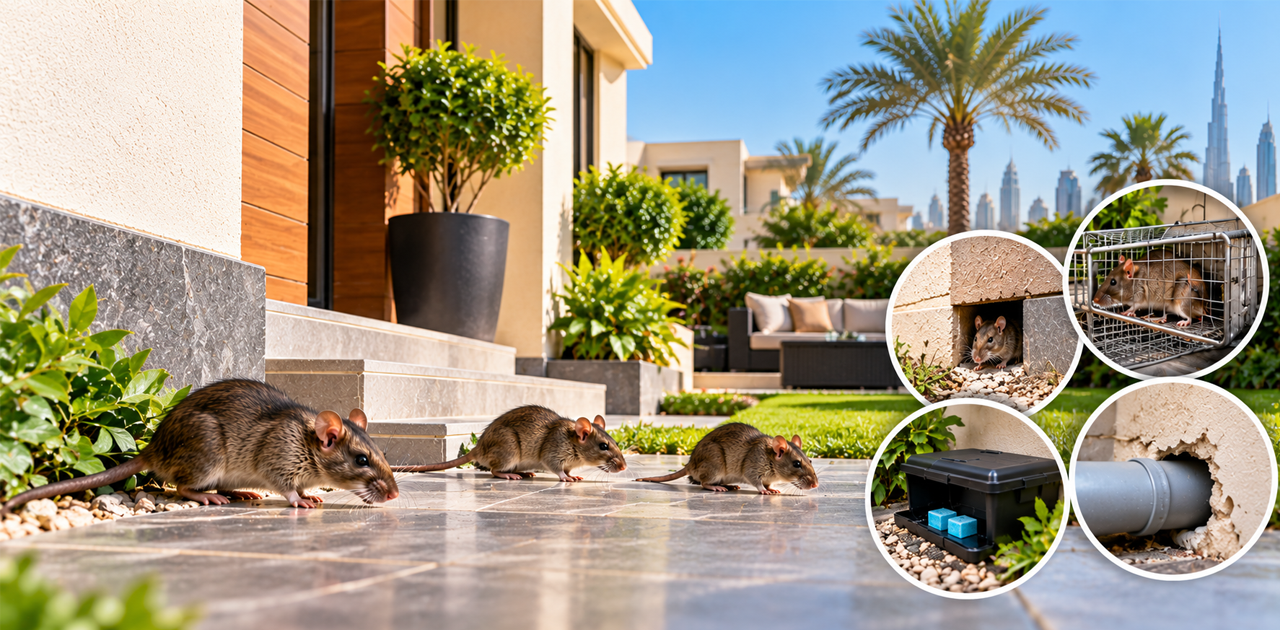

Rodent infestation in Dubai homes shows up first as droppings, gnaw marks, scratching noises in walls or ceilings, greasy rub marks along skirting boards, and a musty ammonia smell. Spotting two or more of these signs means rats or mice are already nesting inside your property and need immediate treatment.
Why Rodent Infestation in Dubai Is a Growing Household Problem
Rodent infestation in Dubai affects villas, apartments, and labor accommodation alike. The city’s dense construction, year-round food supply, and constant waste output give rats and mice everything they need to survive.
Rodent Species Behind Most Dubai Infestations
Three species cause most problems in Dubai homes: the Norway rat (Rattus norvegicus), the roof rat (Rattus rattus), and the house mouse (Mus musculus). Norway rats burrow near drains and ground-level gaps. Roof rats climb into attics and false ceilings. House mice settle in wall voids, cabinets, and storage rooms.
How Fast Rodents Breed Inside Homes
Rodents breed fast. A female mouse produces 5 to 10 litters per year, with 5 to 6 pups per litter. A female rat gives birth after 21 to 23 days of pregnancy and raises 12 pups per litter. One pair can become dozens of rodents within three months.
Health and Property Risks of Rodents
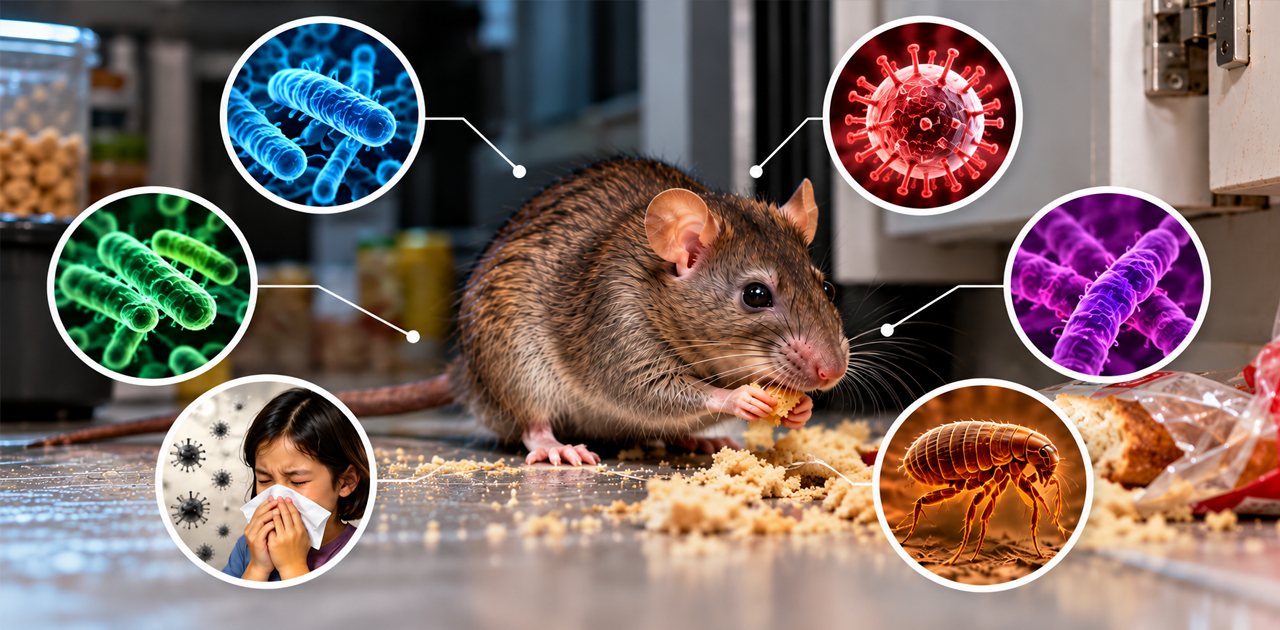
Rodents carry real health risks. They spread leptospirosis, salmonellosis, and rat-bite fever through urine, droppings, and contaminated food. Their constant gnawing damages wiring, insulation, and furniture. Early detection protects both your family and your property.
Why Early Treatment Matters
If you already see signs inside your home, pest control for rodents in Dubai removes the infestation at its source. Allied Pest Control inspects the property, identifies the species, and treats the problem. The sections below explain how to identify the problem first and how to treat it step by step.
Common Rodent Problems in Dubai Homes
Dubai homes face specific rodent pressures. Villas with palm trees and landscaped gardens attract roof rats, which climb along walls, pipes, and power lines into attics and false ceilings. Older buildings in areas like Deira, Karama, and Satwa give Norway rats easy access through damaged drains and gaps around pipes.
Apartments face a different pattern. Mice travel through shared ventilation shafts, AC ducts, and service risers between units. A neighbor’s infestation becomes your infestation within weeks.
Summer heat pushes rodents indoors in search of cool shelter and water. Nearby construction sites, restaurants, bin areas, and storage rooms also drive rodents toward residential buildings.
Early Signs of a Rodent Infestation in Dubai Homes
Rodents leave clear physical evidence. Learning the common signs of rats in the house lets you act before the population grows. Check each sign below.
1. Rodent Droppings in the House
Rodent droppings are the most reliable sign. Mouse droppings measure 3 to 6 mm and look like dark grains of rice. Rat droppings measure 12 to 20 mm and have blunt or pointed ends, depending on the species.
A single mouse leaves 50 to 75 droppings per day. Fresh droppings are dark, soft, and shiny. Old droppings are gray, dry, and crumbly. Look behind appliances, inside kitchen cabinets, along skirting boards, and in storage rooms.
2. Rat Noises in Walls and Ceilings
Rats and mice are nocturnal. You hear scratching, scurrying, squeaking, and gnawing sounds between 10 PM and 5 AM. Rat noises in walls and ceilings point to nesting activity in cavities, false ceilings, or attic spaces.
Heavy thumping or running sounds indicate rats. Light, fast scratching indicates mice. Sounds that repeat nightly mean an established nest.
3. Rodent Damage to Furniture and Wires
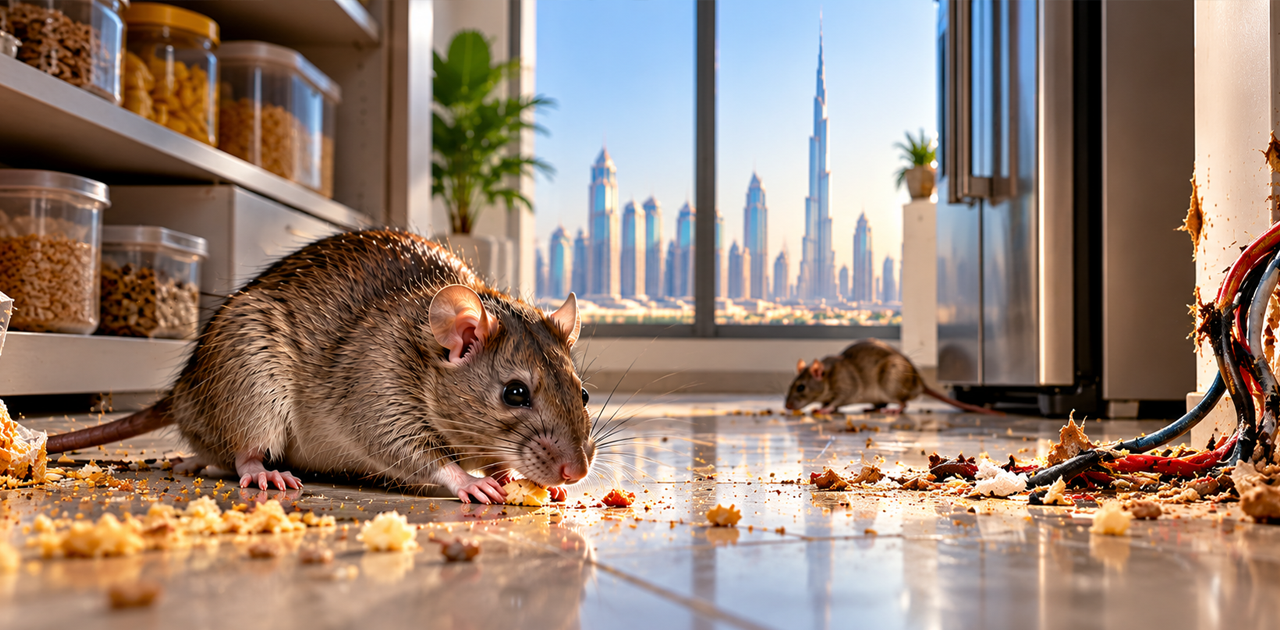
Rodent incisors grow about 12 cm per year, so rats and mice gnaw constantly to wear them down. Rodent damage to furniture and wires appears as ragged edges on wood, chewed cables, shredded insulation, and damaged plastic pipes.
Gnawed electrical wiring creates a serious fire hazard. Rats also chew through food packaging, cardboard boxes, and soap bars. Fresh gnaw marks look pale and clean. Old marks turn dark.
4. Grease Marks and Rub Trails
Rats follow the same routes along walls every night. Oil and dirt from their fur leave dark, greasy smears along skirting boards, pipes, and entry holes. These rub marks confirm active travel routes.
Footprints and tail drag marks appear in dusty areas such as garages, balconies, and storage rooms. A thin layer of talcum powder placed along a suspected path shows tracks by morning.
5. Nests and Shredded Materials
Rodents build nests from paper, fabric, cardboard, and insulation. Look for shredded material in quiet, dark spaces: behind refrigerators, inside wardrobes, in attic corners, and under sinks.
A nest holding pups means the infestation has passed the early stage. Treat it immediately.
6. Strange Smells
Rodent urine produces a sharp ammonia odor. A heavy, musty smell in closed rooms signals a large or long-term infestation. A sweet, rotting smell indicates a dead rodent inside a wall or ceiling void.
A UV flashlight reveals dried urine trails, which glow blue-white under ultraviolet light.
7. Pet Behavior and Visible Sightings
Cats and dogs react to rodents before humans do. Pets that stare at walls, scratch at baseboards, or sniff the same spot repeatedly have detected movement or scent.
Seeing a live rodent during the day signals a severe infestation. Rodents avoid light and people, so daytime activity means the nest is overcrowded.
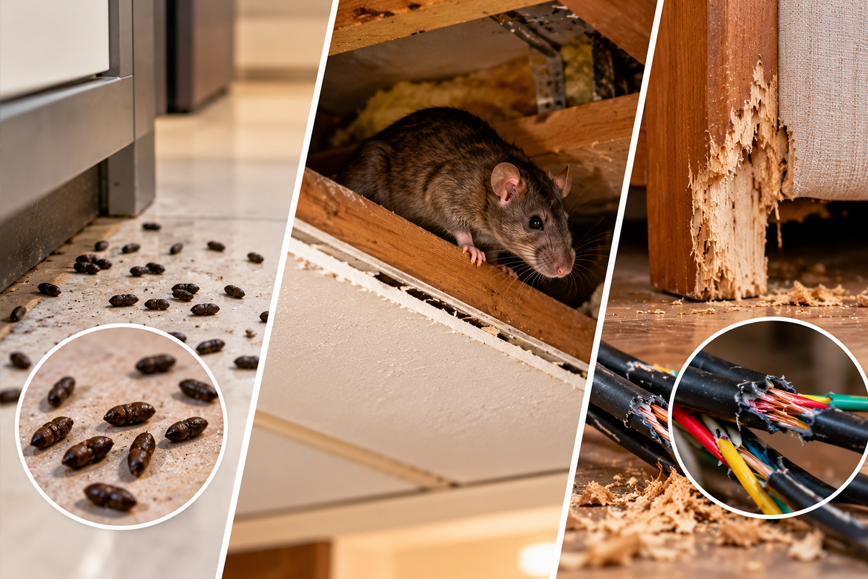
Rat Infestation Signs vs Mouse Infestation Signs
Identifying the species determines the treatment method. Use this comparison.
| Sign | Rats | Mice |
| Dropping size | 12–20 mm | 3–6 mm |
| Gnaw hole size | 5 cm or larger | 2–3 cm |
| Entry gap needed | 20 mm | 6 mm |
| Noise | Heavy thumping, scurrying | Light scratching |
| Nest location | Attics, drains, burrows | Wall voids, drawers, cabinets |
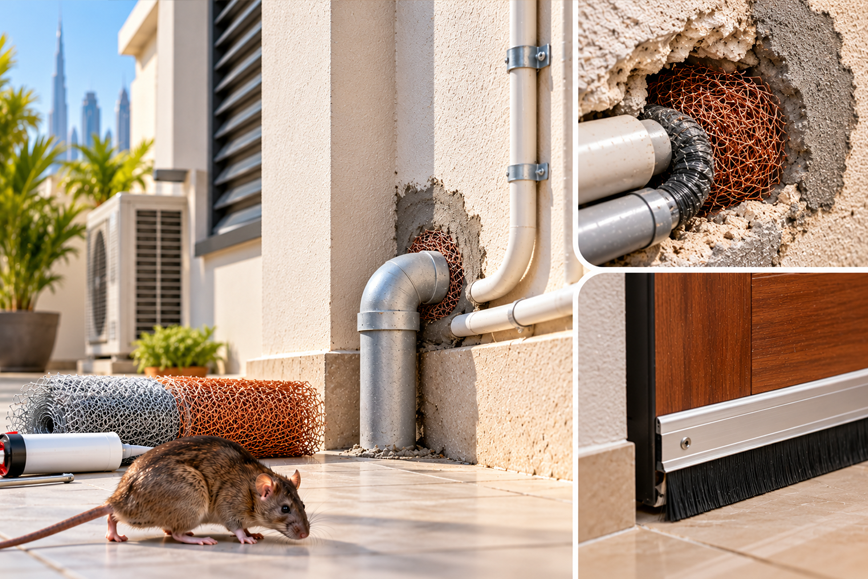
A mouse squeezes through a gap the width of a pencil. A rat fits through a hole the size of a 2 AED coin. Seal both sizes.
How to Detect Rats at Home: Step-by-Step Checklist
Follow this checklist to confirm an infestation. Complete each step in order.
- Inspect at night: Switch off lights, wait 15 minutes, then listen for scratching in walls and ceilings.
- Check high-risk zones: Examine the kitchen, storeroom, attic, balcony, and garage with a flashlight.
- Search for droppings: Look behind appliances and along walls. Wear gloves and a mask.
- Do the flour test: Sprinkle a thin line of flour across a suspected route. Footprints appear overnight.
- Look for gnaw marks: Check wires, door frames, pipes, and food packages.
- Trace entry points: Walk the outside of your property. Look for gaps around pipes, AC lines, vents, and door bases.
- Use a UV light: Scan floors and shelves for urine stains.
- Place a motion-activated camera: A camera near a dropping site confirms species and activity time.
Three or more positive results confirm an active infestation. Move to treatment at once.
How to Treat a Rodent Infestation in Dubai
Treatment works in four stages: remove access, remove food, remove rodents, and prevent return. Skipping any stage lets the population rebuild.
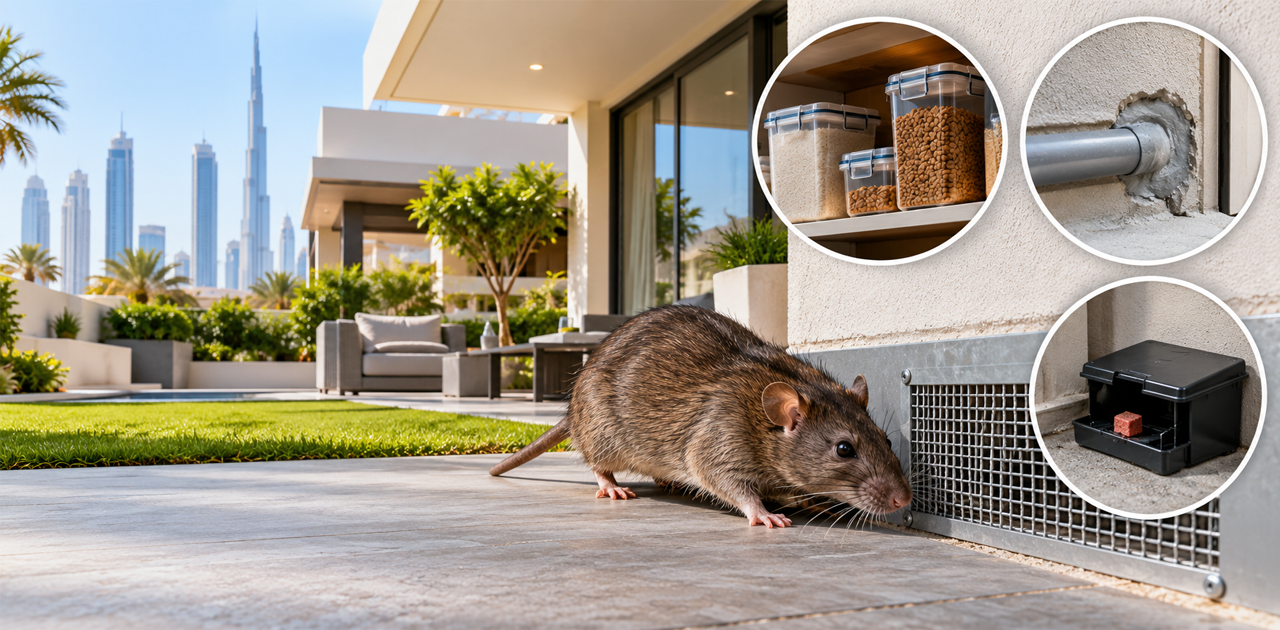
Seal entry points: Fill gaps with steel wool, copper mesh, and cement or silicone sealant. Rodents chew through foam, plastic, and rubber, so use metal-based materials. Install door sweeps on exterior doors.
Remove food and water sources: Store dry food in sealed glass or hard plastic containers. Empty bins nightly. Fix leaking taps and AC drain lines. Rodents need 15 ml of water per day.
Set traps: Snap traps baited with peanut butter kill rodents quickly. Place them perpendicular to walls with the trigger end facing the wall. Set 6 to 8 traps for a minor infestation. Check them every morning.
Use tamper-resistant bait stations: Professionals load these stations with anticoagulant rodenticides such as bromadiolone or brodifacoum. The stations protect children and pets. Do not scatter loose poison at home.
Clean and disinfect: Spray droppings with a 1:10 bleach solution and wait 5 minutes before wiping. Never sweep or vacuum dry droppings, as this spreads pathogens into the air.
Monitor for 4 weeks: Rodent activity should stop within 7 to 14 days. If droppings or noises continue after two weeks, the nest is still active.
For a deeper breakdown of each method, read our guide on how to get rid of rats in Dubai.
When to Call Professional Rodent Control Services in Dubai
DIY methods handle a single mouse or a short-term problem. Call professionals when you hear rodents nightly, find droppings in multiple rooms, or see rodents during the day.
Allied Pest Control delivers professional rodent control services in Dubai that include a full property inspection, species identification, entry-point proofing, baiting and trapping, and follow-up visits. Dubai Municipality requires licensed companies to use approved pesticides, so working with a qualified provider keeps your home within local regulations.
Allied Pest Control technicians also reach nests inside false ceilings, wall cavities, and drainage lines that homeowners cannot access. A typical treatment program runs 3 to 4 weeks with scheduled re-inspections.
Rodent Infestation Prevention in Dubai
Prevention costs less than treatment. Apply these habits to keep rodents out.
- Seal every gap larger than 6 mm: Inspect pipes, vents, and door frames every 3 months.
- Trim vegetation: Cut tree branches at least 1 meter from the roof and walls.
- Store food correctly: Use airtight containers. Keep pet food indoors overnight.
- Manage waste: Use bins with tight lids and move garbage outside daily.
- Declutter storage areas: Raise boxes 15 cm off the floor and remove cardboard stacks.
- Schedule yearly inspections: A trained technician finds early activity you miss.
Consistent prevention reduces the risk of rodent infestation in Dubai homes by closing the three things rodents need: food, water, and shelter.
Conclusion
Early detection stops a rodent infestation in Dubai before it damages your wiring, contaminates your food, and threatens your family’s health. Check for droppings, night noises, gnaw marks, grease trails, nests, and odors. Confirm activity with the step-by-step checklist, then seal entry points, remove food sources, and trap or bait the rodents.
When signs appear in more than one room, bring in specialists. Allied Pest Control removes the infestation completely and keeps your home protected year-round. Learn more about our rodent control experts and book an inspection today.
Frequently Asked Questions
How fast does a rodent infestation grow?
A rodent infestation doubles roughly every 6 to 8 weeks. Early action prevents a small problem from becoming a major one.
What is the first sign of rats in a house?
Droppings are the first sign. Scratching sounds at night and gnaw marks follow shortly after.
Can rodents live in apartments in Dubai?
Yes. Rodents travel through ducts, pipes, and shared walls and settle in any apartment with food access.
Do rodents go away on their own?
No. Rodents stay as long as food, water, and shelter remain available. They require removal and proofing.
Who can I call for rodent control in Dubai?
Allied Pest Control inspects Dubai homes, identifies the rodent species, and treats the infestation with proofing, trapping, and baiting.