Have you ever spotted winged insects swarming around your home and wondered what they are? Many UAE homeowners make the costly mistake of confusing termites with flying ants. While they may look similar at first glance, the difference between these two pests is enormous especially when it comes to property damage.
Termites silently destroy structures, while flying ants are mostly a nuisance. Knowing which pest you’re dealing with can save you thousands of dirhams in repairs. Keep reading to find out the answer.
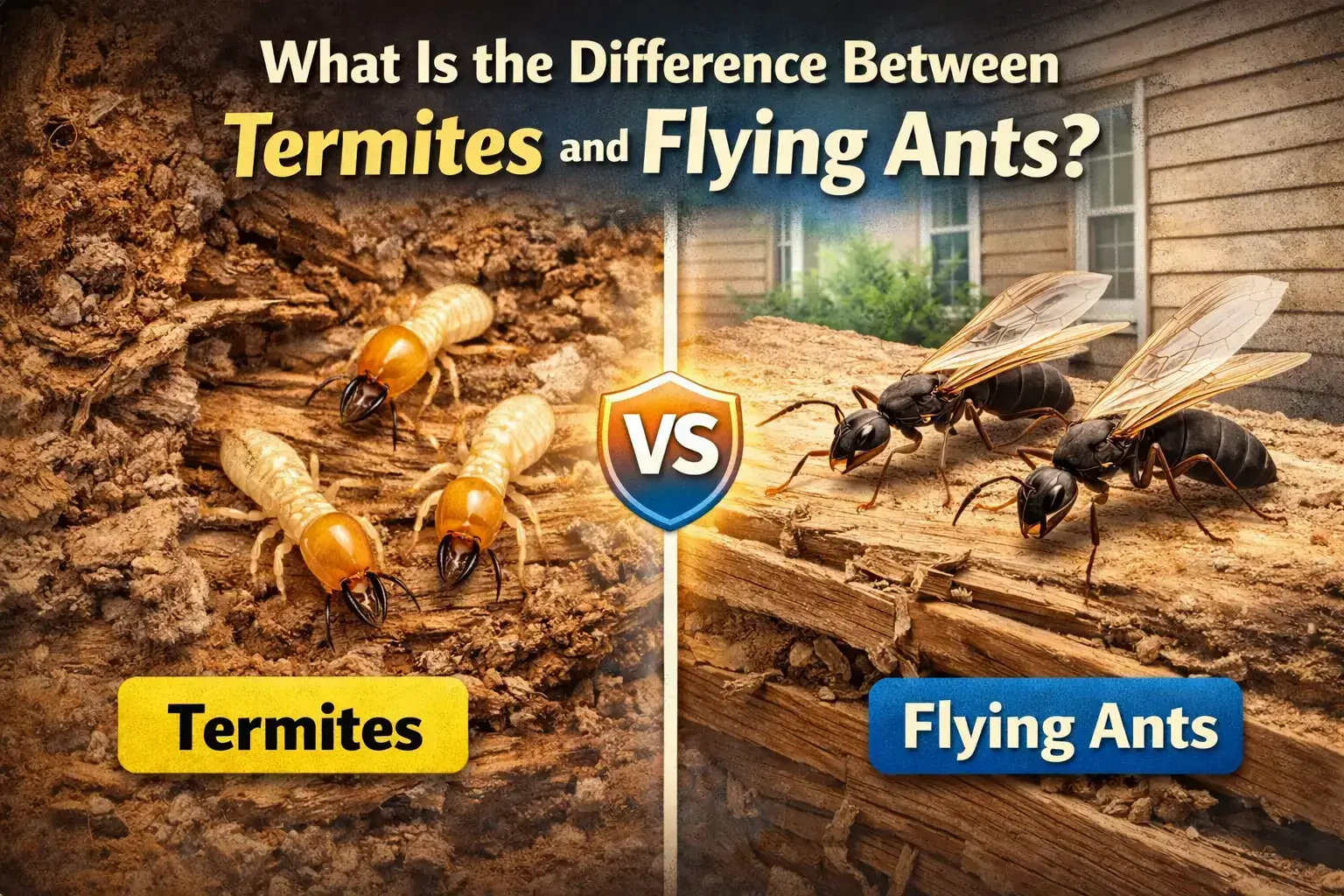
What Is the Difference Between Termites and Flying Ants?
Termites have straight waists, equal-length wings, and straight antennae, while flying ants have pinched waists, unequal wings, and bent antennae. Termites cause serious structural damage by eating wood, whereas flying ants are mostly harmless. Identifying the correct pest is critical for effective treatment in UAE homes and businesses.
Termites and flying ants are often mistaken for each other because both have wings and swarm in groups. However, they are entirely different insects with different behaviors, body shapes, and threats to your property.
The key differences at a glance:
- Body shape: Termites have a straight, thick waist. Flying ants have a pinched, narrow waist.
- Antennae: Termites have straight, beaded antennae. Flying ants have bent or elbowed antennae.
- Wings: Termites have four equal-length wings. Flying ants have unequal wings; the front pair is longer.
- Color: Termites are usually pale or creamy white. Flying ants are typically dark brown or black.
Why UAE Properties Are Especially Vulnerable
The UAE’s hot, humid climate creates ideal conditions for termite infestations. Subterranean termites, the most destructive species, thrive in the sandy soil common across Dubai, Abu Dhabi, and Sharjah.
Flying ants, on the other hand, typically swarm during humid seasons and tend to nest outdoors. They rarely cause structural damage indoors.
Understanding this distinction helps property owners take the right action quickly.
How to Identify Termites: Key Warning Signs
Termites are small, pale insects often found in wood, soil, or mud tubes looking for hollow-sounding timber, discarded wings, or frass (tiny droppings) as key warning signs. If you spot these signs early, contacting a professional termite treatment service can prevent costly structural damage to your home.
1. Mud Tubes on Walls or Foundations
Termites build pencil-thin mud tubes along walls, pipes, and foundations to travel between their colony and food source.
2. Hollow or Damaged Wood
Knock on wooden surfaces. A hollow sound often means termites have been feeding inside.
3. Discarded Wings Near Windows or Doors
After swarming, termites shed their wings. Finding piles of wings is a strong sign of a nearby termite colony.
4. Frass (Termite Droppings)
Drywood termites leave behind tiny, pellet-like droppings near infested wood.
How to Identify Flying Ants: Key Warning Signs
1. Visible Ant Trails
Flying ants are social insects. You’ll usually see a trail of regular ants nearby.
2. Seasonal Swarms
Flying ants swarm during specific seasons, usually after rainfall or temperature spikes.
3. Nests in Soil or Wood Cracks
They prefer to nest in moist soil, garden beds, or wall cracks not inside wooden structures.
Termites vs Flying Ants: Side-by-Side Comparison
| Feature | Termites | Flying Ants |
| Waist Shape | Straight/Thick | Pinched/Narrow |
| Wing Length | Equal | Unequal |
| Antennae | Straight | Bent |
| Color | Pale/Cream | Dark Brown/Black |
| Diet | Wood/Cellulose | Plants/Sugar/Insects |
| Property Damage | Severe | Minimal |
| Treatment Needed | Urgent Professional | Basic Pest Control |
Step-by-Step: What to Do If You Spot Winged Insects at Home
Step 1 — Don’t panic or disturb them: Observe where they are swarming from. Disturbing a termite colony can scatter them and make treatment harder.
Step 2 — Inspect the area carefully: Look for mud tubes, damaged wood, discarded wings, or frass. Use a flashlight if needed.
Step 3 — Capture one insect (safely): Place it in a sealed bag or container to show a pest control professional for accurate identification.
Step 4 — Contact a licensed pest control company: Self-treatment is rarely effective for termites. Professional-grade solutions are essential, especially in UAE conditions.
Step 5 — Schedule a full property inspection: Even if you only spot a few insects, a comprehensive inspection can reveal hidden colonies before they cause further damage.
Benefits of Early Professional Pest Identification
Early professional pest identification helps you catch infestations before they spread, and regular termite inspections can detect hidden colony activity long before visible damage appears, saving you from costly repairs down the line. Experts can also accurately distinguish between similar-looking pests, ensuring you receive the right solution, whether that’s a flying ant control service or targeted treatment for another species entirely.
- Prevents thousands of dirhams in structural repair costs
- Protects wooden furniture, flooring, and roof structures
- Ensures the correct treatment is applied the first time
- Provides peace of mind for homeowners and tenants
- Meets UAE property maintenance and safety standards
- Stops colonies from spreading to neighboring units or buildings
Cost Factors for Termite Treatment in the UAE
The cost of termite control depends on several factors:
- Property size: Larger villas or commercial spaces require more extensive treatment
- Infestation severity: Early-stage infestations cost significantly less to treat
- Treatment method: Chemical barriers, baiting systems, and fumigation vary in price
- Inspection requirements: Some properties may need multiple visits for complete clearance
- Location: Dubai, Abu Dhabi, and Sharjah may have varying service rates
Getting a professional inspection is the first step to understanding the true cost for your specific situation.
Common Mistakes UAE Homeowners Make
Ignoring early signs: Many people see a few winged insects and assume it’s seasonal. By the time they act, the colony has grown significantly.
Using DIY sprays on termites: Off-the-shelf sprays kill surface insects but never reach the colony. This gives a false sense of security while damage continues underground.
Misidentifying the pest: Treating flying ants with termite chemicals (or vice versa) wastes money and time and leaves the real problem untreated.
Skipping professional inspections: Annual pest inspections are strongly recommended for UAE properties, especially villas and older buildings with wooden elements.
Waiting for visible damage: By the time wood damage is visible, termites have usually been active for months or even years.
Conclusion: Don’t Leave Your Property to Chance
If you notice signs of termites or flying ants, taking quick action is the best way to prevent serious damage. Termites are often called silent destroyers because they can weaken the structure of a property long before visible signs appear.
With years of experience across the UAE, Allied Pest Control provides reliable inspection and treatment services to detect and eliminate pest infestations. Their licensed technicians use safe, approved methods to protect homes and businesses before the problem becomes costly.
Frequently Asked Questions (FAQs)
Can termites and flying ants infest a property at the same time?
It is possible. Both pests can coexist in the same property, especially near garden areas. Professional inspection is the only reliable way to identify what you’re dealing with.
Are flying ants dangerous to humans or pets?
Flying ants are generally harmless. Some species can bite if disturbed, but they pose no serious health risk to humans or pets in most UAE conditions.
How quickly can termites damage a UAE property?
Termites can cause significant structural damage within 3 to 5 years if left untreated. In humid UAE conditions, infestations can grow faster than in cooler climates.
Do termites only eat wood?
Termites primarily eat cellulose found in wood, but they also damage paper, cardboard, insulation, and even some fabrics. Any cellulose-based material in your home is at risk.
How often should UAE homeowners get a pest inspection?
Experts recommend at least one professional pest inspection per year. Properties near construction zones or with previous infestations may benefit from bi-annual checks.
Is termite treatment safe for children and pets?
Modern professional termite treatments used by licensed companies are designed to be safe when applied correctly. Allied Pest Control uses UAE-approved, regulated products for all treatments.