Termites are one of the most destructive pests on the planet and they work silently. By the time most homeowners notice a problem, serious structural damage has already been done. In the UAE, warm temperatures and sandy soil create the perfect environment for termite activity all year long.
Knowing the early signs of termites in your home can save you thousands of dirhams in repair costs. From hollow-sounding wood to mud tubes along your walls, these warning signals are easy to miss if you don’t know what to look for.
In this guide, Allied Pest Control walks you through every key warning sign, what causes it, and what to do next.
How to Spot Termites in Your Home?
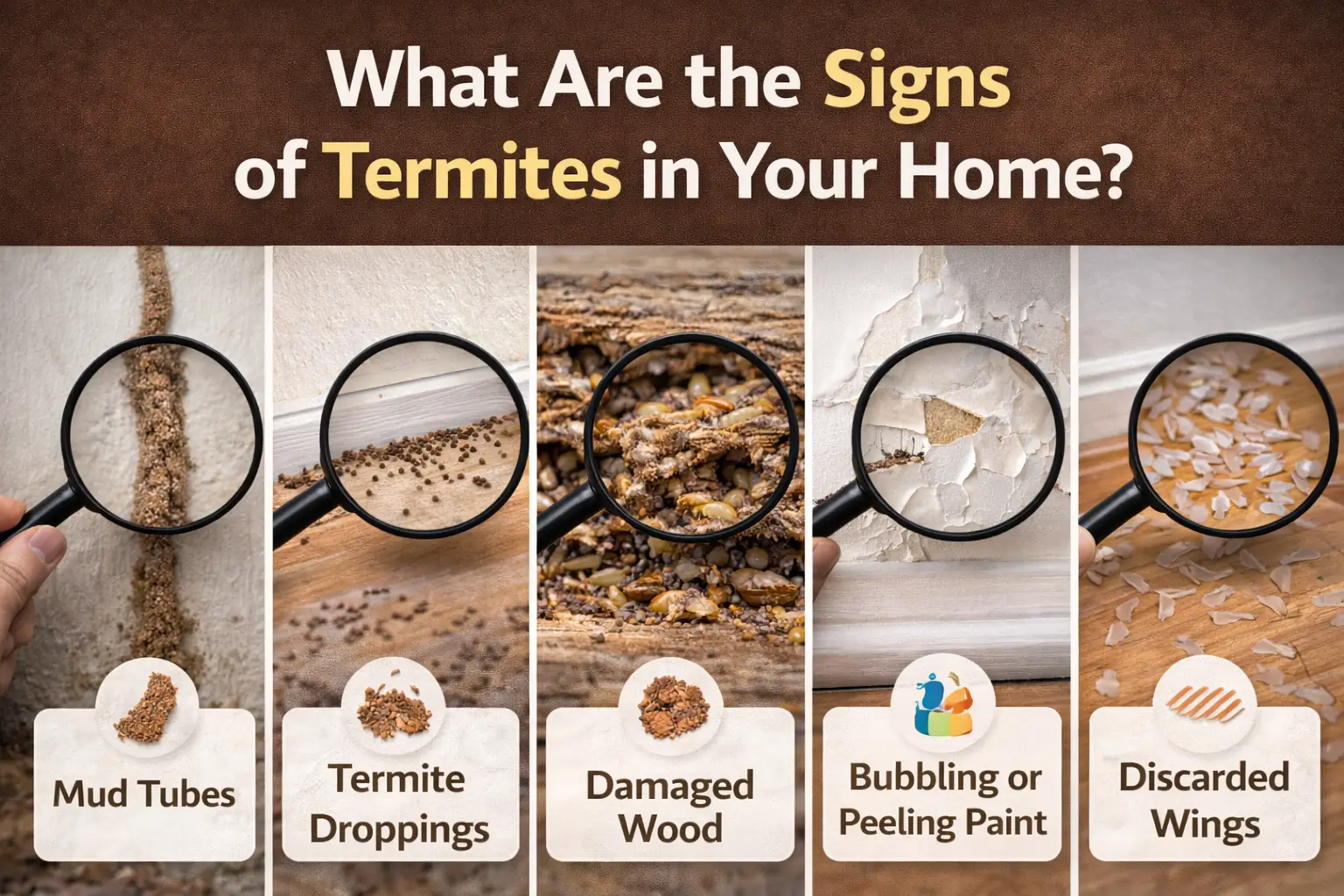
Spotting termites early means checking for mud tubes on walls or foundations, hollow-sounding wood when tapped, discarded wings near windows, and small pellet-like droppings called frass. Paint that bubbles without a water leak and doors or windows that suddenly stick are also strong warning signs of an active infestation.
What Are the Main Signs of Termites in Your Home?
The main signs of termites in your home include mud tubes on walls or foundations, hollow-sounding wood, discarded wings near windows, termite droppings (frass), bubbling or peeling paint, and tight-fitting doors or windows. Early detection is critical to prevent costly structural damage.
Top 8 Signs of a Termite Infestation You Should Never Ignore
1. Mud Tubes on Walls and Foundations
Subterranean termites build pencil-sized mud tubes to travel between their colony and food source. These brown, sandy tubes are most commonly found along your foundation, basement walls, or crawl spaces.
If you spot these tubes, do not brush them away without calling a professional first. Active tubes mean an active infestation.
2. Hollow or Damaged Wood
Termites eat wood from the inside out, leaving only a thin outer shell. Tap on wooden beams, floors, or window frames. If they sound hollow or papery, termites may be feeding inside.
This type of termite damage is one of the most serious structural threats to UAE homes and villas.
3. Discarded Wings Near Doors and Windows
Winged termites called swarmers emerge to start new colonies. After finding a mate, they shed their wings. Finding small, identical wings near windowsills or door frames is a strong sign of a nearby colony.
4. Termite Droppings (Frass)
Drywood termites push their fecal pellets out of small holes in wood. These droppings look like tiny ridged pellets or sawdust and are often found in small piles beneath infested furniture or wooden structures.
5. Bubbling or Peeling Paint
Termites produce moisture as they feed through wood. This moisture can cause paint to bubble, blister, or peel even when there is no water leak. This is often mistaken for a plumbing issue in UAE properties.
6. Tight-Fitting Doors and Windows
As termites damage wood and introduce moisture, door and window frames can warp and swell. If doors or windows suddenly become difficult to open or close, termite activity in the surrounding timber may be the reason.
7. Clicking or Rustling Sounds Inside Walls
Soldier termites bang their heads against tunnel walls to warn the colony of danger. Worker termites are also noisy eaters. Press your ear close to a wooden wall you may actually hear them chewing.
8. Visible Termite Bodies or Swarms
A live termite sighting is the most obvious sign. Termites are pale white or tan insects, usually 4–6 mm long. Swarms near your property especially after rainfall signal that a colony is actively spreading.
How to Inspect Your Home for Termites: Step-by-Step Guide
Step 1: Check the Exterior Foundation: Walk around your home and look for mud tubes, cracks in the foundation, or termite entry points near soil contact areas.
Step 2: Inspect Wooden Structures: Use a screwdriver to gently probe wooden beams, door frames, and floorboards. Listen for hollow sounds and watch for easy penetration into soft wood.
Step 3: Look in Dark, Damp Areas: Termites prefer dark, moist environments. Check under sinks, in crawl spaces, bathrooms, and near leaking pipes.
Step 4: Search for Swarmers and Discarded Wings: Check windowsills and light fixtures after heavy rain. Piles of small wings are a clear red flag.
Step 5: Look for Frass Piles: Check corners, baseboards, and below wooden furniture for tiny pellet-like droppings that indicate drywood termite activity.
Step 6: Call a Licensed Pest Control Professional: If you find any of the above signs, contact Allied Pest Control UAE for a thorough termite inspection and treatment plan.
Benefits of Early Termite Detection
Catching termites early with a professional Termite Inspection Service can save you from costly structural repairs. The sooner you act, the better you can protect your home from serious and long-term termite damage.
- Saves thousands of dirhams in structural repair costs
- Prevents collapse of wooden beams, floors, and ceilings
- Protects the resale value of your UAE property
- Stops the colony from spreading to neighbouring units or buildings
- Reduces allergens and dust caused by termite damage
- Allows for targeted treatment instead of full-scale fumigation
Termite Treatment Cost Factors in the UAE
The cost of termite treatment depends on several variables:
- Property size: Larger homes require more extensive treatment
- Infestation level: Early-stage infestations cost significantly less
- Type of termite: Subterranean vs. drywood termites need different methods
- Treatment method: Chemical barriers, baiting systems, and fumigation vary in cost
- Location: Rates may differ across Dubai, Abu Dhabi, and Sharjah
Getting a professional inspection first is the best way to receive an accurate cost estimate.
Subterranean Termites vs. Drywood Termites: Key Differences
| Feature | Subterranean Termites | Drywood Termites |
| Location | Soil-based, underground | Inside dry wood directly |
| Main Sign | Mud tubes | Frass / pellet droppings |
| Risk Level | High structural risk | Moderate, slower damage |
| Treatment | Soil barriers, baiting | Spot treatment, fumigation |
| UAE Prevalence | Very common | Common in wooden furniture |
Common Mistakes Homeowners Make With Termites
- Ignoring small signs like a single mud tube or a few discarded wings
- Using DIY spray treatments that only kill surface-level termites
- Delaying professional inspection to save money it costs far more later
- Removing mud tubes without assessing whether the colony is still active
- Assuming termites only affect old buildings new UAE properties are equally at risk
- Not scheduling regular annual termite inspections, especially after construction
Conclusion: Don’t Let Termites Eat Your Investment
Termites are a year-round threat in the UAE. The warm climate, sandy soil, and modern construction materials create ideal conditions for these silent destroyers.
If you have spotted any warning signs mud tubes, hollow wood, frass, tight doors, or swarms do not wait. Every day of delay means more structural damage and higher repair bills.
Allied Pest Control UAE offers certified termite inspections and proven treatment solutions. Our trained technicians use advanced detection tools to eliminate termites completely and protect your property long-term. Get in touch today and stop termites before they stop you.
Frequently Asked Questions (FAQs)
How do you test your house for termites?
Tap wooden surfaces for a hollow sound, check walls for mud tubes, and look for frass or discarded wings. A licensed pest control professional can provide a thorough and accurate termite inspection for your home.
Is it normal to see termites in a house?
It is not normal and should never be ignored. Seeing live termites means an active infestation is present. Immediate professional treatment is necessary to prevent serious structural damage to your property.
What is the main cause of termites?
Termites are attracted to moisture, wood, and warm soil. Leaking pipes, wood-to-soil contact, and poor ventilation are common causes. In the UAE, warm temperatures and sandy soil make properties especially vulnerable throughout the year.
What time of year are termites most active?
Termites are most active in spring and early summer when swarmers emerge. However, in the UAE’s consistently warm climate, termite activity can occur all year long without any real seasonal slowdown.
Can you sleep in a room with termites?
Termites do not bite or spread disease, but sleeping in an infested room is risky due to structural damage and allergens. It is strongly advised to treat the infestation promptly before continuing to use the affected room.
How do termites suddenly appear?
Termites do not truly appear suddenly. Colonies grow slowly underground for years before visible signs emerge. Swarming events triggered by heat or rain may make them seem sudden, but the infestation usually began much earlier.