Termites are one of the most destructive pests that can invade any property. In the UAE, the warm climate and rapid construction boom make buildings especially vulnerable to termite infestations. These tiny insects can silently eat through wood, walls, and even concrete causing thousands of dirhams in structural damage before anyone notices.
Understanding the main causes of termites in buildings is the first step toward effective prevention. Whether you own a villa, apartment, or commercial property, this guide will help you identify the root causes, spot early warning signs, and take action before the damage becomes severe.
Keep reading — the answers you need are right here.
What Are the Main Causes of Termites in Buildings?
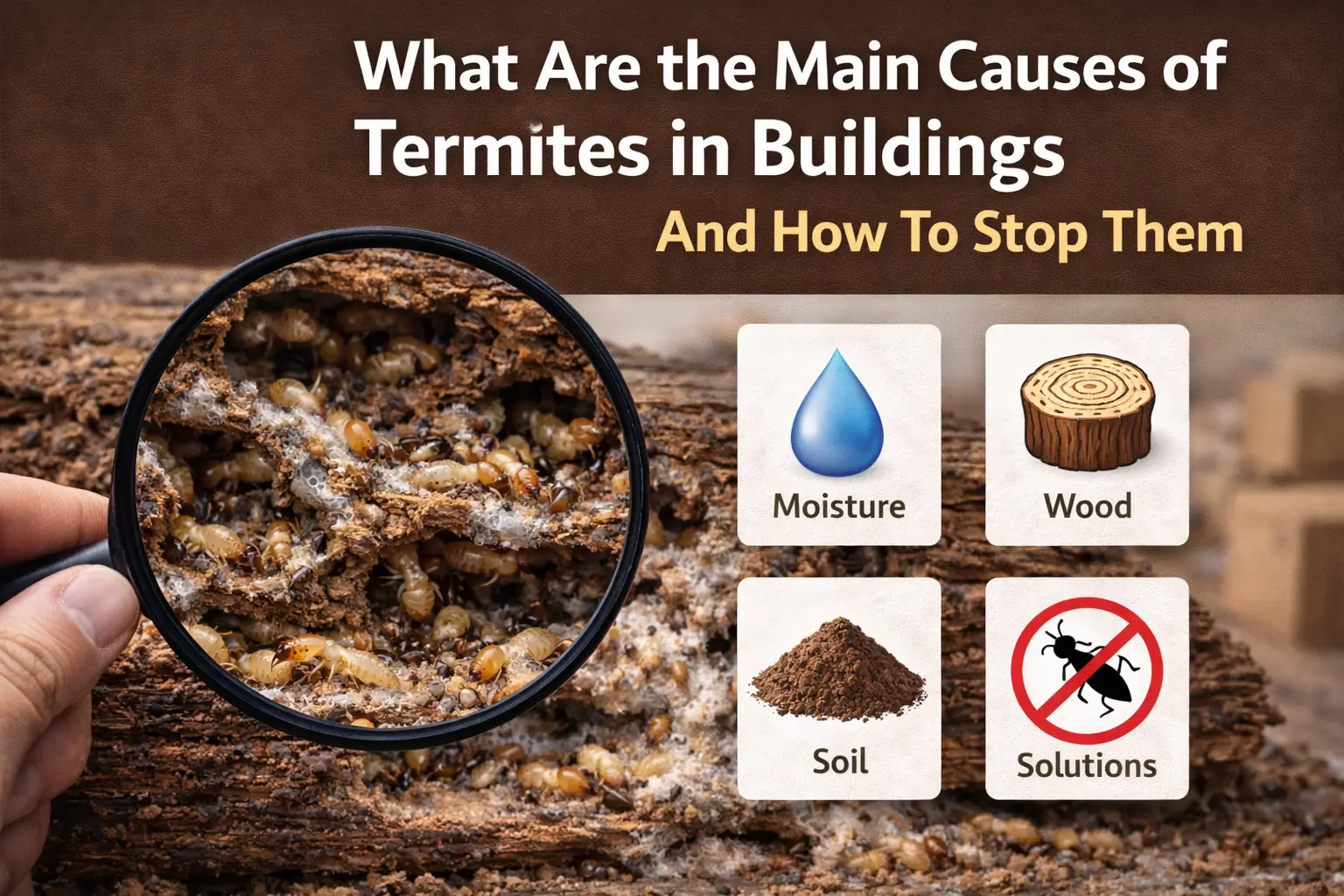
Termites in buildings are mainly caused by excess moisture, wood-to-soil contact, foundation cracks, poor ventilation, and buried construction debris. In the UAE, the warm climate accelerates colony growth, making early detection and professional pest control essential for protecting your property.
The Main Causes of Termites
The main causes of termites in buildings are excess moisture, wood-to-soil contact, foundation cracks, and poor ventilation. Warm climates like the UAE accelerate colony growth, making early inspection and professional pest control essential. Here we explain the main causes of termites in detail through several key points.
1. Excess Moisture and Water Leakage
Moisture is the number one attractant for termites. Subterranean termites, the most common species in the UAE, thrive in damp environments.
Common moisture-related causes include:
- Leaking pipes inside walls and under flooring
- Poor drainage around the building’s foundation
- Roof leaks that allow water to seep into wooden beams
- Condensation from air conditioning units
- Waterlogged soil near the building perimeter
When wood absorbs moisture, it becomes soft and easy for termites to tunnel through. Regular plumbing inspections and proper waterproofing are critical preventive steps.
2. Wood-to-Soil Contact
Direct contact between wood and soil is one of the most dangerous termite entry points. When structural timber, door frames, or wooden fences touch the ground, termites get direct access to their food source.
High-risk areas in buildings include:
- Wooden door and window frames touching the ground
- Untreated timber used in construction
- Wooden garden structures connected to the building
- Old wooden supports buried in soil
Always maintain a gap between any wooden element and the soil. Using concrete or metal supports instead of direct timber placement reduces termite risk significantly.
3. Cracks and Gaps in the Foundation
Termites only need a gap as small as 1/64 of an inch to enter a building. Foundation cracks are silent doorways for termite colonies.
Why this is especially common in the UAE:
The extreme heat and sand-based soil cause building foundations to expand and contract. Over time, this creates micro-cracks that invite termites underground without any visible warning above the surface.
Signs of foundation vulnerability:
- Visible cracks in exterior or interior walls
- Gaps around utility pipes entering the building
- Uneven flooring or hollow-sounding tiles
- Mud tubes running along the foundation walls
4. Poor Ventilation in Crawl Spaces and Attics
Areas with poor airflow trap humidity. Crawl spaces, roof voids, and wall cavities with inadequate ventilation create the perfect warm, moist environment that termites love.
In the UAE, many buildings have enclosed roof spaces where heat builds up during summer. Without proper airflow, these areas become ideal nesting zones for termite colonies.
Ventilation improvements that prevent termites:
- Install mesh-covered vents in crawl spaces
- Use dehumidifiers in enclosed basement areas
- Ensure attic ventilation allows year-round air circulation
- Seal gaps around utility lines entering the building
5. Construction Debris Left Underground
During construction, wood scraps, tree stumps, and organic material are sometimes buried beneath the structure. This buried debris acts as a food source that draws termites directly under your property.
In the UAE’s fast-growing real estate sector, rushed construction timelines mean organic waste is often not properly removed before the foundation is laid. This is a leading cause of early termite infestations in new buildings.
6. Landscaping Too Close to the Building
Trees, plants, and mulch placed directly against a building create a bridge for termites. Mulch retains moisture, roots can penetrate foundations, and plants provide organic matter that termites consume.
Safe landscaping practices:
- Keep mulch at least 30 cm away from the foundation
- Trim tree branches that touch exterior walls or the roof
- Remove dead stumps and roots near the property
- Use inorganic ground cover near the building perimeter
How to Inspect Your Building for Termite Risk: Step-by-Step
Step 1 — Check for Moisture: Inspect pipes, roof edges, and AC drainage points. Look for damp walls, stained ceilings, and swollen door frames.
Step 2 — Examine the Foundation: Walk around the exterior. Look for mud tubes, cracks, or soil piled against the walls.
Step 3 — Tap Wooden Surfaces: Knock on wooden beams, skirting boards, and door frames. A hollow sound indicates termite damage inside.
Step 4 — Check Crawl Spaces and Roof Voids: Look for discarded wings, termite droppings (frass), or mud tunnels in low-traffic areas.
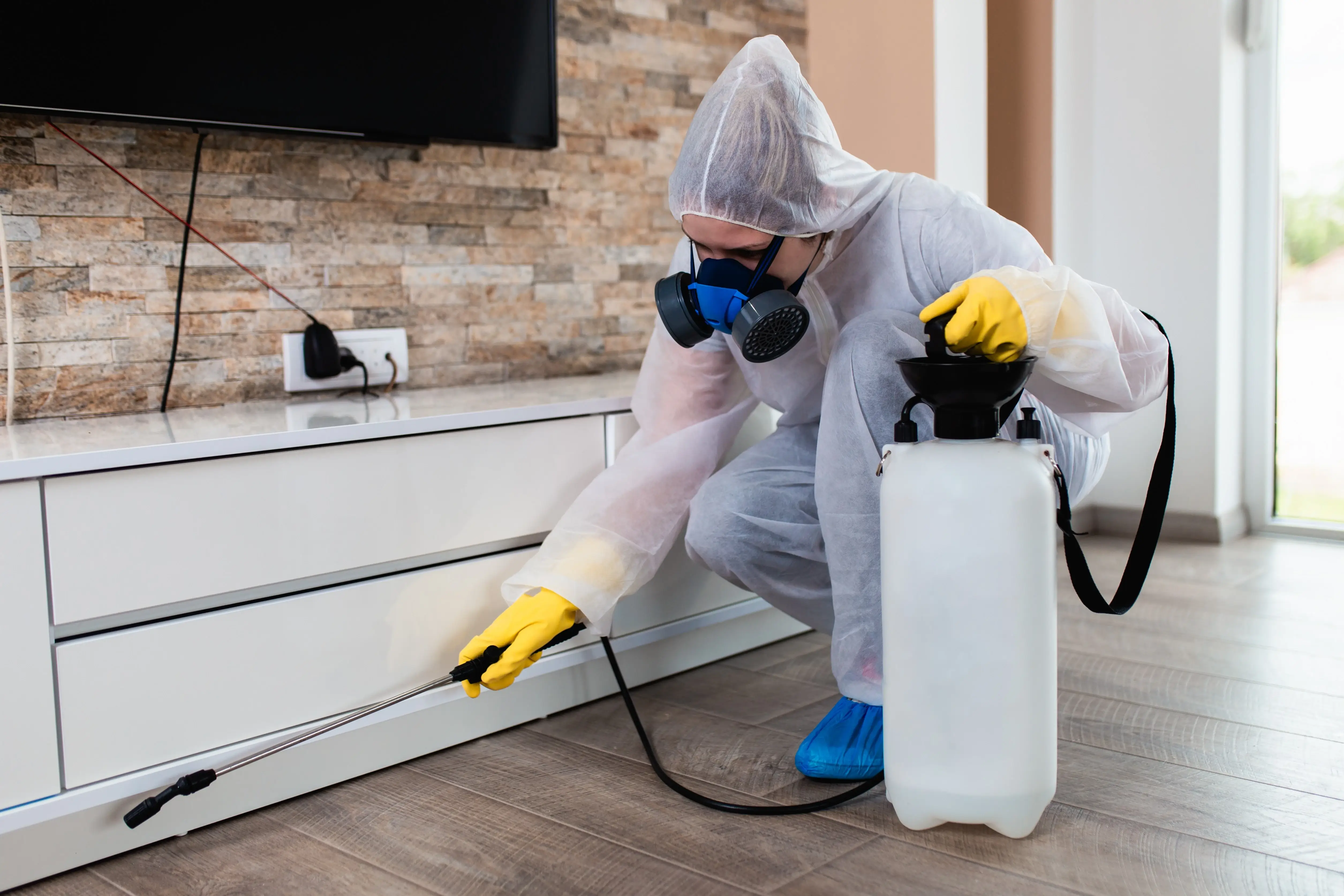
Step 5 — Call a Certified Pest Control Specialist: If you spot any warning signs, contact a licensed pest control company immediately. Early treatment saves significant repair costs.
Benefits of Early Termite Detection and Prevention
Early termite detection saves your property from serious structural damage. Booking a professional termite control service in Dubai at the right time can prevent costly repairs and protect your investment for years to come.
- Protects the structural integrity of your property
- Avoids costly repair bills reaching tens of thousands of dirhams
- Maintains property value in UAE’s competitive real estate market
- Keeps your family and tenants safe from health risks
- Provides peace of mind that your investment is fully protected
Common Mistakes Property Owners Make
- Ignoring small cracks in walls, thinking they are harmless
- Using DIY sprays that only kill visible termites, not the colony
- Planting trees and shrubs directly against the building foundation
- Skipping annual pest inspections because no termites have been seen
- Storing firewood or lumber inside or directly against the property
Termite Treatment Cost Factors in the UAE
- Size of the affected area — larger properties cost more to treat
- Type of termite species identified during inspection
- Method used — chemical barriers, baiting systems, or heat treatment
- Severity of the infestation — early-stage vs. advanced structural damage
- Whether a long-term plan or one-time treatment is selected
Investing in regular inspections is always more cost-effective than emergency structural repairs.
Conclusion: Protect Your Property Before Termites Take Over
Termites do not wait. Every day without action is another day they are silently destroying your building’s structure. Understanding the main causes of termites in buildings gives you a powerful advantage.
From moisture control and foundation maintenance to professional chemical barriers, proven solutions exist. The key is acting early before the damage becomes visible and expensive. Contact Allied Pest Control today to protect your property
Allied Pest Control is your trusted partner for termite prevention and treatment across the UAE. Our certified specialists use the latest inspection technology and UAE-approved treatments to protect your home or business.
Frequently Asked Questions (FAQs)
What is the most common cause of termites in buildings in the UAE?
Excess moisture combined with warm temperatures is the leading cause. Leaking pipes, poor drainage, and humid crawl spaces create the ideal environment for subterranean termites to thrive and multiply.
Can termites damage concrete buildings?
Yes. Termites travel through concrete cracks to reach wooden interiors. No building type is fully immune if entry points exist anywhere in the structure.
How do I know if my building has a termite problem?
Look for mud tubes on walls, hollow-sounding wood, discarded wings near windows, or bubbling paint. These are key signs of an active termite colony inside.
How often should I schedule termite inspections?
Annual professional inspections are recommended for all UAE properties. High-risk buildings with a previous infestation history should consider bi-annual inspections for full protection.
Are termite treatments safe for families and pets?
Yes, when applied by licensed professionals. Modern treatments use low-toxicity products that are safe after proper application, following all UAE safety and environmental standards.
What is the best termite prevention method for new buildings?
Pre-construction soil treatment and chemical barriers are the most effective. Installing physical termite barriers during construction provides long-lasting protection before infestations can begin.