Termites are one of the most destructive pests in the UAE. If you live in an apartment building, you may wonder, can termites spread from upper flats to lower flats? The answer is yes, and it can happen faster than you think.
These tiny insects are silent destroyers. They work through walls, floors, and ceilings without making a sound. By the time you see visible damage, the infestation may already be severe.
Whether you live on the ground floor or the top floor, no flat is completely safe. Understanding how termites travel in buildings is the first step to protecting your home and property.
In this guide, Allied Pest Control explains everything UAE homeowners and residents need to know about termite spread in apartment buildings and what to do about it.
Can Termites Spread from One Flat to Another?
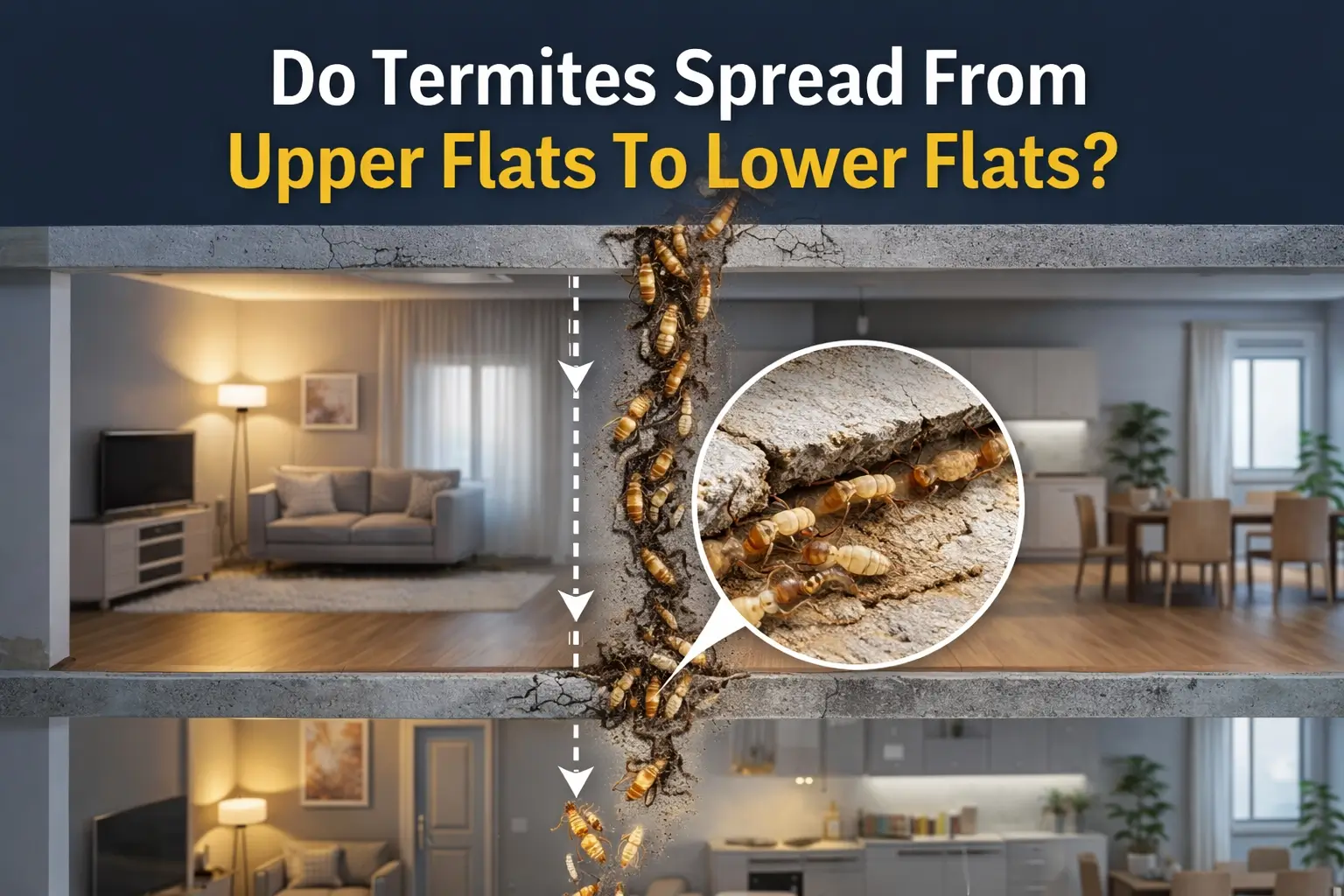
Yes, termites can spread from upper flats to lower flats and vice versa. They travel through shared walls, wooden beams, plumbing gaps, and ceiling structures. In multi-story buildings, a termite colony in one unit can quietly invade neighboring flats within weeks if left untreated.
How Do Termites Spread Between Floors in Apartment Buildings?
Termites do not need open doors or windows to move between flats. They use hidden pathways inside the building structure.
1. Shared Walls and Partitions
In apartment buildings, walls are shared between units. Termites tunnel through drywall, plaster, and wooden framing. Once inside the wall, they can move freely between flats.
2. Wooden Flooring and Ceiling Panels
Wooden floors in upper flats can serve as a bridge. Termites eat through the wood and reach the ceiling of the flat below. This is one of the most common ways termites spread vertically.
3. Plumbing and Electrical Conduit Gaps
Gaps around pipes and electrical wiring create easy entry points. Termites use these small openings to travel across floors without being noticed.
4. Swarmers (Flying Termites)
During the swarming season, reproductive termites develop wings. They fly to new areas, land, shed their wings, and start a new colony. Swarmers can easily enter any flat through windows, vents, or cracks.
5. Infested Furniture and Wooden Items
Moving termite-infested furniture from one flat to another is a direct way of spreading an infestation. Always inspect second-hand or stored wooden furniture before bringing it into your home.
How to Tell If Your Flat Is Infested with Termites
Termites are hard to spot but they do leave clues. Watch for these warning signs:
- Hollow-sounding walls or floors when you tap on them
- Mud tubes along walls, skirting boards, or corners
- Discarded wings near windows or light sources
- Small piles of sawdust-like frass (termite droppings)
- Blistered or bubbling paint on walls
- Tight-fitting doors and windows due to warped wood
- Visible tunnels in wooden furniture or beams
If you notice any of these signs, contact a professional pest control company in UAE immediately.
How Many Termites Are Considered an Infestation?
A single termite colony can contain anywhere from 60,000 to one million termites. Even a small colony of a few thousand workers can cause serious structural damage within months.
There is no safe number. If you spot even a few termites, it likely means thousands more are hidden inside your walls. Do not wait to act immediately.
How Fast Do Termites Spread in a Building?
Termites are slow to start but fast to grow. A new colony may take 3–5 years to fully mature. But an established colony can spread through an entire wall in just a few months.
In the UAE’s hot climate, termites are active year-round. Higher temperatures accelerate their activity and reproduction rate. This makes early detection and treatment even more critical.
How to Stop Termites from Spreading Step by Step
If you suspect a termite problem, here is what you should do right away:
- Inspect Your Flat: Check walls, wooden furniture, flooring, and skirting boards for signs of termites.
- Notify Building Management: Report the issue so neighboring flats can be inspected too.
- Remove Infested Items: Isolate and dispose of heavily infested wood or furniture.
- Seal Cracks and Gaps: Block entry points around pipes, vents, and walls to limit their movement.
- Call a Licensed Pest Control Company: Professional treatment is the only reliable way to eliminate a termite colony.
- Schedule Regular Inspections: Annual termite inspections prevent future infestations.
Benefits of Professional Termite Treatment in UAE
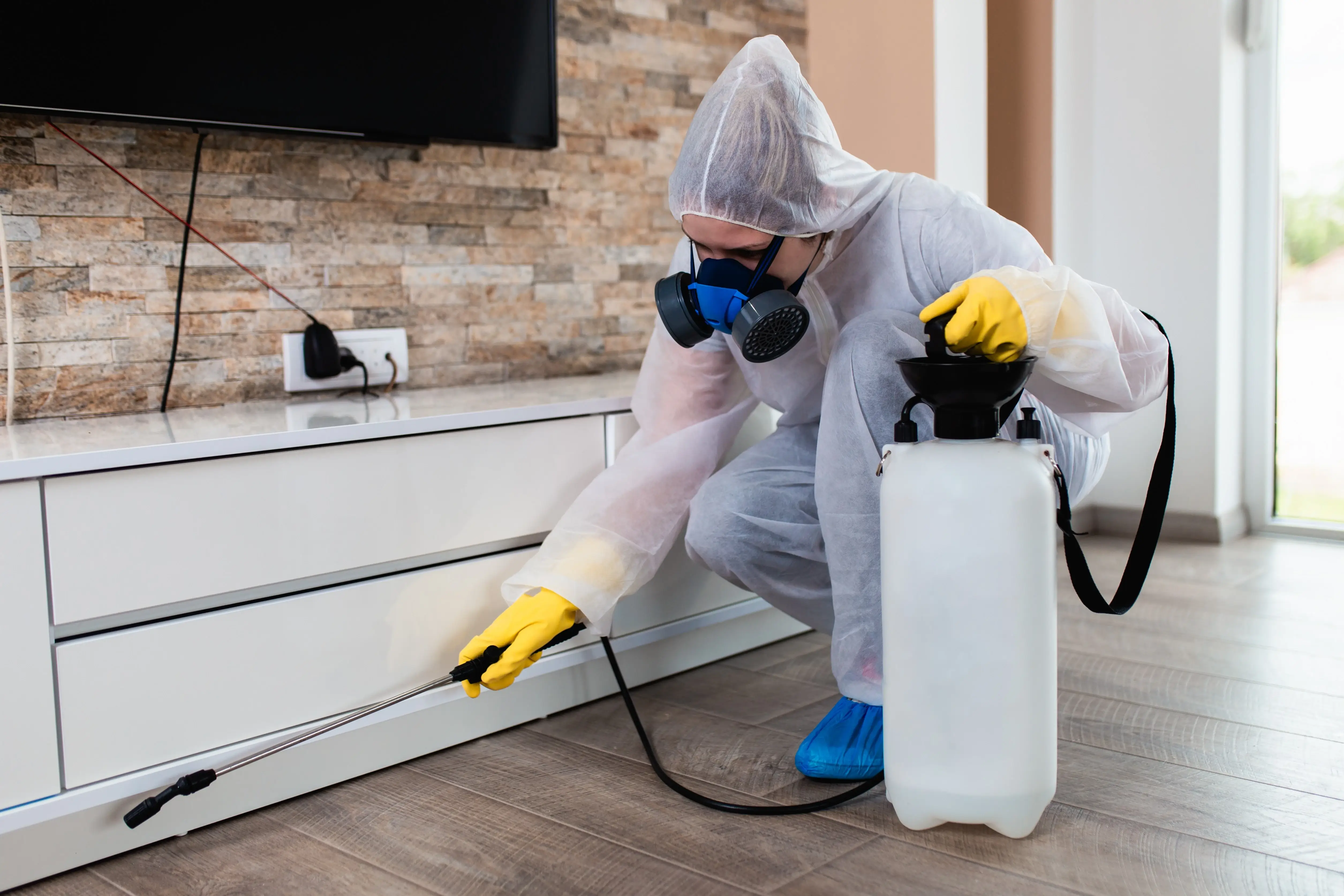
Professional termite elimination services in UAE target the entire colony, not just surface-level insects. Licensed technicians use advanced treatments that reach deep into walls and soil. This ensures the queen is destroyed and the infestation does not return.
- Complete elimination of the entire termite colony not just visible insects
- Prevents structural damage to your flat and the building
- Protects wooden furniture, flooring, and fixtures
- Keeps neighboring flats safe from cross-infestation
- Comes with warranties and follow-up inspections
- Uses UAE-approved, safe, and effective treatment methods
- Saves money long-term by avoiding costly repair bills
DIY vs Professional Termite Treatment Which Is Better?
DIY Termite Treatment
Over-the-counter sprays and repellents may kill some surface termites. However, they rarely reach the queen or the deep colony. Without treating the root source, termites return quickly.
Professional Termite Treatment
Licensed pest control companies use methods like soil treatment, baiting systems, and wood injection. These reach deep into the colony and provide long-lasting protection. For apartment buildings, professional treatment is the only effective solution.
Verdict: DIY methods are a temporary fix. Professional treatment is the only way to fully protect your flat in the UAE.
Common Mistakes That Allow Termites to Spread
- Ignoring early signs like mud tubes or hollow-sounding walls
- Using DIY sprays instead of professional treatment
- Not informing neighbors or building management about an infestation
- Bringing in second-hand wooden furniture without inspection
- Delaying treatment because the damage seems small
- Only treating one flat while ignoring connected units
- Skipping annual pest inspections in UAE’s high-risk climate
What Pest Is Most Damaging to a House?
Termites are widely considered the most destructive pest to residential and commercial properties. In the UAE, subterranean termites are the most common and aggressive species. They cause billions in property damage globally each year.
Unlike other pests, termites damage the core structure of your building beams, floors, ceilings, and walls. This can make a property structurally unsafe if left untreated for long periods.
Protect Your Flat / House Before It’s Too Late
Termites do not respect boundaries. They can and do spread from upper flats to lower flats moving silently through walls, floors, and shared structures. In the UAE, where high temperatures keep termites active all year, the risk is even greater.
Do not wait for the damage to become visible. By the time you see cracks, hollow walls, or sagging floors, thousands of termites may already be at work.
Allied Pest Control offers expert termite inspection and treatment services across the UAE. Our licensed technicians use proven methods to eliminate termite colonies and protect your home from future infestations.
Contact Allied Pest Control Today to Protect Your Flat from Termite Damage!
Frequently Asked Questions
Can termites be transferred from house to house?
Yes. Termites can be transferred through infested furniture, wooden boxes, or building materials. Flying termites (swarmers) can also travel between properties. Always inspect items before moving them into a new home.
How long does termite treatment last?
Professional termite treatment typically lasts 3 to 5 years depending on the method used. Soil barrier treatments offer longer protection, while baiting systems require regular monitoring. Annual inspections help maintain full protection for your home.
Can termites live in concrete buildings?
Termites cannot eat concrete, but they travel through tiny cracks and gaps in it. They target wooden doors, frames, furniture, and flooring inside concrete buildings. No apartment is fully safe from a termite infestation.
How to tell if your house is infested?
Look for mud tubes, hollow-sounding walls, discarded wings, sawdust-like droppings, and blistered paint. Tight doors or windows can also signal termite damage. A professional inspection confirms the extent of the infestation.
Should I inform my neighbor if I have termites?
Yes, absolutely. Termites spread through shared walls and structures, putting neighboring flats at equal risk. Informing your neighbor and building management allows for a coordinated treatment plan that stops the infestation from spreading further.
How fast do termites spread in the house?
An established colony can spread through an entire wall within a few months. In the UAE’s warm climate, termite activity is year-round. Early detection and professional treatment are essential to stop rapid spreading.