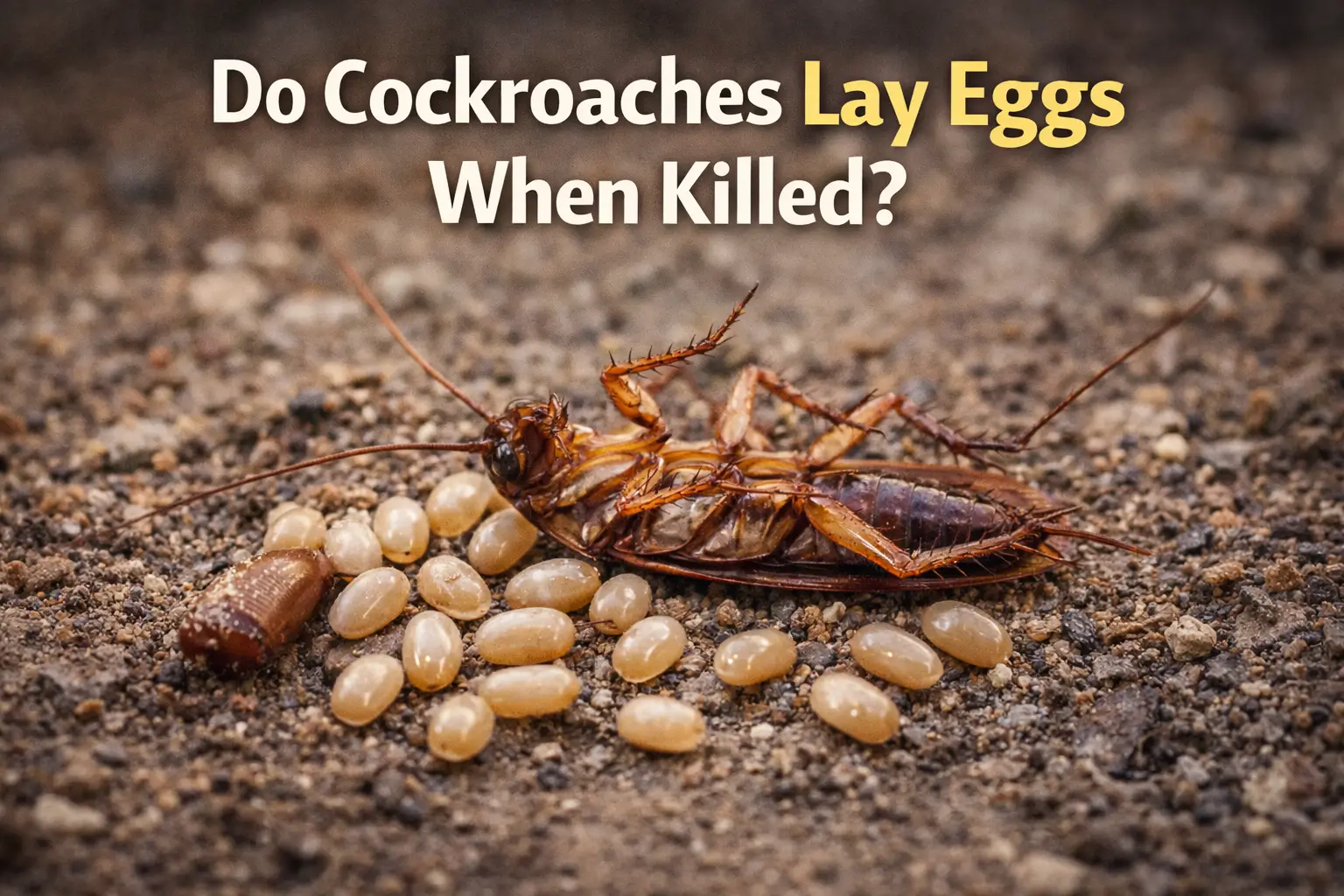
Cockroaches do not automatically lay eggs when killed, but a pregnant female (carrying an ootheca) can release her egg case upon death if the ootheca is not yet permanently attached. The ootheca contains 14–48 eggs depending on the species, and if it lands in a warm, humid environment, those eggs can still hatch even without the mother.
Here is a quick answer:
Cockroaches do not lay eggs when they are killed. However, if a female cockroach is already carrying an egg case (called an ootheca), it may still release or drop it when crushed or after death, and in some cases the eggs inside can survive and hatch later.
What Is a Cockroach Egg Case (Ootheca)?
A cockroach ootheca is a hardened protein capsule that a female cockroach produces to protect her eggs. Each ootheca holds 14–48 eggs depending on species: German cockroaches carry 30–48 eggs per case, American cockroaches carry 14–16, and Oriental cockroaches carry around 16. The ootheca shell is tough, water-resistant, and designed to survive harsh conditions including most surface sprays that kill adult roaches.
German cockroaches carry the ootheca attached to their body until hatching. American and Oriental cockroaches deposit the ootheca in a hidden location 1–2 days after forming it. This difference matters: killing a German cockroach that is carrying an ootheca risks releasing the egg case intact onto the floor.
What You Need Before You Start
To handle cockroach eggs properly and prevent hatching, gather these supplies:
- Sealed plastic bags: For disposing of dead roaches and egg cases
- Gel bait: (Advion Cockroach Gel, Maxforce FC Magnum) kills roaches before they reproduce
- Insect Growth Regulator / IGR: (Gentrol IGR, Nyguard) prevents nymphs from reaching reproductive maturity
- Boric acid powder: dehydrates roaches and eggs on contact
- Residual spray: (Temprid SC, Cy-Kick CS) treats cracks and crevices
- Vacuum with HEPA filter: safely removes egg cases from surfaces
- Glue traps: monitors infestation level and catches adults
Do Cockroaches Lay Eggs When Killed: Step-by-Step Control Guide
Step 1: Identify the Cockroach Species
Species identification determines egg behavior and treatment method. German cockroaches (small, tan, two dark stripes) carry the ootheca on their body highest risk of egg release when killed. American cockroaches (large, reddish-brown) deposit eggs in hidden areas. Oriental cockroaches (dark, slow-moving) glue eggs near food sources. Use a magnifying glass and glue traps to identify the species before treating.
Step 2: Locate and Remove Egg Cases First
Search for oothecae before applying any pesticide. Common hiding spots include inside cabinet hinges, behind refrigerators, under sinks, inside cardboard boxes, and along wall-floor junctions. An ootheca is brown, capsule-shaped, and 5–10mm long. Use a vacuum with a HEPA filter to remove egg cases from surfaces. Immediately seal the vacuum bag in a plastic bag and dispose of it outside.
Step 3: Apply Gel Bait in Active Areas
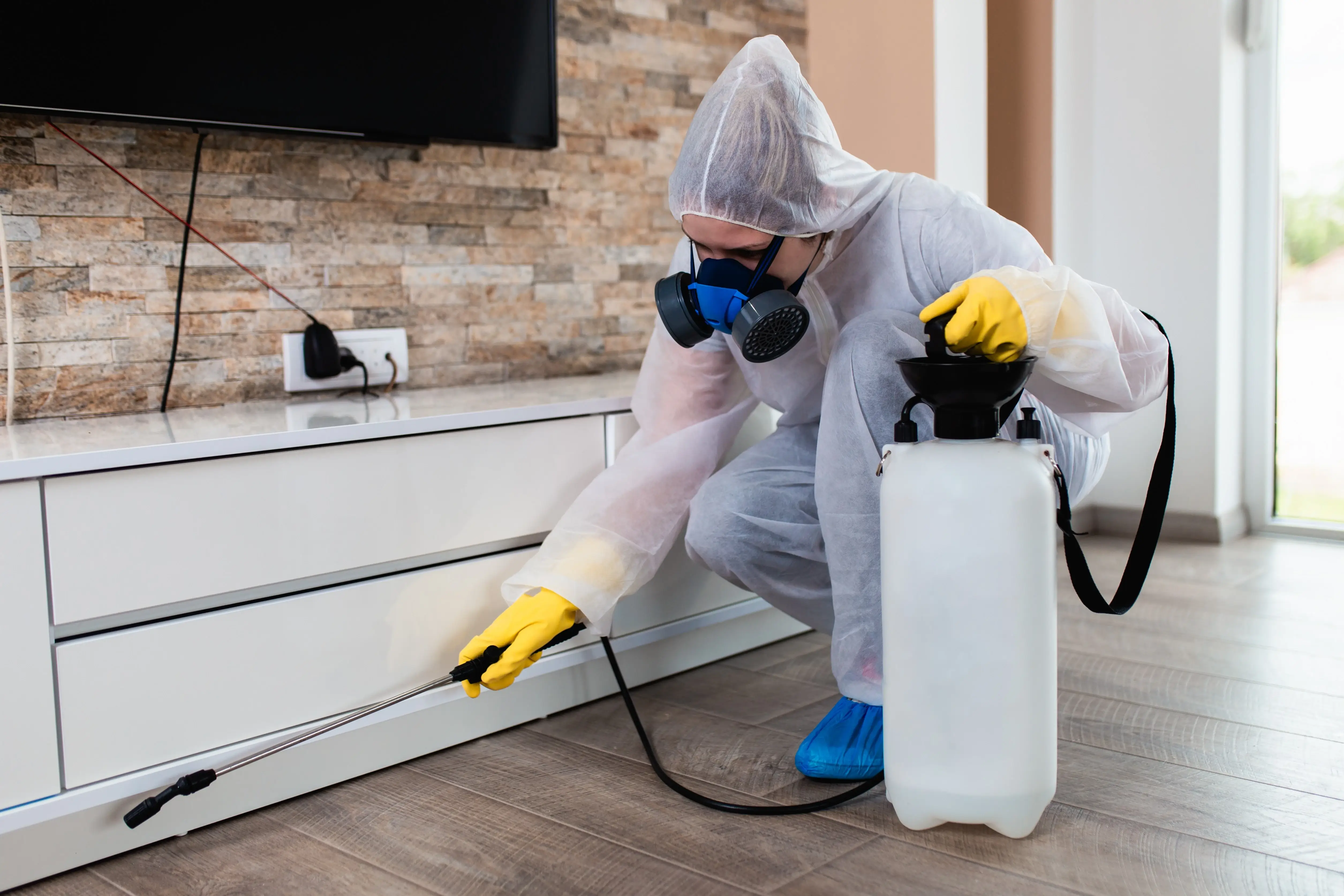
Place gel bait (Advion Cockroach Gel or Maxforce FC Magnum) in pea-sized dots every 12 inches along baseboards, under appliances, and inside cabinet hinges. Cockroaches consume the bait, return to the harbor, and die along with other roaches that contact the contaminated body. Gel bait reaches cockroaches that sprays cannot, including pregnant females hiding deep in wall voids.
Step 4: Apply an Insect Growth Regulator (IGR)
Spray an IGR like Gentrol IGR or Nyguard in all treated areas. IGRs contain hydroprene or pyriproxyfen, which mimic juvenile hormones and prevent cockroach nymphs from developing into reproductive adults. IGRs do not kill roaches directly, they break the breeding cycle by sterilizing adults and stopping eggs from hatching into viable nymphs. Apply IGR every 90 days for continuous protection.
Step 5: Treat Cracks and Crevices with Residual Spray
Apply a residual insecticide (Temprid SC or Cy-Kick CS) into cracks, crevices, wall voids, and pipe entry points using a crack-and-crevice tip. These products remain active for 60–90 days and kill cockroaches that walk across treated surfaces. Focus on areas behind appliances, under sinks, and along baseboards where females deposit egg cases.
Step 6: Dispose of Dead Roaches Correctly
Never sweep dead cockroaches into an open bin. Pick them up using a paper towel, seal them in a plastic bag, and dispose of the bag outside immediately. If the dead roach is a female German cockroach, check for an attached ootheca (visible as a brown capsule at the rear of the abdomen) before handling. Crushing a pregnant roach risks releasing the egg case.
Step 7: Monitor and Repeat Treatment
Place glue traps in kitchen corners, under appliances, and near entry points. Check traps every 7 days. A reduction in trap counts by week 3–4 confirms the treatment is working. Reapply gel bait every 3–4 weeks and IGR every 90 days. A complete cockroach breeding cycle lasts 3–4 months consistent treatment across this period eliminates the full population.
Allied Pest Control offers the most reliable cockroach control service Dubai using professional-grade treatments that eliminate cockroaches and their egg cases at every stage. Their certified team protects your home or business with proven methods that stop infestations from coming back.
Cockroach Egg Control at a Glance
| Task | Method | Product | Frequency |
| Remove egg cases | Vacuum + sealed disposal | HEPA vacuum | Before each treatment |
| Kill adults + pregnant females | Gel bait | Advion, Maxforce FC | Every 3–4 weeks |
| Stop eggs from hatching | IGR spray | Gentrol, Nyguard | Every 90 days |
| Treat harborage areas | Residual spray | Temprid SC, Cy-Kick CS | Every 60–90 days |
| Monitor population | Glue traps | Catchmaster, Trapper | Check weekly |
How Long Does Cockroach Egg Treatment Take?
Initial treatment vacuuming egg cases, applying gel bait, IGR, and residual spray takes 2–3 hours for a standard kitchen or apartment. Visible roach activity drops within 3–7 days of gel bait application. Full elimination of the population, including all hatching egg cycles, takes 4–8 weeks with consistent treatment. German cockroach infestations take longer due to their faster reproduction rate (one female produces up to 300 offspring per year).
How Often Should You Treat Cockroach Eggs?
Treat every 3–4 weeks for the first 3 months to cover the full breeding cycle. Reapply IGR every 90 days as a maintenance measure. In high-risk environments (restaurants, food processing facilities, apartment buildings), monthly monitoring with glue traps and quarterly IGR application prevents re-infestation. A single untreated ootheca contains enough eggs to restart an infestation.
Pro Tips for Best Results
- Use non-repellent residual sprays (Temprid SC, Phantom) near gel bait stations so roaches still consume the bait.
- Store gel bait in a cool, dry place where heat above 90°F degrades the active ingredient within days.
- Combine boric acid powder in wall voids with gel bait on surfaces for dual-action control.
- Seal all food in airtight containers to force cockroaches to consume bait instead.
- Fix leaking pipes cockroaches need water every 3 days and concentrate around moisture sources.
Frequently Asked Questions
What is the fastest way to eliminate cockroach eggs?
The fastest way to eliminate cockroach eggs is to physically remove toothache using a HEPA vacuum, then apply an IGR like Gentrol immediately to prevent hatching of any missed eggs. Combining physical removal with IGR delivers results within 24–48 hours and stops the breeding cycle without waiting for chemical penetration.
Can I eliminate cockroaches and their eggs in one treatment session?
Eliminating cockroaches and their eggs in one session is not fully possible because oothecae are resistant to most pesticides. One session of vacuuming, gel bait placement, IGR spray, and residual treatment will kill adults and prevent hatching but follow-up treatments every 3–4 weeks are required to catch newly hatched nymphs.
What is the best product to kill cockroach eggs?
The best products to stop cockroach eggs from hatching are IGRs, specifically Gentrol IGR (hydroprene) and Nyguard (pyriproxyfen). These products do not kill the egg directly but prevent nymphs from developing into breeding adults. No surface spray fully penetrates an intact ootheca shell.
What is the most common challenge when dealing with cockroach eggs?
The most common challenge when dealing with cockroach eggs is locating hidden oothecae before they hatch. Females deposit egg cases deep inside cracks, wall voids, and appliance motors areas that are difficult to inspect and treat. A HEPA vacuum combined with a crack-and-crevice IGR application addresses this directly.
What should I do first when I find a cockroach egg case?
The first step when you find a cockroach egg case is to vacuum it up immediately using a HEPA filter vacuum, then seal and discard the vacuum bag outside. Do not crush the ootheca, crushing can scatter eggs. After removal, apply an IGR spray to the surrounding area to neutralize any remaining eggs.